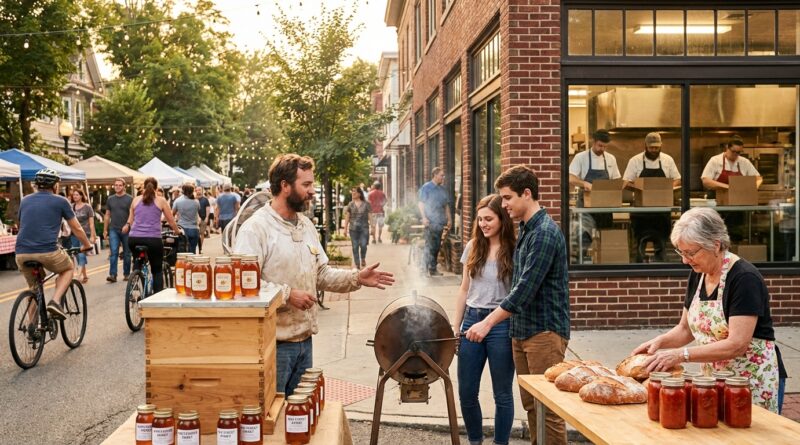
From Backyard Bees To Blockwide Brands: How Hyper‑Local Food Producers Are Quietly Building New Micro‑Manufacturing Models
You can feel the gap on Main Street. The neighborhood beekeeper sells out every weekend. The cottage baker has a waiting list. The guy roasting beans in a garage has a better product than half the chains in town. Yet somehow these businesses still get treated like charming little hobbies instead of what they really are, the early pieces of a local manufacturing economy. That is frustrating if you are the maker trying to grow, and it is just as frustrating if you run a market, a downtown group or a business district that wants more local jobs and more money staying close to home. The good news is this is not a fantasy. Hyper local food manufacturing is already happening. It just needs better packaging, shared tools, clearer rules and a simple path from kitchen-table brand to blockwide business. Once a town sees these producers as a network instead of isolated side hustles, the economics start to look very different.
⚡ In a Hurry? Key Takeaways
- Hyper local food manufacturing becomes real economic development when towns treat bakers, beekeepers, roasters and sauce makers as a coordinated production network, not as one-off hobbyists.
- Start with shared kitchens, common labeling help, pooled buying and one local sales channel so tiny producers can grow without taking giant risks.
- Food safety, permits and consistency matter. Trust is the premium product here, so growth has to be matched with clear standards and reliable quality.
Why tiny food businesses matter more than they look
It is easy to underestimate a table at the farmers market. A few jars of honey. Twelve loaves of sourdough. Small bags of roasted coffee. It looks modest.
But look closer. Those products are doing three jobs at once. They create income. They build local identity. They shorten the distance between producer and buyer.
That is the basic promise of hyper local food manufacturing. Instead of waiting for a giant plant to open on the edge of town, a community grows dozens of small producers who can make, package and sell premium food close to where people live.
That model is quiet, but it is powerful. A neighborhood honey brand can support pollination, gift shops, cafes and market traffic. A local sauce maker can become a wholesale supplier for restaurants. A cottage bakery can outgrow home rules and move into a shared commercial kitchen with three other brands.
This is manufacturing. Just smaller, closer and more human.
Why these producers get stuck at hobby scale
Most towns do not fail because they lack talent. They fail because the path from small batch to small business is messy.
The rules are hard to read
Cottage food laws, health department rules, labeling requirements and insurance can feel like a maze. Many makers stop growing simply because they are scared of getting something wrong.
The equipment jump is expensive
A person can start with a home mixer, a backyard hive or a tabletop roaster. Scaling up is another story. Commercial mixers, bottling setups, packaging tools, cold storage and certified kitchen space cost real money.
Each producer is solving the same problems alone
One baker is trying to figure out labels. One jam maker is calling around for jars. One coffee roaster is hunting for affordable packaging. This is wasted effort.
Local institutions still see them as “cute”
That may be the most annoying part. Business groups often celebrate these makers in marketing photos but do not build the systems that help them grow. A ribbon cutting is nice. A shared production plan is better.
The shift: Stop thinking “artisan,” start thinking “micro-manufacturing cluster”
This is where things get interesting. A single food maker may stay small for years. A cluster of food makers can support services, shared infrastructure and repeat local demand.
Picture one district with:
- a community kitchen
- a labeling and compliance helper
- a pickup shelf in local shops
- pooled buying for jars, flour, sugar and boxes
- one seasonal market turning into a year-round sales channel
Now the beekeeper is not just selling honey. They are part of a system. The bakery uses local honey in a branded loaf. The coffee roaster sells a honey latte blend with the cafe. The gift shop stocks all three.
That is how a tiny local product turns into a blockwide brand presence.
A practical playbook for building hyper local food manufacturing
1. Map the producers you already have
Most places have more local makers than they realize. Start simple. Make a list of every beekeeper, baker, coffee roaster, hot sauce maker, jam producer, pickler, chocolatier and caterer in your area.
Then sort them by stage:
- testing recipes
- selling casually
- licensed and growing
- ready for wholesale
You cannot build support if you do not know who is already doing the work.
2. Create one shared “how to sell legally” guide
Do not make each maker call five offices and piece together old advice from social media. Put together one clear local guide covering permits, cottage food rules, approved kitchen options, insurance basics, labeling rules and contact points.
This alone can move people forward faster.
3. Build shared production spaces before chasing private buildouts
Not every producer needs their own facility. In fact, many should not have one at first. Shared kitchens and processing spaces let makers test demand before taking on rent and equipment debt.
This is also where public infrastructure can help. If your town has a makerspace, library lab or community workshop, it may already be closer to this future than people think. A good companion read is From Library Card To Local Factory: How Public Makerspaces Are Quietly Powering Hyper‑Local Manufacturing. The idea is the same. You do not need a giant factory first. You need affordable, shared capacity.
4. Pool the boring stuff
Boring stuff is where growth often dies.
Help local producers share:
- label template support
- food photography
- package design
- bulk ingredient buying
- delivery runs
- bookkeeping and point-of-sale tools
These are not glamorous investments. They are the things that make tiny businesses viable.
5. Give them a dependable place to sell every week
A once-a-month pop-up is better than nothing, but it is not enough to build a production business. Makers need repeat demand.
That can come from:
- a year-round indoor market
- a permanent local products shelf in cafes and shops
- corporate gifting partnerships
- school, hospital or office snack programs
- restaurant wholesale accounts
Reliable sales are what justify better equipment and more hiring.
6. Brand the district, not just the individual maker
This part is often missed. Consumers love stories, but they also love shortcuts. If your town or district becomes known for trusted local food, every producer benefits.
Think of a shared identity like:
- Made on Maple Street
- Northside Pantry Collective
- Old Town Small Batch Foods
Now each jar, bag and box is helping advertise the others.
What makers can do right now, even without city help
If you are the producer reading this, you do not need to wait for a grant program or a master plan.
Pick one upgrade, not ten
The next move might be cleaner labels, a better order form, a wholesale price sheet or one new retail account. Small steps count.
Find your neighboring producers
Do not act like you are competing with every other local seller. A baker and a beekeeper can create bundles. A roaster and a chocolatier can share gift boxes. Collaboration lowers customer acquisition costs without anyone needing to use that term out loud.
Get serious about consistency
If a customer loves your granola once and the next bag is different, trust breaks. Standardize your recipes, packaging and fill weights as early as you can.
Document your process
Simple production notes help with quality, food safety and training. This becomes important the moment a friend, family member or part-time worker starts helping.
What market managers, downtown groups and chambers should do
If you run a local market or business district, you can do more than host events.
Act like a coordinator
Bring producers, health officials, packaging vendors and local retailers into one room. People often need translation more than motivation.
Use small grants for practical bottlenecks
A $1,500 grant for labeling compliance or shared cold storage can matter more than a $10,000 branding campaign with no production support behind it.
Measure the right things
Do not just count festival attendance. Track producer revenue, repeat wholesale accounts, shared kitchen use, jobs added and local shelf placements.
Make local procurement easier
Help cafes, hotels and gift shops buy from neighborhood makers with one catalog or one ordering hub. Convenience wins.
Trust is the premium product
People buy hyper local food because it feels personal, but that only works if it also feels safe and reliable.
So yes, celebrate the handmade story. But back it up with:
- proper ingredient labels
- allergen clarity
- safe kitchen practices
- batch tracking
- tamper-evident packaging where needed
That is not bureaucracy for the sake of it. It is how local brands earn the right to grow.
Why this model is quietly stronger than it looks
Big supply chains look efficient until they break. A storm, shipping issue, fuel spike or distributor mess can throw everything off.
Small local producers are different. They are not immune to problems, but they are closer to their customers, more flexible in what they make and quicker to adapt. One can switch flavors. Another can change package sizes. A neighborhood network can often recover faster than a distant supplier.
That is why hyper local food manufacturing is not just a lifestyle trend. It is a resilience strategy.
At a Glance: Comparison
| Feature/Aspect | Details | Verdict |
|---|---|---|
| Solo maker model | Low overhead at first, but each producer handles permits, buying, packaging and sales alone. | Good for starting, weak for scaling. |
| Shared micro-manufacturing network | Common kitchen space, pooled services, repeat sales channels and cross-promotion between local brands. | Best path to stable local growth. |
| Traditional outside supplier model | Easy to buy from at scale, but less local identity, less money stays in town and supply shocks hit harder. | Useful, but not enough on its own. |
Conclusion
Backyard honey, small-batch sauces, neighborhood roasters and cottage bakers are not a sideshow. They are the early layer of a smarter local economy. When a town treats them as part of a real hyper local food manufacturing system, the benefits stack up fast. More trusted food. More stable small jobs. More money recirculating on local streets. Shorter supply chains that can handle shocks better than faraway distributors. The real opportunity is not just helping one talented maker sell a few more jars or loaves. It is building a clear ladder that helps many of them grow together. If your community can do that, these hidden food artisans stop being invisible. They become a local manufacturing base people can actually see, taste and support every week.