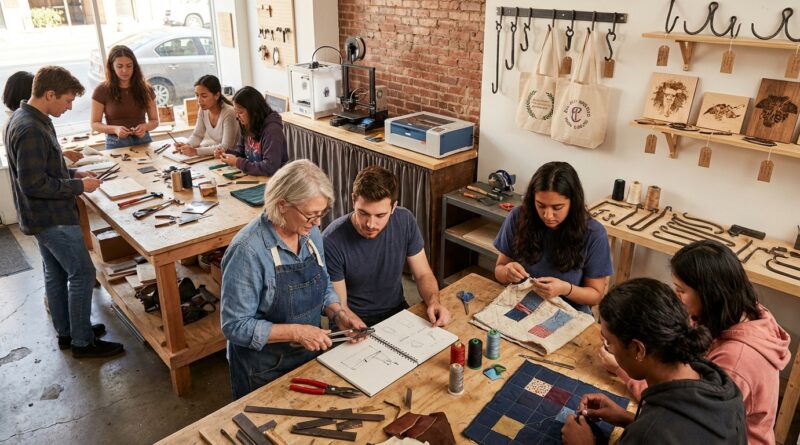
From Grandma Hobbies to Neighborhood Micro‑Factories: Why Young Makers Are Quietly Rewiring Local Economies
You can feel the mismatch in a lot of towns right now. The pottery class has a waitlist. The forge workshop is full. Quilting circles suddenly have people in their twenties asking smart questions about thread weight and finishing. But when local leaders talk about “economic development,” they still picture warehouses, tech offices, or chain retail. That is frustrating, especially if you run a community shop, makerspace, market, or downtown program and can plainly see the talent sitting right in front of you. These are not just cute hobbies. They are the early stage of hyper local manufacturing from craft hobbies. The gap is not talent. It is structure. Most communities have classes, but no shared product plan, no simple sales path, and no rules that make neighborhood-scale production feel normal. The good news is that this is fixable, and you do not need a giant grant or a shiny industrial park to start.
⚡ In a Hurry? Key Takeaways
- Young makers can become a real local production base if towns connect classes to repeatable products, shared workspaces, and simple sales channels.
- Start with 3 to 5 products your area can make well this month, then build a neighborhood brand around them.
- Keep it safe and sustainable by checking zoning, insurance, product rules, and tool training before you scale up.
Why this shift matters more than it looks
A blacksmith making bottle openers, a sewist making repair kits, and a woodworker turning out simple stools may not look like “manufacturing” in the old sense. But step back and it starts to look very real.
You have raw materials. You have skilled labor. You have production tools. You have finished goods people will buy. That is manufacturing. It is just happening on a smaller, more human scale.
For a lot of towns, that is actually the better fit. Not every place is going to land a big factory. Many can support dozens of tiny producers making useful, giftable, locally branded goods in storefront workshops, co-op studios, or back rooms behind the main street coffee shop.
This is where hyper local manufacturing from craft hobbies becomes practical, not dreamy. The point is not to turn every knitter into a full-time business owner. The point is to create a local system where skilled hobbyists can move into part-time paid production, small batch sales, repairs, custom work, and teaching.
The big mistake towns keep making
Most communities stop at the class.
They celebrate attendance numbers. They post nice photos. They maybe hold a holiday market. Then the energy fades because there is no bridge between “I learned this” and “I can make and sell this consistently.”
That missing bridge usually has four parts:
1. No product focus
People learn techniques, but not which items are easiest to make well, price fairly, and sell again next month.
2. No shared equipment plan
A person may know how to do the work, but cannot afford a kiln, industrial sewing machine, lathe, or proper ventilation setup alone.
3. No neighborhood sales channel
If every maker is left to figure out packaging, checkout, signage, and online sales from scratch, many will give up.
4. No clear local rules
Even motivated people hit a wall if zoning, permits, insurance, or landlord concerns make small-scale production feel risky.
What “micro-factory” really means in a neighborhood
Do not picture smokestacks. Picture a cluster of small, organized production.
A neighborhood micro-factory can be:
- A shared workshop that produces a short list of house-brand goods
- A downtown storefront with retail in front and production in back
- A co-op of makers using one order system and one local label
- A weekly production night in a community workshop tied to a monthly market
- A pop-up production space inside an underused commercial unit
The common thread is simple. It is not random crafting. It is small-batch making with standards, schedules, and a path to sale.
A blueprint communities can use this week
Step 1: Pick products before you pick programs
This is the part many groups skip because it feels less romantic. Still, it is the part that makes the whole thing work.
Ask one practical question: what could local makers produce reliably in small batches, at a price local people or visitors will actually pay?
Good starter products tend to be:
- Simple to teach and repeat
- Small enough to store
- Safe to make in shared spaces
- Easy to brand locally
- Useful, giftable, or tied to local identity
Examples:
- Hand-forged hooks, plant hangers, bottle openers, and hardware
- Pottery mugs, planters, spoon rests, and house numbers
- Wooden serving boards, stools, birdhouses, and signs
- Quilted tote bags, mending kits, aprons, and baby gifts
- Needlepoint ornaments, bookmarks, and framed local map art
If you can only start with three products, even better. Focus wins.
Step 2: Match products to real skill levels
Not everyone in a class is ready for custom commissions. That is fine.
Build a ladder:
- Beginner makers do prep work, finishing, packaging, or very simple items
- Intermediate makers produce core items from patterns or templates
- Advanced makers handle complex work, quality checks, and mentoring
This keeps the system welcoming and productive at the same time.
Step 3: Create one shared local brand
This is where towns can do something individual makers often cannot do alone.
Give the goods a common identity. Maybe it is “Made on Main,” “Northside Works,” or “River Town Crafted.” Keep it plain and memorable.
Then use that brand on tags, shelf cards, market booths, and social posts. People love buying things with a local story, but they need to recognize the story fast.
The shift is subtle but powerful. Instead of selling “a random mug by someone I do not know,” you are selling “a mug made in our town by local makers using the town workshop.”
Step 4: Build one easy sales path
Do not make every maker become a checkout system expert.
Start with one or two channels:
- A shelf or corner inside an existing shop
- A once-a-month neighborhood market table
- A simple online preorder form for pickup
- A wholesale relationship with one museum, cafe, hotel, or visitor center
One dependable sales path is worth more than five messy ones.
Step 5: Set simple standards
This is where a hobby becomes reliable local production.
You need basic standards for:
- Dimensions and materials
- Finish quality
- Packaging
- Pricing
- Who approves final sale items
This does not kill creativity. It protects trust. Customers come back when the goods feel consistent.
How to turn classes into production pipelines without killing the joy
This worry is real. A lot of makers do not want their favorite evening class turned into a grim assembly line. Fair enough.
The fix is to keep learning, experimentation, and production as connected but separate tracks.
Track 1: Open learning
Classes stay exploratory. People try things, make mistakes, and learn the craft.
Track 2: Production nights
Separate sessions focus on repeatable items with templates, shared materials, and quality checks.
Track 3: Premium custom work
Advanced makers can still take on one-off pieces and artistic work at higher prices.
This three-track model keeps the culture healthy. People can stay hobbyists, become part-time producers, or grow into small business owners at their own pace.
What local governments can do without making this painfully slow
City halls are starting to pay more attention to artisan production, and that is a good thing. But communities do not need to drown this in paperwork.
The useful moves are pretty basic:
- Allow low-impact artisan production in neighborhood commercial spaces
- Clarify which uses are allowed by right and which need review
- Make fire, ventilation, and occupancy rules easy to understand
- Offer small grants for shared tools, signage, and code upgrades
- Help connect makers with vacant storefronts and pilot spaces
If you are a downtown group or community market organizer, push for plain-language guidance. Most people can handle rules. What they cannot handle is mystery.
Safety, insurance, and the boring stuff that actually matters
This is the part nobody puts on the poster, but it is important.
If you want hyper local manufacturing from craft hobbies to last, you need to cover the basics early.
Think through these questions first
- Does the space allow the type of production you want to do?
- Do you need special ventilation, dust collection, fire suppression, or electrical upgrades?
- Who carries liability insurance?
- Are products labeled properly if they touch food, children, or skin?
- Who has tool training sign-off?
- What happens if a batch fails quality review?
This sounds fussy, but it saves heartbreak later. A simple binder or shared online folder with rules, checklists, and contacts can do a lot of work here.
How to know if your town is ready
You do not need perfect conditions. You just need enough pieces already on the board.
Your area is likely ready if you have at least four of these:
- Popular craft or trade classes with repeat attendance
- A makerspace, art center, school shop, or church hall with usable space
- An existing market, downtown shop, or visitor center that can sell goods
- A local pride story people respond to
- One or two organizers who are good at logistics
- A willing landlord or public space partner
- A few experienced makers open to mentoring
If that list sounds familiar, you are closer than you think.
Three starter models that work in the real world
The market-table model
Best for towns with classes but no permanent space.
Pick 3 products, produce once a week, sell once a month at a branded booth. This is the easiest way to test demand.
The storefront-backroom model
Best for commercial districts with a vacant shop.
Retail in front. Light production and packing in back. Customers love seeing things being made. It builds trust fast.
The co-op production model
Best for areas with lots of independent makers.
Makers keep their own identity but share branding, bulk materials, training, and sales channels for a selected line of local goods.
What success looks like after six months
It probably will not look like a giant business park, and that is okay.
It might look like:
- 12 makers earning regular side income
- One downtown shelf that keeps selling out of a few dependable products
- A repair and mending night that brings people into local shops
- A branded “made here” line that visitors ask for by name
- A city that updates its rules because the pilot proved the idea works
That is not small. That is a local economy learning how to make things again.
At a Glance: Comparison
| Feature/Aspect | Details | Verdict |
|---|---|---|
| Starting point | Classes and hobby groups already exist, but they need product focus and a sales path. | Best place to begin. Low cost, fast to test. |
| Business model | Small-batch local goods sold through shared branding, markets, shops, and preorder systems. | More realistic than chasing one big employer. |
| Main risk | Weak standards, unclear zoning, and no insurance or safety plan can stall growth. | Fixable with simple rules and a pilot program. |
Conclusion
The rise in younger people taking heritage crafts seriously is not a quirky side story. It lines up with another important shift, which is cities starting to make room for artisan production in neighborhood commercial spaces. Put those two trends together and you get a real opening. Not for nostalgia. For practical, block-by-block production. If your community can connect blacksmithing, quilting, woodworking, pottery, and similar skills to a short list of products, one shared brand, and one easy sales path, you can start creating part-time income and a stronger local identity right away. The best part is that this is not some far-off development plan. It is a blueprint you can use this week. Pick a few products. Set standards. Find a shelf, a market table, or a back room. Then help your town say something it has not said in a while. We make things here.