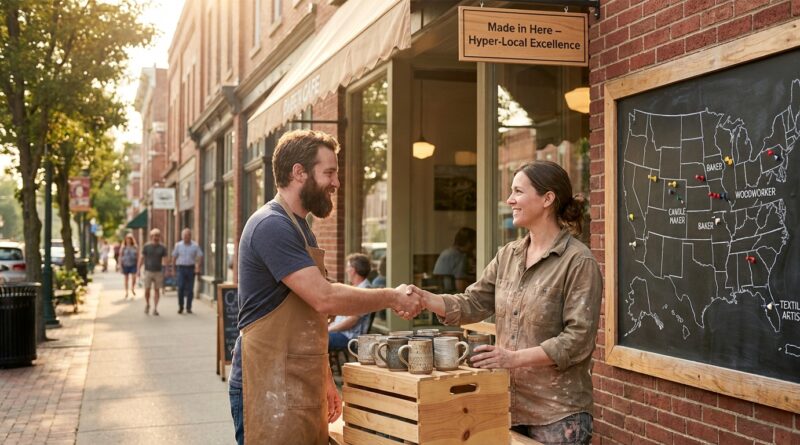
How to Turn Your Neighborhood Makers Into a Hyper-Local Supply Chain (In 30 Days or Less)
You can feel the gap, even if you do not use supply chain language. The cafe wants locally made mugs, shelf snacks, candles, jam, or cutting boards. The owner is busy, short on time, and not sure who nearby actually makes good stuff in small batches. Meanwhile, the potter three blocks away, the backyard baker, and the metalworker in the old warehouse all seem strangely hard to find. That is the frustrating part. Everyone says people want local. Almost nobody explains how to build a hyper local supply chain with neighborhood makers in a way that works next month, not someday. The good news is you do not need a grant, a fancy app, or a citywide campaign to start. You need a simple 30-day plan, a short list of makers, and a low-risk way to test products in real shops. Start small. Keep it practical. Let real neighbors buy real things from real people.
⚡ In a Hurry? Key Takeaways
- To build a hyper local supply chain with neighborhood makers, start with a tiny pilot. Pick 3 to 5 products, 5 to 10 makers, and one month of testing.
- Use a simple system. One shared spreadsheet, one intake form, one pickup day, and one clear payment schedule can carry most small local partnerships.
- Start low risk. Test food safety, labeling, reliability, and reorder speed before you expand to more products or more stores.
Why this feels harder than it should
Most local business owners are not against buying nearby-made goods. They are overloaded. They already juggle rent, staffing, vendors, ordering, customer service, and a dozen little emergencies before lunch.
Makers have a different problem. They are visible to friends, maybe to Instagram followers, but invisible to buyers who need a dependable local source. A shop owner might love local pottery and still have no idea where to find a potter who can deliver 20 matching mugs on time.
That is why the best approach is not “support local” as a slogan. It is a mini operating system. A simple, boring, useful process.
What a hyper-local supply chain actually means
Strip away the buzzwords and this is all it means: nearby businesses regularly buying goods from nearby makers, with a repeatable way to order, deliver, pay, and restock.
The goods can be simple:
- Ceramic mugs for a cafe
- Locally roasted coffee for an office or bakery
- Wooden serving boards for a wine bar
- Candles, soap, prints, and textiles for a gift shop
- Jams, granola, bread, and sauces for a neighborhood market
The key word is repeatable. A one-time pop-up is nice. A real local supply chain means somebody can reorder next Tuesday and trust it will happen.
The 30-day neighborhood sourcing challenge
If you want to know how to build a hyper local supply chain with neighborhood makers, this is the easiest starting point. Do not try to map the whole city. Do not launch a giant directory. Run a 30-day challenge with a tight scope.
Days 1 to 3. Pick your category and your radius
Choose one product lane first. Not ten. One.
Good beginner lanes:
- Giftable goods like candles, ceramics, prints, soap
- Shelf-stable food like jam, honey, roasted coffee, granola
- Simple fixtures like planters, signs, trays, cutting boards
Then set a radius. Try one to five miles in a dense neighborhood, or ten to fifteen miles in a spread-out town.
This matters because “local” gets fuzzy fast. A clear radius helps everyone understand the goal.
Days 4 to 7. Build a list of 20 makers
You are not looking for perfection. You are making a starting map.
Search in these places:
- Farmers markets and weekend markets
- Instagram location tags
- Local craft fairs
- Cafe bulletin boards
- Neighborhood Facebook groups
- Chamber of commerce listings
- Art schools, co-ops, and community studios
Create a basic spreadsheet with:
- Maker name
- Product type
- Distance from your shop
- Contact info
- Wholesale available, yes or no
- Minimum order
- Lead time
- Notes on packaging, labeling, and style
Do not overthink the tech. A simple Google Sheet is enough.
Days 8 to 10. Send one clear outreach message
This is where many people freeze. Keep it short.
Try something like this:
“Hi, we are a neighborhood cafe/shop in [area]. We are building a small local maker program for [product type]. We would love to learn about your wholesale options, lead times, and minimums. We are starting with a 30-day pilot and keeping it simple. If you are interested, can you send a line sheet, price list, and a few photos?”
That message works because it respects the maker’s time. It also signals that you are serious.
Days 11 to 14. Screen for boring but important stuff
Charm matters. Reliability matters more.
For food and drink, check:
- Proper labeling
- Ingredient list
- Allergen info
- Required permits or local rules
- Shelf life
- Packaging that survives handling
For non-food goods, check:
- Consistent sizing
- Durable packaging
- Wholesale pricing
- Restock time
- Ability to make small repeat batches
This is the part people skip because it is not romantic. But this is what turns a nice local idea into something sustainable.
Days 15 to 18. Choose 5 makers for a pilot
Pick a mix. A smart pilot has one or two “easy yes” products, one higher-margin gift item, and one thing that creates buzz.
For example, a cafe might test:
- Local honey
- Small-batch granola
- Hand-thrown mugs
- Soy candles
- A neighborhood artist’s postcard set
Keep first orders small. The goal is not to stock every shelf. It is to learn what sells, what arrives on time, and what customers ask about.
Days 19 to 22. Set simple terms
You do not need a six-page contract for a tiny pilot. You do need clarity.
Agree on:
- Wholesale price
- Retail price guidance
- Order minimums
- Payment timing
- Delivery or pickup day
- Returns or damaged item policy
- Restock lead time
If you are a maker, do not be shy about protecting your time. “I deliver on Tuesdays” is better than “message me anytime.” Structure helps both sides.
Days 23 to 26. Launch a small in-store test
This is where local sourcing stops being an idea and becomes visible.
Use simple signs:
- Made 0.7 miles away
- Roasted in the next neighborhood
- Thrown by hand at a local studio
Customers love specifics. “Local” is nice. “Made by Ana on Maple Street” is memorable.
Train staff to tell the story in one sentence. Not a speech. Just enough to make the item feel human.
Days 27 to 30. Review what actually worked
At the end of the month, ask basic questions:
- What sold fastest?
- What had the best margin?
- Which maker was easiest to work with?
- What caused confusion at checkout or restocking?
- Did customers respond more to food, gifts, or home goods?
Then keep the top performers and drop the friction-heavy ones. That is not failure. That is the point of a pilot.
How residents can help, even if they do not own a store
This is not only for retailers. Regular people can build demand that makes these tiny supply chains stick.
Ask one useful question
At your cafe, bakery, or flower shop, ask: “Do you carry anything made in the neighborhood?”
If enough customers ask, owners pay attention.
Buy local on routine, not just holidays
Holiday markets are great, but local makers need boring Tuesday money too. Replace one regular purchase this month with a neighborhood-made version. Soap. Bread. Coffee. A host gift. A planter.
Share specifics, not just praise
Posting “support local” is fine. Posting “These handwoven kitchen towels are made four blocks from the shop” is much more useful.
Common mistakes that trip people up
Trying to do too much at once
If you start with 40 makers and 12 product categories, you will create chaos. Start with one lane and a few dependable people.
Ignoring margins
Local is not magic. Shops still need healthy margins, and makers still need fair pay. If the numbers do not work, adjust package sizes, bundles, or price points.
Using handmade as an excuse for inconsistency
Handmade can still be dependable. Slight variation is part of the charm. Missed deadlines and vague communication are not.
Skipping compliance
Food rules, labeling rules, and basic liability questions matter. Check them early. It is much easier than cleaning up a preventable mess later.
Simple tools that make this manageable
You do not need enterprise software. For a neighborhood-scale system, these basics are enough:
- A shared spreadsheet for maker tracking
- A Google Form for maker applications
- A shared calendar for delivery days
- A template email for onboarding
- A one-page wholesale terms sheet
If you already use a POS system, add a tag for “local maker” so you can see what sells without extra work.
What success looks like after the first month
Success is not becoming a mini Amazon for your zip code.
Success is much simpler:
- A shop has 3 to 5 neighborhood-made products that actually move
- Two or three makers now have steady repeat orders
- Customers begin to expect local options
- Ordering and payments feel predictable, not awkward
- More dollars stay in the neighborhood
That is a real hyper-local supply chain. Small, yes. But real.
At a Glance: Comparison
| Feature/Aspect | Details | Verdict |
|---|---|---|
| Starting scope | One category, one neighborhood radius, 5 makers max for the pilot | Best way to start without getting buried |
| Operations setup | Spreadsheet, simple intake form, weekly delivery or pickup schedule, clear payment terms | Low-cost and realistic for small shops |
| Risk level | Low if you test in small batches and check packaging, labeling, and reliability first | Smart, practical path to long-term local sourcing |
Conclusion
You do not have to wait for a big platform, a city program, or a perfect directory to make this work. Hyper-local demand is already growing in food, gifts, and home goods. What is missing is a simple starting method. That is why a 30-day neighborhood-sourcing challenge works so well. It gives residents and small retailers a manageable way to find nearby makers, test real products, and move real money into the local economy. Better yet, it builds supply lines that are often tougher than distant ones because people know each other, can solve problems quickly, and can restock without a cross-country headache. Start with one shelf, one cafe corner, or one market table. The woodworker, weaver, baker, potter, or metalworker down the street does not need you to think bigger. They need you to start.