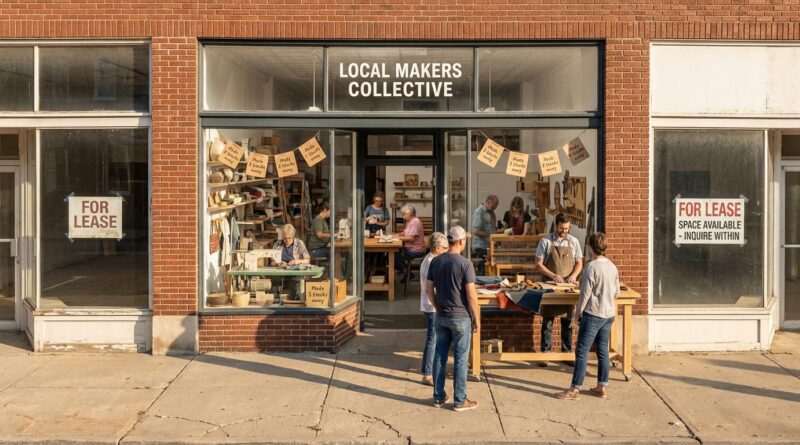
Tariffs, Empty Shelves and the Comeback of the Corner Workshop
You are not imagining it. The same lightbulbs, bike parts, school supplies, and kitchen basics really do seem harder to find, slower to arrive, and more expensive than they were a few years ago. Add tariffs to the mix, and a product that already traveled halfway around the world can suddenly cost more before it even reaches the shelf. Then a chain store closes, and your town loses one more easy place to shop. It feels like regular people are stuck paying for decisions made far above their heads. But there is a small, practical shift happening underneath all that noise. As imported goods get pricier and less predictable, local makers, repair shops, and tiny manufacturers are starting to look less like a novelty and more like the smart backup plan. That is the real story behind how tariffs are fueling hyper local manufacturing, and why it matters on your block, not just in Washington.
⚡ In a Hurry? Key Takeaways
- Tariffs can make imported goods cost more and arrive less reliably, which gives nearby makers and repair shops a real opening.
- Start with a few categories you buy often, like furniture, clothing repairs, home goods, or bike service, and look for local options before clicking “buy now.”
- Local does not always mean cheaper upfront, but it can mean better durability, easier repairs, and money staying in your town.
Why shoppers feel cornered right now
When prices jump, most of us do the same thing. We blame inflation, grumble, and move on. But tariffs add another layer. They can raise the cost of imported materials or finished goods, and that extra cost often lands on retailers and customers.
Then supply chains get messy. A shipment is delayed. A retailer trims inventory to avoid risk. Suddenly the item is out of stock online, missing in stores, or only available from a third-party seller at a ridiculous markup.
That is why this feels personal. It is not just an economics story. It is the missing appliance part, the backordered backpack, the favorite hardware store that could not hang on.
How tariffs are fueling hyper local manufacturing
Here is the plain-English version. If imported products become more expensive, less predictable, or both, local production starts to make more sense.
That does not mean every town is about to open a giant factory. It usually looks much smaller than that. Think neighborhood machine shops, woodworkers, sewing studios, print shops, metal fabricators, ceramics makers, electronics repair benches, and small batch food producers. Some are old-school corner workshops. Some are modern micro factories with computer-guided tools and online ordering. Same idea. Make more things closer to the people who need them.
Why local makers suddenly have an edge
They are not waiting on a cargo container from overseas. They can often buy materials from regional suppliers. They can make shorter production runs. They can customize. They can repair. They can talk to customers face to face.
That last part matters more than people think. If something breaks, you know where to go. If a part is slightly off, somebody can adjust it. If you need ten units instead of ten thousand, a small shop may actually be a better fit.
This is not nostalgia. It is practical math.
There is a temptation to treat local manufacturing like a feel-good story about simpler times. That misses the point. The comeback of the corner workshop is often about risk, speed, and control.
A cheap imported item can get expensive fast if it arrives late, breaks quickly, or cannot be repaired. A nearby maker may charge more at checkout, but the total value can be better because the item lasts longer or can be fixed instead of tossed.
For families on a budget, that distinction is huge. Paying less today is helpful. Paying once instead of three times is better.
What kinds of products make sense to buy locally
Not everything can or should be made down the street. But some categories are a great fit for hyper-local production or service.
Home goods and furniture
Tables, shelves, cabinets, stools, and simple storage pieces are often worth sourcing nearby. You can get solid materials, exact measurements, and a person who can come back if something needs adjusting.
Repairs and alterations
This is the easiest place to start. Shoe repair, tailoring, lamp rewiring, small appliance repair, bike tune-ups, and furniture refinishing can stretch your budget far more than constant replacement.
Specialty parts and small production runs
Local machine shops and fabrication shops can sometimes make brackets, mounts, replacement pieces, or one-off hardware that big retailers do not stock anymore.
Everyday gifts and household basics
Candles, soaps, ceramics, cutting boards, notebooks, and textiles are often available from local makers. These purchases may not solve every supply-chain problem, but they shift some of your spending to businesses that are rooted nearby.
How to find local makers without turning it into a second job
You do not need to become a full-time supply-chain detective. Start small.
Search by problem, not by product
Instead of searching for “desk lamp,” search for “lamp repair near me” or “local metal fabricator” or “woodworker in [your town].” You may find someone who can repair, build, or modify what you need.
Check the boring places
Chamber of commerce listings, farmers markets, community Facebook groups, maker fairs, library bulletin boards, and local trade schools are often more useful than glossy ads.
Ask one simple question
“Do you make this here, repair it here, or source it nearby?” That one sentence can tell you a lot about where your money is going.
How to buy smarter when money is tight
Let’s be honest. “Buy local” can sound like expensive advice dressed up as civic virtue. That is not helpful if your budget is already stretched.
So try this instead.
Pick three categories, not your whole life
Choose the items that frustrate you most. Maybe it is kids’ clothing repairs, lawn tool maintenance, and basic furniture. Focus there first.
Compare cost over a year
If a $25 imported item breaks every four months, and a $60 local version lasts two years, the math changes fast.
Use local for the hard-to-replace stuff
For commodity items like paper towels, local manufacturing may not be realistic. For items where fit, repair, or durability matter, local often shines.
Split your spending
You do not have to choose sides. Buy some basics from national chains if you need to. Then direct a slice of your budget to nearby workshops and service businesses that help your town stay useful and resilient.
What local businesses need from shoppers
Most small makers are not asking you to spend blindly. They need consistency more than heroics.
A repair shop needs repeat customers. A local sewist needs a few referrals. A cabinet maker needs realistic timelines. A neighborhood print shop needs small but steady orders. If enough people shift even 10 to 20 percent of their spending toward businesses like these, it can make a real difference.
That is the part many people miss when talking about how tariffs are fueling hyper local manufacturing. Demand does not have to explode overnight. It just has to become a little more intentional.
What towns and neighborhoods can do
This is not only on individual shoppers. Communities can make it easier.
Support repair culture
Libraries, schools, and community centers can host fix-it clinics, sewing nights, and tool-sharing programs.
Make local suppliers visible
Many great shops are hidden in industrial parks or side streets. A simple local directory can help residents find them.
Buy local as institutions
Schools, churches, nonprofits, and small offices can source signage, simple furniture, printing, uniforms, and maintenance work from nearby businesses when possible.
The limits are real, and that is okay
Hyper-local manufacturing is not a magic wand. Some products need global supply chains. Some materials are still imported. Some local shops are already stretched thin. And yes, some handmade or small-batch products cost more.
But the goal is not total self-sufficiency. The goal is fewer single points of failure. More nearby skills. More options when shelves are empty or prices spike again.
Think of it like backing up your phone. You still use the main system, but you feel a lot better knowing there is a second copy when something goes wrong.
At a Glance: Comparison
| Feature/Aspect | Details | Verdict |
|---|---|---|
| Imported mass-market goods | Often cheaper upfront, but vulnerable to tariffs, delays, stock shortages, and uneven quality. | Good for some basics, but less dependable when supply chains get shaky. |
| Local makers and workshops | Usually easier to contact, more flexible on repairs or custom work, and less exposed to long shipping routes. | Best for durability, service, and keeping money circulating nearby. |
| Repair-first approach | Extends the life of items you already own through tailoring, tool repair, appliance fixes, and refinishing. | Often the smartest budget move of all. |
Conclusion
If your local stores feel thinner, pricier, and less reliable, that is not just bad luck. Tariffs, retail bankruptcies, and fragile supply chains are now showing up in everyday life, right where people shop. The good news is that you are not completely stuck. By shifting even part of your spending toward nearby makers, repair shops, and small manufacturers, you can protect your wallet, keep useful skills and jobs in town, and create more options when the big system stumbles. That is why this moment matters. Global chaos is real, but so is the chance to turn it into something practical and local, one purchase, one repair, and one corner workshop at a time.