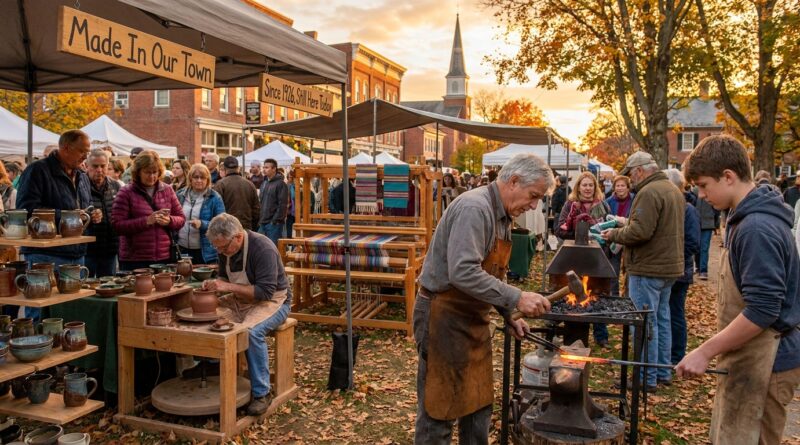
The Hyper-Local Heritage Workshop: How Neighborhood Makers Are Quietly Bringing Old Skills Back To Daily Life
You can feel the gap, even if you do not have a name for it. Stores are full, packages arrive fast, and yet so much of what we buy feels anonymous. Meanwhile, the old skills that once gave a town its look and character are often stuck behind velvet ropes, festival booths, or social media clips. That can be frustrating. You watch a potter throw a bowl or a smith shape a hook, think “that’s amazing,” then go home with nothing but a phone photo. The good news is this stuff is not gone. In many places, it is quietly coming back through local heritage craft workshops near me style searches, neighborhood guilds, community studios, and small maker collectives. The trick is knowing how to spot the real thing, ask a few smart questions, and make one small purchase or class sign-up that turns admiration into support.
⚡ In a Hurry? Key Takeaways
- Heritage craft workshops are easiest to support when you pick one local skill, learn who teaches it, and buy directly from that maker.
- Start small. Take a beginner class, order one useful item, or commission a repair instead of treating the craft like a one-day festival attraction.
- Value matters more than souvenirs. A well-made local piece often lasts longer, keeps money in town, and helps older experts pass skills to younger people.
Why these old skills matter again
People are tired of generic stuff. That is really the heart of it.
A hand-thrown mug from a local clay body, a forged garden tool made by someone ten minutes away, or a woven table runner based on regional patterns feels different because it is different. It carries local materials, local history, and local labor.
It also solves a modern problem. Global supply chains still wobble. Cheap goods break. Replacements get delayed. A local craft economy cannot replace everything, of course, but it can bring back some resilience. If your town still has a leatherworker, woodturner, basket maker, or ceramic studio, that is not just quaint. It is useful.
What “heritage workshop” really means
This is not about cosplay for history buffs. A heritage workshop is simply a place where an older regional skill is still being practiced in a living way.
It usually has three things
First, a real skill with roots in the area. Maybe your town once had mills, farms, fisheries, logging camps, brickworks, or rail yards. Crafts grew around those needs.
Second, a working teacher or maker. Not just a museum interpreter doing the same demo every Saturday, but someone who still sells, repairs, or teaches the craft.
Third, useful output. Cups. Belts. Knives. Brooms. Quilts. Iron hardware. Woven goods. Things people can actually bring into daily life.
How to find local heritage craft workshops near me without wasting a weekend
The search term works, but do not stop at the first event listing.
Start with these places
Check your town’s arts council, historical society, county fair board, extension office, and downtown business group. They often know who is teaching and who is simply vending.
Then look at fall festivals, harvest markets, folk schools, community colleges, and maker spaces. A blacksmith demo at a festival is nice. A blacksmith who also runs monthly classes is the gold.
Also search social media, but use it like a map, not proof. A pretty video is not the same as an active workshop.
Use a short reality check
When you find a maker or workshop, ask:
- Do they teach beginners?
- Do they make items people use all year?
- Do they explain the local history behind the craft?
- Do they take commissions, repairs, or custom orders?
If the answer is yes to at least two of those, you likely found something real and rooted.
What to buy if you want to help, not just browse
This is where many good intentions fall apart. People want to support local makers, but they are not sure what counts.
Best first purchases
Buy something practical. A pottery mug. A hand broom. A leather key holder. A forged coat hook. A woven towel. A wooden spoon. These are easier to use daily, easier to justify in the budget, and more likely to remind you why the craft matters.
If the prices feel higher than chain-store goods, that is normal. You are paying for skilled labor, small-batch materials, and a piece that was not stamped out by the container load.
Better than a souvenir
A heritage craft purchase works best when it enters your routine. The bowl you use every morning does more for the maker, and for the story of the craft, than a decorative trinket that lives on a shelf.
Classes are often more important than purchases
If you really want an old skill to stay alive, sign up.
One beginner class can do more than a dozen “looks cool” comments. Workshops create income between festival seasons. They also help elder craftspeople see a path to pass knowledge on instead of retiring with it.
What a good beginner workshop looks like
It should be clear about cost, time, safety, and what you will actually make. A one-evening leather class that sends you home with a card wallet is perfect. So is a half-day pottery basics session or a blacksmith intro focused on hooks or simple tools.
You do not need to become an apprentice. You just need to move from spectator to participant.
How to tell the difference between “heritage-inspired” and the real thing
This part matters because plenty of products borrow the look of tradition without supporting the people who keep the skill alive.
Ask gentle, normal questions
Where is this made? Who taught you? Is this design tied to the region? Do you source local material when possible? Can I visit the studio or take a class?
Real makers usually love these questions. They have stories. They can explain tools, materials, and why their work looks the way it does.
If every answer is vague, or if the item seems mass-produced with a rustic label slapped on it, trust your gut.
Why this helps your town, not just one artisan
One intentional buy does more than support one person’s booth fee.
It creates a tiny but real market signal. It tells a retired weaver there is reason to teach. It tells a younger neighbor that apprenticing is not silly. It tells local organizers to keep workshop space available. It tells downtown landlords that small production still has a place next to coffee shops and boutiques.
That is how a place gets its texture back. Quietly. One paying customer at a time.
A simple plan for the next 30 days
Week 1: Pick one craft
Choose the one that feels most tied to your area. Pottery in a clay-rich region. Boatbuilding near the coast. Weaving in a mill town. Blacksmithing in an old farm community.
Week 2: Learn one story
Find out how that craft served the town in the past. You do not need a history degree. Ask the maker, check the historical society, or read the placard you usually walk past.
Week 3: Make one intentional spend
Buy one useful object, book one class, or pay for a repair.
Week 4: Share it with one person
Give the item as a gift, bring a friend to the workshop, or post about the maker with details on how to support them. Not just “so cute.” Include where, when, and what they make.
Common worries, answered plainly
“Isn’t this expensive?”
Sometimes, yes. But start with one modest item. A $25 handmade spoon or mug can be a more meaningful use of money than a $25 impulse buy that breaks in six months.
“What if I do not know enough to judge quality?”
That is fine. Ask what makes this piece sturdy, repairable, or typical of the tradition. Makers hear this all the time.
“What if there is nothing near me?”
You may have to widen the circle to your county or region. “Near me” does not always mean five blocks away. It can mean close enough to visit twice a year and order from between visits.
At a Glance: Comparison
| Feature/Aspect | Details | Verdict |
|---|---|---|
| Buying at a festival | Fast, fun, and a good way to meet makers, but easy to treat as a one-off seasonal purchase. | Good first step |
| Taking a workshop | Builds skills, creates steadier income for the craftsperson, and turns passive interest into real support. | Best long-term support |
| Buying useful handmade goods year-round | Keeps the craft in daily life and helps makers plan beyond market season. | Most practical habit |
Conclusion
The next time you see a smith at a fair, a weaver at a harvest market, or a potter at a seasonal stall, try not to stop at admiration. Pick one local skill. Learn the story behind it. Then make one small, intentional buy or sign up for one class. That simple move turns event buzz into year-round support. It helps elder craftspeople earn steadier income, gives younger neighbors a reason to learn, and strengthens the feeling that your town is more than a shipping address. In a moment when so many products feel generic and supply chains still feel shaky, keeping even one old skill alive in your own ZIP code has real emotional and economic value. Start small. But start.