The Hyper Local Workshop Passport: How Neighborhood ‘Make Days’ Quietly Turn Curious Locals Into Loyal Buyers
You can live three blocks from a candle maker, a woodworker, or a tiny coffee roaster and still end up buying from Amazon out of habit. That is not because people do not care about local businesses. It is usually because they rarely get a simple, low-pressure chance to walk in, look around, ask dumb questions, and see how things are made. The big holiday market is nice, but it is crowded, rushed, and over in a weekend. After that, local makers turn invisible again.
That is why the hyper local open studio workshop passport idea works so well. It gives neighbors a reason to visit real workspaces during set “Make Days,” collect stamps from each stop, and slowly build trust with the people making things nearby. For makers, it turns quiet hours into discovery time. For residents, it makes local shopping feel easy, human, and fun instead of like homework. Best of all, it is small enough to start on one block, with a handful of workshops, next month.
⚡ In a Hurry? Key Takeaways
- A hyper local open studio workshop passport gives people a simple reason to visit real maker spaces, not just browse market stalls once a year.
- Start small with 5 to 8 makers, a printed passport card, set visiting hours, and one clear reward for completing multiple stops.
- Keep it low-pressure and safe. Visitors should watch, ask questions, and buy if they want, without feeling trapped in a sales pitch.
Why local buying keeps stalling
Most towns already have the raw material for stronger neighborhood shopping. They have bakers, ceramic artists, bike builders, letterpress printers, soap makers, repair shops, and all kinds of small producers hidden in plain sight.
The problem is access. People see the finished product at a booth, but they do not see the person, the process, or the place. Without that connection, local shopping can feel random and occasional. Convenient, familiar online buying wins again.
That is where a workshop passport changes the script. It turns local discovery into a repeatable habit instead of a once-a-year event.
What a workshop passport actually is
Think of it like a neighborhood crawl, but for making things.
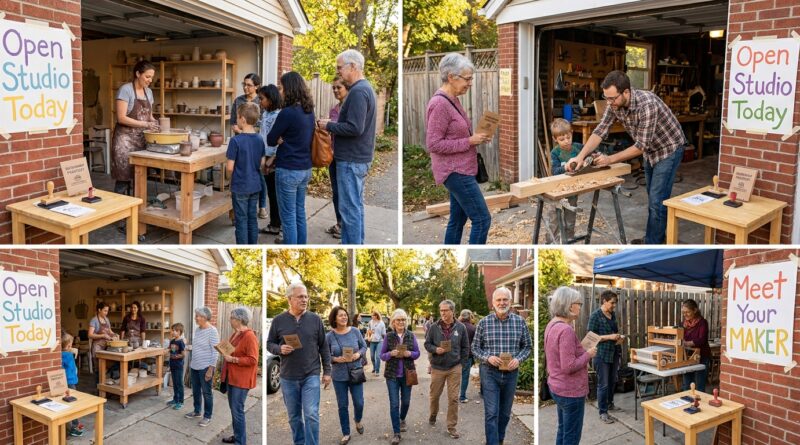
Residents get a simple passport, on paper or on their phone, with a map of participating workshops. On a set day or weekend, each maker opens their space for a short window. Visitors stop in, watch a demo, meet the owner, ask questions, and get a stamp or check-in mark.
After a certain number of visits, they unlock something small. Maybe a raffle entry. Maybe a free coffee from a nearby cafe. Maybe 10 percent off a future purchase from any participating shop.
The point is not the prize. The point is momentum. The passport gives people a reason to keep going after the first stop.
Why this works better than another pop-up market
People trust what they can see
When someone watches a leather bag being cut by hand or sees fresh loaves come out of a local oven, the price makes more sense. The skill feels real. The maker becomes a person, not just a logo.
It removes the pressure
A market booth often feels transactional. Walk up, glance, maybe buy, then move on. An open workshop visit feels more relaxed. You are there to look and learn first. Buying can come later.
It spreads foot traffic
Markets pack everyone into one place. A passport sends them across side streets, small industrial corners, and overlooked storefronts. That helps whole blocks, not just one event venue.
It creates repeat behavior
One market visit is an outing. A passport can become a monthly or seasonal routine. That matters if the goal is lasting local spending, not a single busy Saturday.
What makes a good hyper local open studio workshop passport
The best versions are simple enough that people understand them in ten seconds.
Keep the area tight
Do not scatter stops across an entire city at first. Pick one district, one main street, or one walkable cluster. If driving and parking become a headache, people drop out fast.
Mix different kinds of makers
You want visual variety. A bakery, a print shop, a ceramic studio, a bike repair bench, a florist, a spice blender. The more contrast, the more fun the route feels.
Set clear open hours
This is important. Visitors should know exactly when each workshop is open. “Anytime this weekend” sounds flexible, but usually creates confusion. “Saturday, 11 to 3” works better.
Offer tiny live moments
Not every stop needs a full class. A five-minute demo is enough. Show glazing. Show roasting. Show screen printing. Show tool sharpening. The live moment is what people remember.
Use a light reward
A passport should encourage discovery, not turn into a coupon circus. Keep the reward modest and fun.
How makers benefit, even if visitors do not buy that day
This is the part many small businesses miss. A workshop passport is not just about immediate sales.
It builds familiarity. And familiarity is often what leads to future orders, gift buying, referrals, class sign-ups, and custom work.
If someone visits a local soap maker in April, they may not buy on the spot. But when they need teacher gifts in June or holiday presents in December, that workshop is no longer abstract. They know where it is. They remember the owner. They remember the smell of the place and the care that went into the product.
That memory is powerful. Big online stores are convenient. They are not memorable.
How to start one without turning it into a giant civic project
This is where people get stuck. They think a good idea needs a committee, a logo package, a six-month planning cycle, and sponsorship decks.
It does not.
Start with 5 to 8 stops
That is enough to feel real, but not so many that the event becomes hard to manage.
Pick one recurring time
For example, the first Saturday of each month from 10 to 2. Consistency beats complexity.
Create one basic passport
A folded card is fine. A one-page printable is fine. A simple phone-friendly map is fine. Do not wait for perfect design.
Agree on visitor rules
Can people bring kids? Are pets allowed? Are photos okay? Are some areas off-limits for safety? Put that in plain language before the first event.
Make the route easy to follow
If the stops are hidden behind warehouses or inside old mill buildings, add signs. Better yet, put a bright poster in every window that says “Workshop Passport Stop.”
Safety matters more than charm
Open workshops sound cozy, but these are still working spaces. Some have hot surfaces, sharp tools, forklifts, food safety rules, or drying racks everywhere.
So keep the event visitor-friendly by design.
Use viewing zones
Mark where guests can stand. A taped line on the floor works.
Keep demos short and controlled
The goal is to let people see the process, not wander into the process.
Limit access where needed
Some makers should offer front-room demos only. That is perfectly fine. You do not need full factory tours to make this work.
Have one host if possible
If the maker is busy demonstrating, someone else can greet people, stamp passports, and answer basic questions.
How to make it feel welcoming, not salesy
The whole strength of this idea is that it lowers pressure. Protect that.
Do not force pitches. Do not trap visitors in long speeches. Do not make every stop about “limited time offers.”
Instead, encourage makers to do three things well.
Say what they make
Simple and clear. No jargon.
Show one interesting step
People love process.
Invite one easy next step
That might be browsing a shelf, joining an email list, booking a class, or coming back for a custom order later.
That is enough. If people feel comfortable, they come back.
Why this is especially useful right now
People are hungry for nearby experiences that feel real. Not expensive. Not overproduced. Just real.
They want to know what is made in their own town. They want stories they can tell their friends. They want to feel less like every purchase comes from a faceless warehouse somewhere far away.
A hyper local open studio workshop passport meets that mood perfectly. It gives residents a practical way to act on their good intentions instead of just saying they want to shop local more often.
Common mistakes to avoid
Making it too big too soon
If your first event includes 30 locations across three neighborhoods, you are building a logistics problem. Start tiny. Prove it works. Then grow.
Choosing awkward hours
Tuesday at 1 p.m. may fit the maker’s schedule, but not the public’s. Pick times regular people can actually attend.
Forgetting wayfinding
If guests cannot find the entrance, they will skip the stop and move on.
Overcomplicating rewards
Keep the passport fun, not bureaucratic. One clear completion goal is enough.
Treating it like a one-off stunt
The real value comes from repetition. A modest event that happens six times will do more than one huge launch that disappears.
What success looks like
Success is not only measured in same-day sales.
It also looks like this:
- Visitors asking when the next Make Day is
- Makers getting custom inquiries the following week
- People discovering streets and workshops they had never noticed before
- Local businesses cross-promoting each other naturally
- Residents starting to name favorite makers the same way they name favorite cafes
That is when you know the passport is doing its real job. It is changing local businesses from background scenery into part of neighborhood life.
At a Glance: Comparison
| Feature/Aspect | Details | Verdict |
|---|---|---|
| Traditional market booth | High visibility for one day, but limited space for process, story, and repeat visits | Good for quick exposure, weaker for long-term connection |
| Hyper local open studio workshop passport | Brings people into real production spaces with demos, conversation, and neighborhood discovery | Best for trust, memory, and future buying |
| Large citywide open-studio festival | Exciting and broad, but often harder to organize and less easy to repeat often | Great later. Not the easiest place to start |
Conclusion
Right now, there is real interest in neighborhood-first shopping and close-to-home experiences, but too many local efforts stop at markets and pop-ups. That is useful, but it only goes so far. A Workshop Passport moves people from browsing tables to walking into actual workspaces. It helps makers use their slower hours as discovery time, gives residents a clear reason to explore streets they usually drive past, and creates a format that a town or block can copy next month, not next year. More than anything, it makes local buying feel personal. When people meet the baker, the printer, the potter, or the repair tech face to face, trust builds faster. The leap from “that looks nice” to “I know where I’m buying next time” gets much shorter. And that is how local makers stop being abstract brands and start becoming what they really are, neighbors.