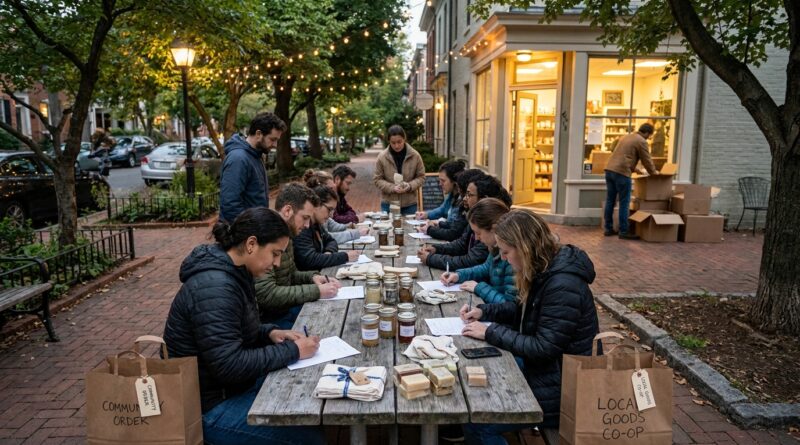
The Hyper-Local Buying Club: How Neighborhood Bulk Orders Quietly Turn Kitchen-Table Makers Into Viable Manufacturers
You have probably done this math in your head already. A $9 bar of local soap turns into a $17 purchase after shipping. A neighborhood baker sells out in ten minutes, then disappears for three weeks because they do not know how much to make next time. Buyers get annoyed. Makers play it safe. Everyone wants local to work, but the middle part keeps breaking.
That is where a hyper-local buying club starts to make real sense. The idea is simple. Neighbors pool orders for things already made nearby, then pick them up together at one place on one day. That cuts shipping, reduces wasted trips, and gives small makers a clearer picture of demand before they buy supplies or stay up late filling orders. If you have been wondering how to start a local buying club for neighborhood makers, the good news is that it does not need an app, a warehouse, or a business degree. It needs a small group, a regular schedule, and a few ground rules that keep things fair for both shoppers and sellers.
⚡ In a Hurry? Key Takeaways
- A local buying club works by collecting neighborhood orders first, then sending one combined order to nearby makers for pickup on a set day.
- Start small with 10 to 20 households, 3 to 5 makers, and one simple order form or group chat so nobody gets buried in admin.
- Use prepayment, pickup windows, and clear food safety and refund rules so the club saves money without creating chaos.
Why this works better than random one-off shopping
Most local makers are stuck in an awkward zone. They are too small for wholesale. Too busy for constant custom orders. Too invisible to compete with giant online shops. So they end up doing tiny batches and hoping enough people show up.
Buyers feel that instability too. One week there is fresh sourdough, candles, or printed cards. The next week, nothing. Then there is shipping. Even when the maker lives fifteen minutes away, the order still gets treated like a mini e-commerce transaction with packaging, delivery time, and extra cost.
A buying club smooths that out. Instead of twenty separate orders, there is one organized batch. That gives the maker a reason to make 40 soaps instead of 12, or 25 loaves instead of 8. Not factory scale. Just enough scale to make the work more efficient.
What a hyper-local buying club actually looks like
Forget the fancy mental picture. In real life, this often looks like a neighborhood email list, a WhatsApp group, a church hall pickup table, or a folding table in someone’s driveway on Saturday morning.
The basic setup
A simple club usually has four parts:
- A list of participating households
- A short menu of available goods from local makers
- A deadline for orders and payment
- A pickup spot and time
That is it. You do not need to build the next Instacart. You need a repeatable routine.
What people tend to buy
The best items are things people reorder, gift, or use often:
- Bread, pastries, tortillas, jams
- Soap, candles, lotion bars
- Coffee beans, spice blends, tea mixes
- Art prints, greeting cards, simple home goods
- Seasonal products like holiday boxes or school fundraiser bundles
Everyday products matter most. If the club only sells special treats, it becomes an occasional novelty. If it includes useful things, it can become part of household shopping.
How to start a local buying club for neighborhood makers
If you want the shortest answer, here it is. Start with one neighborhood, one pickup point, one order day each month, and a handful of makers people already trust.
Step 1: Find the first ten interested households
You do not need a giant audience. You need dependable people. Ten to twenty homes is enough to test whether there is real demand.
Ask simple questions:
- What local goods would you actually buy monthly?
- What price range feels reasonable?
- Would you prepay if pickup was easy?
- What pickup times work best?
The point is not to win a popularity contest. The point is to see what neighbors will consistently buy.
Step 2: Pick makers who can handle a repeat schedule
Look for people making good products now, not people with a dream and no process. Reliability matters more than ambition at the start.
Good early partners are makers who:
- Already sell at markets or through Instagram
- Know their unit costs
- Can produce in small batches on a schedule
- Are willing to set a minimum order quantity
Be honest with them. Tell them this is a pilot, not a miracle growth plan.
Step 3: Keep ordering painfully simple
This is where many good ideas die. Too many options. Too many last-minute edits. Too many payment methods.
Start with a plain system:
- Google Form or shared spreadsheet for orders
- Venmo, PayPal, or another simple payment method
- Order deadline every month, same day if possible
- One pickup window, such as Saturday 10 a.m. to noon
If a buyer misses the deadline, they wait until next time. If you bend the rules every week, the club becomes unpaid customer service.
Step 4: Set minimums before anyone starts baking or pouring wax
This is important. Makers need to know when an item is worth producing.
For example:
- Baker only runs croissants if 18 boxes are ordered
- Soap maker only pours a scent if 24 bars are pre-sold
- Printmaker only runs a design if 15 copies are reserved
That protects the maker from guessing wrong and protects the club from constant sell-outs.
Step 5: Choose pickup, not delivery, at first
Delivery sounds friendly. It is also a fast way to create a second job for whoever organizes the club.
One pickup spot keeps labor low and pricing sane. A porch, garage, community center, school lot, or local shop can work. The best pickup locations are easy to find, easy to park near, and covered if weather goes bad.
Why makers like this model
Small producers do not just need more customers. They need clearer signals. That is the real gift of a buying club.
When orders arrive in one planned batch, makers can buy supplies with more confidence, block out production time, and waste less packaging. They can also test new products in a lower-risk way. If twenty neighbors say yes to a new lotion bar scent or seeded rye loaf, that is better feedback than a few random likes online.
It is a little like what is happening with neighborhood beer. People are tired of polished “local” brands that feel distant and generic. The appeal is in something truly nearby and rooted in place. You can see a similar pattern in The Hyper-Local Taproom Shift: How Neighborhood Breweries Are Quietly Replacing Big Craft With Truly Backyard Beer, where local loyalty starts to matter more than broad reach.
How buyers save money without squeezing the maker
This part needs care. A buying club should reduce waste and overhead, not pressure small makers into race-to-the-bottom pricing.
Where the savings usually come from
- No individual shipping fees
- Less packaging per order
- More efficient production runs
- One pickup stop instead of many customer handoffs
That can mean better prices, larger bundle sizes, or a free extra item every few orders. Not every saving has to show up as a lower sticker price. Sometimes the value is better consistency and less hassle.
What not to do
Do not treat neighborhood makers like a giant warehouse club. If buyers start demanding deep discounts, endless substitutions, or instant refunds on handmade goods, the model breaks.
The healthier pitch is this: we can make local more affordable and practical by organizing demand better.
Common problems and how to avoid them
Problem: People say they want local, then forget to order
Use a schedule people can remember. First Monday order deadline. First Saturday pickup. Repetition beats reminders.
Problem: The organizer gets overwhelmed
Rotate jobs. One person manages forms. Another handles pickup day. Another does communication. If one neighbor becomes the entire system, burnout is coming.
Problem: Food safety gets fuzzy
If you include baked goods, canned goods, or prepared food, check local cottage food rules and labeling requirements. Be clear about allergens, storage, and pickup timing. Bread sitting in a hot car all afternoon is not a charming local experience.
Problem: Too many choices
Keep the menu tight. Three bread options are manageable. Fifteen are chaos. The same goes for soaps, candles, and prints.
Problem: Last-minute cancellations
Prepayment solves a lot. Make the refund policy clear before ordering opens. Handmade and made-to-order goods should not carry big cancellation risk for the maker.
Good tools for a very small club
You can run the first version with basic tools:
- Google Forms for collecting orders
- Google Sheets for tracking totals
- WhatsApp, Signal, or email for reminders
- Simple digital payments for prepaying
If the club grows, then look at storefront tools or lightweight commerce platforms. Early on, fancy software can create more work than it removes.
What success looks like after a few months
A good buying club does not need to become huge. In fact, huge may be the wrong goal.
Success looks more like this:
- Buyers know when orders open and what to expect
- Makers can count on a baseline number of sales
- Pickup day runs smoothly
- New makers can test products without betting too much money
- Neighborhood spending stays closer to home
If one soap maker moves from random 8-unit weeks to steady 30-unit monthly runs, that matters. If a baker can buy ingredients in smarter quantities because demand is less scattered, that matters too.
At a Glance: Comparison
| Feature/Aspect | Details | Verdict |
|---|---|---|
| Cost to buyers | Shared pickup cuts shipping and reduces packaging costs, though prices may still be higher than big-box goods. | Usually worth it for frequent-use local products. |
| Reliability for makers | Preorders and minimum quantities give clearer demand signals than markets or sporadic online drops. | One of the biggest benefits. |
| Effort to organize | Needs deadlines, payment tracking, pickup planning, and clear rules, especially with food items. | Manageable if you start small and stay simple. |
Conclusion
A hyper-local buying club is not some grand fix for every problem in local commerce. But it is a very practical one. It helps right now because budgets are tight, shipping fees keep creeping up, and plenty of people want to support local makers without paying boutique prices for basics they use every week. When neighbors pool demand for goods made nearby, small producers can plan slightly larger, more efficient runs without pretending to be a factory. Buyers get easier access, lower friction, and fewer surprise costs. Makers get steadier sales and a better shot at becoming viable manufacturers from a kitchen table, garage studio, or tiny workshop. Best of all, more of that money keeps moving through the same streets where people live. That is a small change with real weight.