From Click To Doorstep In 24 Hours: How Hyper‑Local 3D Printing Networks Are Quietly Replacing Big-Box Supply Chains
You order a tiny replacement part online. Then you wait a week, sometimes three. When it finally shows up, it is the wrong size, made from flimsy plastic, or already cracking at the edges. That is the quiet little misery of modern shopping. The part exists. Someone nearby could probably make it today. But most of us still default to a warehouse hundreds or thousands of miles away because that system feels normal.
Meanwhile, local makers sit a few blocks away with capable printers, real skills, and empty machine time. They watch cheap bulk imports and rushed “slop prints” train people to think all 3D printing is either junk or a hobby toy. It does not have to work that way. A local 3d printing network same day model can fill the gap between “I need this now” and “I guess I’ll order another disposable part online.” The trick is making neighborhood manufacturing feel simple, trustworthy, and boring in the best possible way. Click, confirm, print, deliver. Done.
⚡ In a Hurry? Key Takeaways
- A small, vetted local 3d printing network same day can replace many low-cost online part orders for homes, schools, and small businesses.
- Start with a narrow list of useful items like brackets, knobs, clips, covers, and appliance parts, then use shared standards for materials, pricing, and delivery.
- Do not print safety-critical parts without clear testing and limits. Trust comes from quality control, not speed alone.
Why this is starting to work now
For years, 3D printing was sold as a future where everyone would make everything at home. That was never the real win. Most people do not want to become printer operators any more than they want to become plumbers. They just want the part.
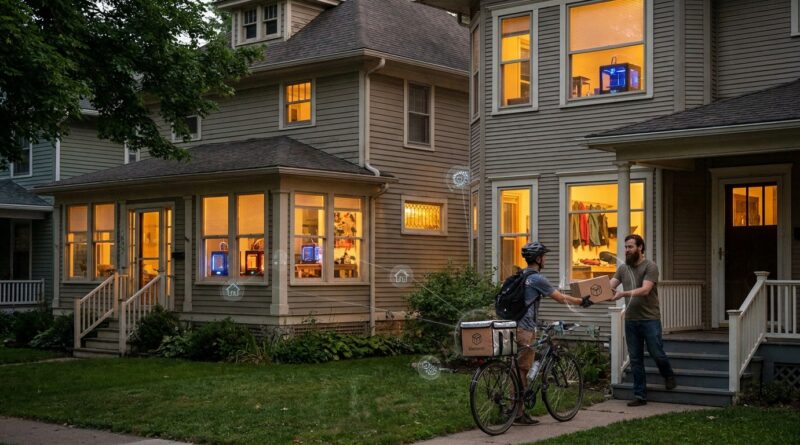
The smarter version is local access, not universal ownership. One neighbor has a tuned printer. Another knows CAD. A bike shop can handle pickup. A courier on an e-bike can do the last mile. Suddenly the supply chain is not global. It is three streets wide.
That is why hyper-local printing networks are quietly replacing parts of the big-box model. Not all of it. Nobody is printing a refrigerator by dinner. But for small plastic parts, repair pieces, organizers, mounts, shims, jigs, custom adapters, classroom tools, and short-run business needs, local wins on speed and often on fit.
What a neighborhood print grid actually looks like
Forget the sci-fi version. A working print grid is just a small group of reliable people using a simple process.
1. A shared intake point
This can be a basic website, a neighborhood forum form, a WhatsApp number, or a local shop counter. The customer uploads a file or a photo of the broken part, picks a material option, sees a clear price range, and chooses pickup or delivery.
2. A vetted list of printers
Not every machine in town should be on the list. The network needs people who can print repeatably, communicate clearly, and finish parts properly. It is less about owning an expensive machine and more about being dependable.
3. A short menu of approved materials
Too many choices confuse people. Start with a few.
- PLA for low-heat household items and prototypes
- PETG for tougher indoor parts and light outdoor use
- TPU for flexible bumpers, feet, seals, and grips
- ABS or ASA only if the network has the right setup and ventilation
4. A local delivery loop
Same-day only works if the handoff is easy. Many neighborhoods already have the bones of this. Bike couriers, local delivery drivers, shop staff, or even scheduled porch pickup windows can keep it moving.
What should be printed locally first
The fastest way to make this useful is to avoid novelty and start with annoying real-world problems.
Best early categories
- Appliance knobs, spacers, clips, and hinge covers
- Furniture feet, brackets, drawer guides, and cable clips
- Bike mounts, tool holders, shop jigs, and adapters
- Custom organizers for kitchens, classrooms, and workshops
- Retail fixtures and point-of-sale parts for small businesses
- Replacement pieces for toys, bins, and storage systems
These are the sweet spot because they are small, lightweight, often hard to find, and expensive to ship relative to their value. They also benefit from being adjusted on the fly. If a part needs to be two millimeters wider, a local printer can fix that before dinner. A big-box seller cannot.
Why local beats big-box for the right jobs
Big-box supply chains are great at moving millions of identical items. They are terrible at small weird needs. The odd bracket. The discontinued latch. The part nobody names correctly in a search bar.
A local 3d printing network same day setup flips that weakness into an advantage.
Faster feedback
If the first version is close but not perfect, the customer can send a photo, stop by, or bring the original item in person. That cuts down on the maddening cycle of ship, wait, test, return, repeat.
Better fit
Local makers can measure the actual object. They can account for wear, tolerances, and tiny real-world differences that a generic online listing never mentions.
Money stays nearby
Instead of sending $18 plus shipping to a random seller, you pay a neighbor, a local shop, or a student maker who will probably spend that money in the same ZIP code.
Repair becomes normal again
That may be the biggest shift. Once people know a local part can be made today, they stop throwing away useful things so quickly.
How to build trust so this does not feel like a hobby club
This is where many local maker efforts stumble. The printing skill may be there, but the customer experience is loose. Trust comes from routine.
Set quality rules
Every network should publish simple standards. Layer height ranges. Infill defaults. Approved wall thickness for common part types. Post-processing expectations. Labeling. Packaging. Turnaround windows.
Use part categories
Not everything should be accepted.
- Category A: low-risk household items
- Category B: fitted replacement parts with a test requirement
- Category C: cosmetic prototypes only
- Category D: no-go items such as load-bearing safety parts unless professionally engineered and tested
Offer a remake policy
A simple promise matters. If the part does not fit within the agreed measurements, one redesign and reprint is included. That sounds small, but it tells people this is a service, not a gamble.
Show examples with plain-English labels
Do not make customers guess what PETG means. Say “better for heat and tougher use.” Show photos of finished parts in real homes and shops. Make it familiar.
The step-by-step path for neighbors who want to start one
You do not need a giant platform or venture funding. You need a pilot that works.
Step 1: Pick a tight service area
Start with one neighborhood, one school district, or a five-mile radius. Same-day gets harder as geography gets sloppy.
Step 2: Recruit 3 to 5 proven makers
Look for different strengths. One person good at design. One who can do production runs. One with flexible materials. One with neat finishing. Keep the group small enough to manage.
Step 3: Create a standard order form
Collect the basics every time.
- What the part does
- Dimensions or photos
- Indoor or outdoor use
- Heat exposure
- Weight or load expectations
- Need-by time
- Pickup or delivery preference
Step 4: Set starter pricing that makes sense
This is where local makers often undercut themselves. Do not charge only for filament. Include machine time, setup, design work, failed prints, finishing, communication, and delivery.
A simple model works better than a mysterious one. For example, base fee plus material tier plus design time plus rush delivery if needed.
Step 5: Build a small parts library
After a few months, common requests repeat. Vacuum adapters. shelf clips. dishwasher rack caps. tool hooks. Save approved designs and measurements. Over time, same-day becomes even faster because the part is already half-solved.
Step 6: Partner with one local business
A hardware store, bike shop, appliance repair shop, or library can act as a trusted front door. Customers who would never message a random printer operator will happily order through a familiar counter.
The boring but important stuff: rules, zoning, and neighbor peace
Home-based making sounds simple until local rules get involved. Noise, deliveries, signage, ventilation, and customer pickups can all trigger questions. If you want a network to last, check this early. Our piece on When Zoning Laws Meet Home Workshops: How Neighborhood Rules Are Quietly Deciding The Future Of Hyper‑Local Making lays out why even careful makers can run into trouble if the local code treats production like a nuisance.
This does not mean “don’t do it.” It means pick setups that fit the area. Quiet machines. Scheduled pickups. Good filtration. Clear limits on traffic. The friendlier and more professional the operation feels, the easier it is to keep support from neighbors.
Where same-day local printing can go wrong
It is not magic. Some parts should not be rushed, and some should not be printed at all.
Wrong material choice
A part near heat, sun, moisture, or stress can fail if someone picks the cheapest option. Material choice is not upselling. It is the job.
Poor measurement
Bad dimensions lead to frustration. Good intake forms, photo guides, and local drop-off measurement options reduce mistakes.
Overselling strength
A printed replacement may look like the original injection-molded part, but that does not mean it behaves the same way. Be honest about limits.
Race-to-the-bottom pricing
If the network becomes just another place for bargain hunting, quality disappears fast. Good local systems compete on speed, fit, service, and trust. Not just price.
What this means for local shops and repair businesses
This is not only for hobbyists with printers in a spare room. Local repair shops can use print networks to cut wait times and save jobs that would otherwise stall on backordered parts. Schools can make classroom tools and replacement pieces without waiting for district procurement. Property managers can solve odd maintenance issues faster. Small retailers can get display parts or fixtures made without ordering 500 units from overseas.
That is the deeper story here. 3D printing works best when it stops pretending to replace factories and starts acting like neighborhood infrastructure. More like a copy shop for physical parts. More like a utility.
At a Glance: Comparison
| Feature/Aspect | Details | Verdict |
|---|---|---|
| Speed | Local print networks can quote, print, and deliver many small parts the same day. Big-box orders often take days or weeks, especially for odd replacement items. | Local wins when the part is small, urgent, and specific. |
| Fit and customization | A nearby maker can measure the actual item, tweak tolerances, and reprint quickly if needed. Mass-market inventory is generic by design. | Local is better for weird, discontinued, or custom parts. |
| Cost and reliability | Unit price may be higher than the cheapest online listing, but shipping delays, return hassle, and poor quality often make the “cheap” option more expensive in practice. | Local offers better real-world value when standards and quality checks are in place. |
Conclusion
The gap right now is not technology. It is habit. Most people still think “online store” before they think “skilled printer two blocks away.” That is why a small, vetted print grid matters. It gives neighbors a practical option that feels as easy as ordering takeout, but with better fit, faster turnaround, and money staying in the community. Done well, a local 3d printing network same day service turns printers from toys and side hustles into a shared neighborhood utility. It helps families repair instead of replace, gives local makers paid repeat work, and makes supply chains feel human again. That is not hype. That is just a smarter way to get a part by tonight.