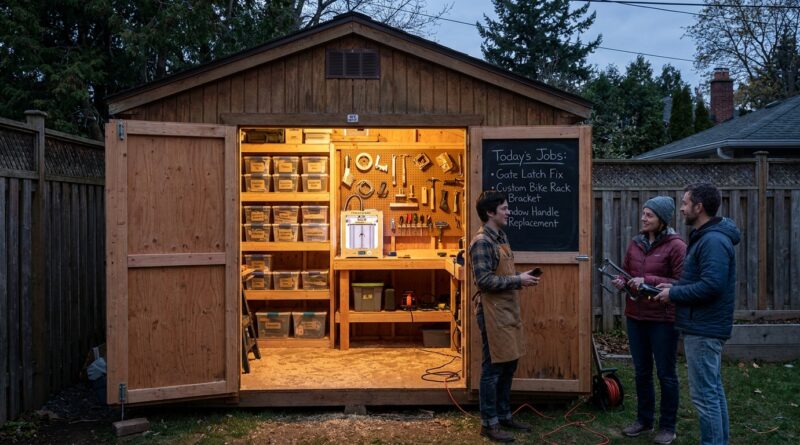
The Hyper-Local Utility Shed: How Backyard Fixers Are Quietly Becoming the Neighborhood’s Micro-Factory of Necessity
Your gate latch snaps on a Tuesday. The dishwasher needs a weird plastic clip. A stroller wheel spacer disappears. None of these are huge problems, until you try to fix them. Then you find out the part is backordered, the store does not carry it, and the online delivery window is somehow nine days for something smaller than a bottle cap. That is the gap a hyper local micro factory neighborhood repair shed can fill. Think of it as one backyard, garage, or side-yard workspace that handles the odd jobs modern retail ignores. A skilled neighbor with tools, a printer, basic materials, and a simple order system can become the block’s go-to source for quick repairs, custom brackets, replacement knobs, patched screens, sharpened blades, and small-batch fixes. It is not about replacing a hardware store. It is about solving the annoying, urgent, one-off problems that keep a house, bike, stroller, garden, or small business running.
⚡ In a Hurry? Key Takeaways
- A hyper-local utility shed is a small neighborhood workshop that handles fast repairs, custom parts, and useful one-off jobs that big retailers often cannot help with quickly.
- Start small with three services, a clear intake system, and simple pricing before buying more tools or taking on complex requests.
- Safety, liability, and realistic job limits matter. Focus on low-risk household fixes first, not gas, structural, or life-safety repairs.
Why this idea is catching on
People are tired of waiting. That is the simple truth.
Big stores are great when you need standard items in standard sizes. They are not great when you need one odd hinge, a custom shim, a mower pull-cord handle, or a replacement clip for a ten-year-old appliance. Those small problems pile up around any neighborhood.
At the same time, plenty of talented people already live nearby. Retired mechanics. Hobby woodworkers. People with sewing machines, 3D printers, soldering irons, laser cutters, and serious repair skills. The problem is not talent. The problem is connection.
A utility shed model gives that talent a simple lane. It turns random side jobs into a trusted, local service people can actually use.
What a hyper-local utility shed really is
Do not picture a giant fabrication shop.
Picture a clean, organized backyard shed, garage bay, or small detached workshop that specializes in practical fixes. It takes in common neighborhood repair needs, makes simple custom parts, and returns them fast. Usually within a day or two.
Typical jobs that fit the model
Good jobs are small, useful, and annoying enough that people will gladly pay to avoid the hassle.
- Replacement plastic knobs, clips, spacers, and brackets
- Screen repair for doors and windows
- Small wood patch pieces for fences, drawers, and garden beds
- Bike accessory mounts and simple hardware fixes
- Sharpening for garden tools and kitchen knives, if local rules allow
- Sewing patches for cushions, bags, and utility covers
- Lamp, cord, and low-risk small appliance fixes
- Custom labels, signs, hooks, organizers, and storage aids
Bad jobs are anything that can seriously injure someone if it fails. Electrical panel work. Structural repairs. Gas lines. Child car seat modifications. Anything life-safety related. Skip those.
Why neighbors use it instead of ordering online
Speed is the obvious reason. But it is not the only one.
People also want someone who can look at the broken thing and say, “Yes, I can make that,” or “No, here is the safer fix.” That human judgment matters. A photo on a product page cannot do that.
There is also less waste. Instead of replacing a whole item because one tab snapped off, a local maker can often repair the weak point for a fraction of the cost.
And the money stays nearby. That part is not just feel-good economics. It means the person doing the work has a reason to stay available, improve service, and build trust on the same few streets they serve.
How to set one up without turning it into chaos
This is where many talented fixers get stuck. They think they need a full business plan, expensive branding, and every tool under the sun. You do not.
1. Pick three core services
Start with the jobs you can do quickly and consistently.
A good starter mix might be:
- 3D-printed replacement parts
- Basic household hardware repair
- Screen, wood, or utility item patch jobs
If you sew, swap one of those for fabric repair. If you weld, focus on simple outdoor metal fixes that do not involve safety-critical loads.
2. Set clear job boundaries
This is important. Write down what you will not touch.
For example:
- No gas, roofing, or structural work
- No major appliance internals under warranty
- No child safety gear modifications
- No emergency electrical service
Boundaries protect your time and reduce your risk.
3. Create a dead-simple intake system
Most neighborhood makers do not fail because of the work. They fail because requests arrive in ten different ways. Texts, porch drop-offs, voice notes, door knocks during dinner.
Use one intake path. A simple form, a dedicated phone number, or even a QR code on a sign outside the shed works.
Ask for:
- Name and address
- Photo of item
- What broke
- When they need it
- Whether repair or replacement is preferred
4. Price for sanity, not guilt
One common mistake is undercharging because the customer is a neighbor. That only works for a week or two. After that, resentment sets in.
Use a simple structure:
- Minimum bench fee for diagnosis or small jobs
- Materials charged separately
- Rush fee for same-day work
- Clear quote approval before work starts
You are not charging friendship rates. You are charging fair, local, reliable rates.
5. Organize for repeat work
If the same fence latch breaks on five homes in one subdivision, that is not random. That is demand.
Keep a file of common dimensions, templates, and materials. Over time, your shed becomes faster because you are not starting from zero each time.
The best tools for a neighborhood repair shed
You do not need a fortune in equipment. You need a smart mix.
Core tools that pay for themselves quickly
- Basic hand tools and measuring tools
- Drill, driver, and bits
- Bench vise and clamps
- Small sander or grinder
- Soldering setup for light electronics work
- 3D printer for clips, covers, brackets, and adapters
- Label maker and storage bins for organization
Useful materials to keep on hand
- Common screws, nuts, washers, and anchors
- PLA, PETG, or other suitable print material
- Sheet plastic, rubber feet, weather stripping, and mesh
- Plywood offcuts, trim pieces, and utility lumber
- Adhesives, epoxies, and touch-up supplies
The rule is simple. Buy tools after demand proves you need them, not before.
How to find the first customers
You probably already know them.
The first wave of work usually comes from the most boring places. Neighborhood groups. HOA pages. School parent chats. Local bulletin boards. Small landlords. Older residents who need help with fiddly repairs. Gardeners. Cyclists. Pet owners.
Do not market yourself as a “maker studio.” Most people will not know what that means.
Say what you actually do. Fast local repairs. Custom small parts. Odd household fixes. One-off replacements.
If you want to see how this kind of shared production mindset can spread beyond single-family homes, The Hyper-Local Block-Wide Workshop: How Apartment Courtyards Are Quietly Turning Neighbors Into a Micro‑Factory Network shows the same idea playing out in denser spaces.
What makes this work financially
The hidden strength of a hyper local micro factory neighborhood repair shed is not huge margins on one job. It is steady demand from small, repeat pain points.
Think of the pattern:
- One repaired gate latch leads to two more on the block
- One replacement planter bracket turns into a set of six
- One custom hose holder leads to storage fixes for the whole garage
- One school fundraiser banner repair becomes regular small-batch community work
This is neighborhood economics. Small jobs compound because trust compounds.
Safety, legal, and neighbor-relations reality check
This part is less exciting, but it matters.
Check local rules first
Zoning, HOA rules, noise limits, and home business rules vary. Some places are relaxed. Others are picky about customer visits, signage, parking, or power tools.
Use waivers and receipts
Even a simple repair ticket helps. It should note what the item is, what was requested, what was done, and any limits on the repair. Keep records.
Carry basic insurance if this becomes regular
Once it stops being the occasional favor and starts becoming steady paid work, talk to an insurance agent. You do not need to guess here.
Control noise and mess
The fastest way to lose goodwill is to become “that loud shed.” Set work hours. Keep dust contained. Manage scrap. Limit pickup windows.
How to turn a hobby into reliable neighborhood income
The shift is mostly operational.
Many skilled people stay stuck because they treat each project as a special snowflake. That is fun for art. It is not great for neighborhood service.
Instead, build tiny systems:
- Standard intake form
- Standard estimate template
- Standard turnaround times
- Standard categories of work
- Standard shelf for completed pickups
That is how a side hobby starts acting like a practical service. You do not need to become a giant online seller shipping to strangers. In fact, many people are happier not doing that.
A local shed model offers something online marketplaces often cannot. Familiar customers. Fewer returns. Better communication. Lower shipping headaches. More repeat business.
Signs your neighborhood is ready for one
- People constantly ask where to find odd replacement parts
- Local repair shops are overloaded or too far away
- There are many older homes, bikes, tools, or garden setups that need upkeep
- You already know several residents with useful tools or repair skills
- Community groups are active and word travels fast
If that sounds familiar, you do not need a grand launch. Start with one person, one space, and a narrow menu of services.
At a Glance: Comparison
| Feature/Aspect | Details | Verdict |
|---|---|---|
| Speed of repair | Neighborhood shed jobs can often be assessed the same day and finished within 24 to 72 hours for common fixes. | Best option for urgent, awkward, one-off needs. |
| Cost and convenience | Prices may beat replacing the whole item, especially when shipping, delays, and wasted parts are factored in. | High value for practical household problems. |
| Risk and job scope | Works best for low-risk repairs, custom parts, and small fabrication. It should not replace licensed trade work. | Excellent niche service when boundaries are clear. |
Conclusion
A backyard utility shed will not fix every supply-chain headache, and it does not need to. Its real value is much more grounded than that. It solves the weird little problems that stall everyday life on a single street. When built carefully, a hyper-local utility shed helps residents get useful repairs in days instead of weeks, keeps spending close to home, and gives skilled makers a realistic path to steady neighborhood income. That is the quiet promise of the hyper local micro factory neighborhood repair shed. Not hype. Just practical help, a few blocks away, right when people need it.