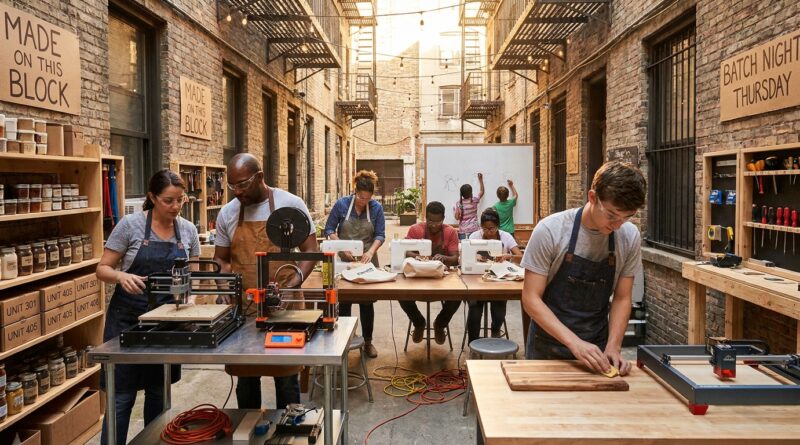
The Hyper-Local Block-Wide Workshop: How Apartment Courtyards Are Quietly Turning Neighbors Into a Micro‑Factory Network
You can feel the waste in almost every city block. One person has a sewing machine in a spare room. Another has a laser cutter in a garage. Someone else knows how to cast resin, repair bikes, print labels, solder electronics, or package handmade food. But they are all working alone, paying too much, and burning out quietly. Meanwhile, neighbors say they want to buy local, but the local stuff is hard to find, slow to make, or too expensive to get off the ground. That is why the hyper local micro factory neighborhood workshop idea matters. It takes underused courtyards, basements, fellowship halls, co-op rooms, and even shared laundry annexes, then turns them into a small production network. Not a giant factory. A practical one. A block-wide workshop where tools, storage, orders, and skills can be shared so local making stops feeling like a solo hustle and starts acting like a neighborhood engine.
⚡ In a Hurry? Key Takeaways
- A hyper local micro factory neighborhood workshop is a shared, small-scale production setup spread across one building or block, so neighbors can make, test, and sell goods together.
- Start small with one shared room, one booking sheet, and one safe category like sewing, bike repair, packaging, or light assembly before adding more tools.
- The big value is lower startup cost and less isolation, but only if you set clear rules for noise, insurance, ventilation, cleanup, and who is allowed to use what.
What this really is
Think of it like a neighborhood workshop with stations instead of one giant room full of expensive gear.
One apartment building might host a cutting table and packaging shelf in the basement. A nearby church might offer a room for classes and shared storage. A courtyard shed might handle bike repair or wood finishing. A resident with a commercial-grade sewing machine might run booked production hours two evenings a week. Another neighbor might do product photography and online order handling from home.
Together, that becomes a hyper local micro factory neighborhood workshop. Small runs. Shared tools. Real output.
The point is not to copy a full industrial plant. The point is to make the first 10 units, then 50, then 200, without forcing every maker to rent a storefront or buy every machine alone.
Why this idea is showing up now
Three pressures are hitting at once.
1. Costs are up
Rent is high. Equipment is high. Shipping is high. Even table space is high if you are selling at markets. Shared production spreads those costs around.
2. Supply chains still feel shaky
People noticed how fragile the system can be. If one missing part, delayed shipment, or overseas backlog can stall a whole product line, local substitutes start to look a lot smarter.
3. Makers are tired of doing everything alone
Making the product is only part of the job. There is sourcing, packing, posting, invoicing, customer service, cleanup, and repairs. Isolation makes all of that feel heavier.
A block-wide workshop softens those edges. It gives people help, rhythm, and a reason to stay in the game longer.
What can actually be made in a neighborhood micro-factory?
More than you might think, as long as you stay realistic about safety and zoning.
Good early categories
These are usually the easiest places to start:
- Textiles, mending, tailoring, tote bags, aprons, patches
- Bike repair and custom accessories
- Candle, soap, and small-batch body care, if local rules allow it
- Laser-cut signs, tags, and packaging inserts
- 3D-printed jigs, clips, organizers, and replacement parts
- Furniture touch-up and simple woodworking
- Assembly of kits, educational tools, and event supplies
- Screen printing and heat-transfer apparel
Best first products
The sweet spot is boring in a good way. Items with steady local demand, simple materials, and repeat buyers. Think school spirit gear, apartment welcome kits, café merch, repair parts, market displays, weather kits, and neighborhood-branded goods.
This is also where related ideas can branch out. For example, some neighborhoods are already tying local production to climate prep through projects like The Hyper-Local Climate Workshop: How Neighborhood Makers Are Quietly Turning Extreme Weather Into New Jobs And Gear. That makes a lot of sense. Once a block can organize tools and labor, it can start producing practical things people need fast.
How the block-wide model works in real life
The smartest versions do not begin with a giant funding round or a fancy maker space buildout.
They begin with a map.
Step 1: Find the hidden assets already on the block
Ask simple questions:
- Who already makes or repairs things?
- Who has underused tools?
- Which rooms sit empty most of the week?
- Who can teach?
- Who can handle scheduling, bookkeeping, or permits?
You are not just inventorying equipment. You are inventorying trust.
Step 2: Pick one lane
Do not try to support every craft at once. Start with one category that fits the space and the people. If your building has artists and designers, maybe it is print and packaging. If it has handy residents and a sheltered yard, maybe it is bike repair and outdoor gear assembly.
Step 3: Build a shared-use system
This can be very simple:
- A calendar for booking tools
- A basic usage fee or monthly membership
- Training before access
- A cleanup checklist
- A clear policy for breakage and consumables
The system matters as much as the tools do. A workshop with no rules turns into a storage closet with resentment.
Step 4: Pilot tiny production runs
This is where the model gets powerful. A resident should be able to test 20 units of a product, learn what went wrong, and adjust without risking a huge lease or loan.
That test-bed function is one of the biggest benefits. It lowers the cost of learning.
What spaces work best
You do not need a warehouse. You need usable, legal, manageable square footage.
Strong candidates
- Apartment courtyards with lockable side rooms
- Unused basement rec rooms
- Church annexes during weekday hours
- Co-op common rooms
- PTA or school support spaces after hours, if allowed
- Vacant storefront back rooms shared by several makers
What matters more than size
- Ventilation
- Electric load
- Noise control
- Fire safety
- Lockable storage
- Insurance compatibility
- Easy cleanup
If a room cannot be cleaned quickly or secured properly, it will become a problem fast.
The technology side, in plain English
This is where non-techies often get nervous. You do not need a complicated software stack.
Keep the digital layer light
Most early workshop networks can run on:
- A shared calendar
- A simple member directory
- A group chat
- A digital waiver form
- A spreadsheet for inventory and tool maintenance
- A basic online storefront or preorder form
That is enough to start. Fancy platforms can come later if the workshop proves demand.
Useful simple tools
Label printers, QR codes for tool instructions, digital booking links, and a shared order board can save a lot of arguments. The best tech is often the least flashy. It just reduces confusion.
Rules that keep the peace
This part is not glamorous, but it is what keeps the whole thing alive.
Write down the obvious stuff
- Who can join
- What training is required
- When quiet hours begin
- What equipment is off-limits without supervision
- How shared supplies are paid for
- What happens if something breaks
- What products are not allowed on site
Decide if this is a club, a co-op, or a business
Those are not the same thing. A casual neighbor club is easier to start, but a formal co-op or LLC may make more sense once money, liability, and outside sales grow.
It is worth getting a short conversation with a local attorney, small business center, or cooperative development group before the workshop gets too busy.
Safety is not optional
This is the part people skip when they are excited. Do not skip it.
Watch-outs
- Ventilation for fumes, dust, or heat tools
- Electrical safety for older buildings
- Fire extinguisher placement
- First aid kits
- Child access rules
- ADA access where possible
- Insurance for members and visitors
Some activities simply do not belong in a shared residential setting. Heavy chemical use, loud machining, and anything with serious combustion or contamination risk should be handled elsewhere. Better to be a little boring than shut down after one preventable incident.
How this helps local money stay local
Here is the part city leaders, landlords, and neighborhood groups should care about.
When one block can produce locally, more value stays nearby. Residents buy supplies from local shops. Makers hire neighbors for finishing, delivery, or admin help. Schools and community groups get nearby vendors for custom jobs. A person can grow from hobby stage to part-time income without leaving the neighborhood economy behind.
That changes the feel of a place. It makes production visible again.
Who should start the conversation this week
You do not need permission from an entire city to begin asking smart questions on one block.
Good starters include:
- Tenants associations
- Co-op boards
- Church committees
- PTAs
- Neighborhood business groups
- Community development nonprofits
The easiest first meeting agenda
- Name three underused spaces nearby.
- Name five people who already make or repair things.
- Pick one product category that fits the block.
- List the top safety concerns.
- Choose one small pilot for the next 30 days.
That is enough to move from vague enthusiasm to real scoping.
Common mistakes to avoid
Starting with expensive equipment
Buy demand first. Buy tools second.
Trying to please every maker
A focused workshop beats a messy all-purpose one.
Ignoring building politics
If the super, property manager, or board hates the idea, solve that early.
No one owns the boring tasks
Someone must handle cleaning, booking, keys, maintenance, and reminders.
Confusing activity with income
A busy workshop is nice. A workshop that helps people actually sell things is better.
At a Glance: Comparison
| Feature/Aspect | Details | Verdict |
|---|---|---|
| Startup cost | Shared tools, rooms, and storage can cut the cost far below renting a solo studio or storefront. | Big advantage for early-stage makers. |
| Ease of setup | Simple pilots are realistic, but zoning, insurance, noise, and safety rules must be sorted out early. | Very doable if started small and managed clearly. |
| Community impact | Reduces maker isolation, supports local buying, and creates a low-risk test bed for tiny production runs. | Strong long-term value for one block or building. |
Conclusion
The hyper local micro factory neighborhood workshop is not a fantasy project for urban planners. It is a practical answer to a very real frustration. Talented people already live on your block. Useful space already exists. What is missing is the bridge between isolated effort and shared production. Get that bridge right, and one courtyard, basement, church hall, or co-op room can start doing real work. This idea tackles three urgent problems at once: rising costs, fragile global supply chains, and lonely makers burning out. By helping one concrete block or building turn underused space into a shared micro-factory, you lower entry barriers for new artisans, keep more production dollars on the street where people live, and create a test bed where neighbors can pilot tiny production runs before they ever sign a lease. Best of all, this is something you can start scoping this week with your tenants group, church, PTA, or co-op board. If one block can make it work, the next block can copy it.