The Hyper-Local Taproom Economy: How Neighborhood Breweries Are Quietly Turning Fans Into Co‑Makers
People are worn out by fake local. You have seen it. A can covered in hand-drawn mountains, a made-up founder story, maybe some talk about small batches. Then you find out the beer is owned three states away, brewed in a giant plant, and shipped in like any other supermarket product. That disconnect is what many neighborhood drinkers are reacting to now. They do not just want “craft.” They want a place they actually know.
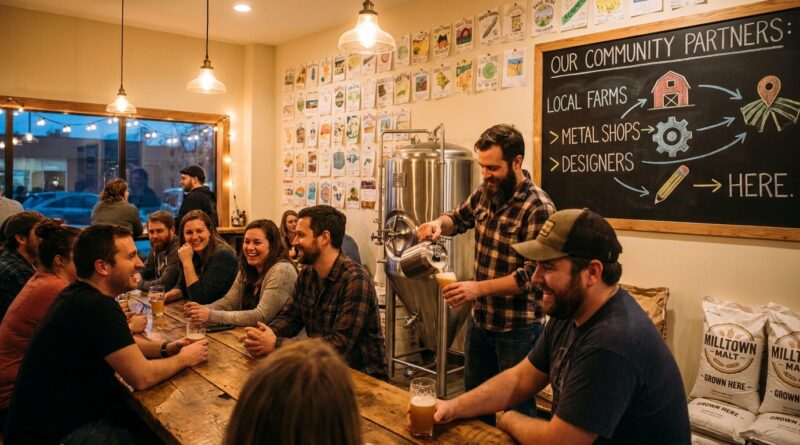
That is why the local craft brewery community economy matters more than it seems. A true neighborhood taproom is not just a place to grab a pint. It is a buyer from local farms, a customer for nearby printers, a showcase for area artists, and often a meeting spot where regulars shape what gets brewed next. Quietly, some of the smartest breweries are turning fans into co-makers. Not by handing them a brewing degree, but by letting them help choose ingredients, vote on seasonal releases, name beers, design labels, and build the culture that keeps money close to home.
⚡ In a Hurry? Key Takeaways
- Neighborhood taprooms win when they stop acting like small national brands and start acting like true local hubs.
- Ask where the ingredients, merch, glassware, art, and fabrication come from. Your spending can keep more money inside your ZIP code.
- The real value is not just fresher beer. It is a stronger local economy that big brands cannot copy.
Why people are drifting away from generic “craft” beer
“Craft” used to mean something specific to a lot of drinkers. Small. Independent. Close to the people buying it.
Now the shelves are crowded with brands that look personal but feel distant. The fonts are rustic. The labels are quirky. The story sounds heartfelt. But the experience is basically the same from city to city.
That is the pain point. People are not only buying flavor. They are buying connection. If the beer says “community” but the money leaves town right away, customers notice.
A neighborhood brewery has a built-in answer to that problem. It can be truly from the block, not just marketed that way.
What “co-maker” really means in a taproom
This is not about putting customers to work for free. It is about making regulars part of the product, the place, and the local supply chain.
Fans help shape the beer
Many taprooms already run small-batch voting nights, test pours, and seasonal feedback boards. A brewer asks, “Should the next pale ale use local peaches or local honey?” The crowd answers. That is not a gimmick if the brewery follows through.
When drinkers can taste a pilot batch, give notes, then come back a month later and see that idea on tap, they feel ownership. They helped make that beer happen.
Neighbors shape the look and feel
The person drawing the can art might live six blocks away. The woodworker making the tap handles may be a regular. The welder building the patio railing could be a parent from the same school district. That is co-making too.
The community becomes part of the story
Real local stories are not invented in a meeting room. They happen because the brewery softball team needs a sponsor, the farmer has extra basil, the screen printer has a new run of shirts, and the owner says yes to hosting a fundraiser on Thursday night.
The hidden engine behind a local taproom
Most people see the pint glass. They do not see the mini economy around it.
A strong neighborhood brewery can support:
- Local grain growers and hop farms
- Nearby bakers or food trucks using spent grain
- Printers making menus, coasters, labels, and posters
- Artists creating murals and can designs
- Metal fabricators building rails, signs, and bar fixtures
- Glass shops and merch suppliers
- Musicians, event hosts, and photographers
One taproom does not need to replace a whole regional economy to matter. It just needs to connect more of its spending to the people around it.
That is where the local craft brewery community economy gets interesting. The brewery is not a lone business. It is a connector.
Why this model works better than trying to “scale the brand”
Small breweries are under pressure. Big beverage companies can copy styles quickly. Grocery shelf space is expensive. Customers are tired of endless IPA clones.
Trying to beat giant brands at their own game is rough. Trying to be the best neighborhood living room is much more realistic.
A macro brand can copy a label style. It can buy ad space. It can sponsor a concert.
What it cannot fake well is the feeling that the stout on tap used coffee from the roaster across town, the trivia prizes were printed by a local shop, and the beer garden benches were built by somebody your cousin actually knows.
That kind of place becomes sticky. People return for more than the drink.
What drinkers should ask if they want to support the real thing
You do not need to interrogate the bartender. Just ask a few normal questions.
Ask where things come from
Try simple ones:
- Do you work with any local farms?
- Who did the art on this can?
- Are your shirts printed nearby?
- Do customers ever vote on new releases?
If the answers are specific, that is a good sign. Real local businesses usually love naming names because those relationships are part of their pride.
Watch the event calendar
A taproom that hosts neighborhood vendors, school fundraisers, local musicians, and civic groups is doing more than selling beer. It is building a place people use together.
This is similar to what is happening in The Hyper-Local Night Market: How Pop-Up Streets Are Becoming Open-Air Factories For Neighborhood Makers. The same basic idea applies. A social space becomes a sales channel, a showroom, and a meeting point for local production.
Buy the things with a local trail behind them
If there is a beer brewed with local fruit, a shirt printed by a shop in town, or glassware etched by a nearby maker, choose that one. You are not just buying an object. You are voting for the chain of people behind it.
How breweries can turn regulars into co-makers without making it feel cheesy
The best version of this is simple and honest.
Run ingredient partnerships people can understand
“This lager uses corn from 14 miles away” is better than a vague speech about terroir. Be plain. Be concrete.
Let customers help pick small-batch releases
Put three options on the board. Let members or regulars vote. Then actually brew the winner.
Credit the people involved
Name the illustrator. Name the farm. Name the metal shop that built the new outdoor bar. Most customers like seeing how a local business gets made.
Make the taproom a platform, not just a room
Invite neighborhood makers in. Host a mini market. Offer wall space to artists. Team up with a local bakery for stout pairings or with a bike shop for a weekend ride.
That is not mission drift. That is how a taproom becomes part of the neighborhood economy instead of just renting space inside it.
What this means for the neighborhood
When a brewery buys local more often, a few things happen at once.
Money circulates longer. Residents learn who makes what nearby. Small suppliers get repeat work. The brewery gains a story that does not need polishing because it is already true.
And maybe most important, the place becomes easier to care about.
That matters in a time when people feel detached from a lot of what they buy. A pint can seem small. But if that pint helps a farmer, a designer, a print shop, and a local venue all stay busier, it is doing more work than most consumer purchases do.
At a Glance: Comparison
| Feature/Aspect | Details | Verdict |
|---|---|---|
| Generic “craft” branding | Looks handmade, but often has weak ties to the actual neighborhood and little visible local spending. | Easy to sell once. Harder to build loyalty around. |
| Hyper-local taproom model | Uses local suppliers, hosts neighborhood events, and gives regulars a say in releases, art, and culture. | Stronger identity and harder for national brands to copy. |
| Community impact | Supports nearby farms, makers, printers, artists, and trades while keeping more dollars circulating locally. | Best long-term value for both residents and small breweries. |
Conclusion
Small taprooms are in a tough spot right now. They are squeezed by giant brands on one side and by plain old customer fatigue on the other. But they also have something bigger companies do not. They already serve as neighborhood living rooms. That is their edge. If residents and brewery owners connect the dots between local farms, printers, artists, metal shops, glass suppliers, and the people ordering the next round, a pint becomes more than a purchase. It becomes local circulation. It becomes proof that a business can still feel rooted in real streets and real faces. For drinkers, that means you can stop being a passive customer and become an intentional supporter. For breweries, it means building a story no national label can fake, because the neighborhood helped make it.