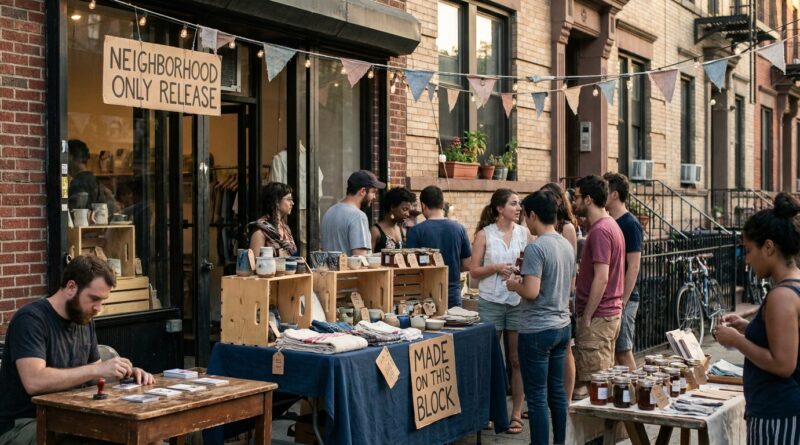
The Hyper-Local Loyalty Drop: How Neighborhood Limited Editions Are Quietly Turning Local Makers Into Community Icons
You know the feeling. You finally hear that the bakery down the block made a tiny run of chili crisp, or the ceramic studio teamed up with the corner florist for 25 hand-painted vases, and it is already gone. Sold out. Over before most neighbors even knew it existed. That is frustrating for shoppers, but it is also a missed chance for local makers. Big brands have trained us to chase the drop, the collab, the nostalgia reissue. Meanwhile, the people actually making things in your neighborhood often do not have the same marketing muscle, mailing lists, or hype machine. The good news is they do have something global brands cannot fake. Real place. Real relationships. Real local stories. Hyper local limited edition drops for neighborhood makers work best when they stay small, clear, and easy to join. Done right, they turn a simple product release into a community event, and a neighborhood business into the kind of local icon people proudly tell friends about.
⚡ In a Hurry? Key Takeaways
- Hyper local limited edition drops for neighborhood makers help small businesses create excitement and loyalty without needing a big brand budget.
- Start with one simple drop. A small batch, a local partner, a pickup window, and a clear story are often enough.
- Keep it fair and local-first. Clear timing, honest quantities, and easy pickup matter more than fake scarcity or online hype.
Why this works so well right now
People are tired of generic everything. They want a reason to care. They want a story they can repeat. They want to feel like they discovered something before the rest of the world did.
That is exactly why limited editions work. Not because the item is rare for the sake of it, but because it feels tied to a moment. Maybe it celebrates a street fair, a school fundraiser, a local sports win, or even just tomato season at the weekend market.
For neighborhood makers, that is a huge opening. You do not need a celebrity co-sign. You need context. A candle shop can make a scent inspired by a local park. A coffee roaster can do a 100-bag run with beans chosen for one block party weekend. A printmaker can release posters that only make sense to people who actually live there. That local detail is the point.
What a neighborhood drop actually looks like
Forget the giant sneaker launch model. A neighborhood drop should feel less like a corporate campaign and more like a local secret that is easy to share.
Keep the batch genuinely small
Think 20, 50, or 100 units. The number depends on what the maker can produce without stress. If the whole thing becomes exhausting, it stops being smart.
Tie it to a place or moment
The best drops have a reason to exist. Examples:
- A bookstore and baker release a pie-and-paperback bundle for the first cold weekend of fall.
- A neighborhood clothing maker prints tees featuring a beloved local sign before the building gets renovated.
- A soap maker does a one-weekend run using herbs from the community garden.
Make pickup part of the experience
Local pickup is not a drawback. It is part of the magic. A Saturday pickup window, a short line, a chat with the maker, maybe a sample table next door. That is how routine shopping becomes memory.
The five ingredients of a good hyper local drop
1. A clear story
If people have to work hard to understand why this item exists, the drop will feel random. The story should fit in one sentence. “Twenty hand-thrown mugs glazed in the colors of the old train station, available this Saturday only.” Simple wins.
2. A real local connection
This is where many big brands miss the mark. They imitate local style, but they are still borrowing it from a distance. Neighborhood makers have the real thing. Use local names with permission, old photos, street history, area ingredients, or a partnership with another nearby business.
3. A fair way to buy
People hate feeling tricked. If there are 40 units, say there are 40 units. If there is a one-per-person limit, say that too. If preorder opens at 8 a.m., do not quietly start at 7:40.
4. Simple promotion
You do not need a fancy ad campaign. You do need repetition. Put it on the shop window, Instagram, email, the neighborhood group chat, and a small printed card at the register. Most local buyers miss things because information is scattered, not because interest is low.
5. An easy next step
Every drop should build the list for the next one. That means email signups at pickup, a QR code by the till, or a receipt note saying, “Want first notice next time?” A sold-out drop that collects no contact info is a wasted chance.
What local makers should copy from big brands, and what they should skip
Big brands are good at creating anticipation. They tease products, count down to release day, and make buyers feel like they are part of a club. That part is useful.
What should you skip? Fake scarcity. Confusing release rules. Overpriced “exclusive” items with no real thought behind them. Neighborhood customers are not looking for manipulation. They are looking for meaning and a little excitement.
That is the sweet spot. Small enough to feel personal. Thoughtful enough to feel worth it.
A practical playbook for local shops and makers
Step 1: Pick one thing people already love
Do not start with your most complicated idea. Start with the item customers already ask about. A favorite loaf. A bestselling soap scent. A standard tote bag. Then make a neighborhood edition of that.
Step 2: Add one local twist
Not five. One. A block-specific design, a local ingredient, a collaboration, or packaging illustrated by a nearby artist.
Step 3: Set a quantity you can actually deliver
If you can comfortably make 35, do 35. There is no prize for overcommitting and disappointing everyone.
Step 4: Announce the drop in layers
Try this simple timeline:
- 7 days before: “Something local is coming.”
- 3 days before: Show the product and quantity.
- 1 day before: Post time, price, and pickup details.
- Drop day: Post once when live, once when low stock, once when sold out.
Step 5: Make the handoff feel good
A handwritten thank-you, a stamp card, a free sample, or a note naming the collaborator goes a long way. People remember how buying felt, not just what they bought.
How residents can stop missing out
This is not only on the makers. If you are the person always hearing about the good stuff too late, there are a few easy fixes.
- Follow your favorite local businesses directly, not just the neighborhood hashtag.
- Join their email list. Email is still where many small shops share first notice.
- Ask in person, “Do you ever do small runs or collabs?”
- Turn on post notifications for the two or three shops you truly care about.
- Support the early drops, even if they are not perfect yet. That is how local experiments survive.
Common mistakes that kill a good drop
Making it too complicated
If people need to decode a paragraph to figure out how to buy, many will give up.
Announcing it too late
A same-day post can work for a bakery. It is harder for higher-priced items or collaborations. Give people a little runway.
Going too broad too fast
Hyper local works because it feels close to home. If every drop immediately gets pushed to a national audience, neighbors stop feeling like insiders.
Forgetting the people who missed out
If 80 people wanted the item and 30 got it, you have a list of interested buyers for the next release. Offer a waitlist, a second run, or first access to a related item.
Why this matters beyond the product
This is bigger than a mug, tote, loaf, or hoodie. A good neighborhood drop gives people a reason to look around and notice who is making things nearby. It turns passive customers into regulars. It nudges money to stay closer to home. It helps one small business introduce another.
That is how a local coffee roaster becomes the place everyone brings out-of-town guests. That is how a small print shop ends up shaping the visual memory of a whole area. The object is small. The identity it builds is not.
At a Glance: Comparison
| Feature/Aspect | Details | Verdict |
|---|---|---|
| Scale | Small batches, local pickup, and community-first promotion keep the drop manageable and personal. | Best for makers who want loyalty, not just one-day sales. |
| Marketing effort | Requires a clear story, repeated simple posts, and a way to collect buyer contact info. | Very doable without a huge budget. |
| Long-term value | Builds local identity, repeat visits, word of mouth, and cross-promotion between nearby businesses. | Often more valuable than the short-term sellout itself. |
Conclusion
Limited editions are not just for giant brands with slick campaigns and global fan bases. Hyper local limited edition drops for neighborhood makers can do something better. They can make a shop feel woven into the daily life of a place. Right now brands are racing to win loyalty with limited editions, nostalgia-driven drops, and DIY creator collabs, but most of that energy still flows to global labels, not the shop around the corner. A practical neighborhood-only drop gives local makers a real way to use the same trend on their own terms, keep more money circulating nearby, and help residents feel like insiders in their own community instead of passive consumers of global hype. Start small. Keep it honest. Make it local enough that people feel proud they were there for it.