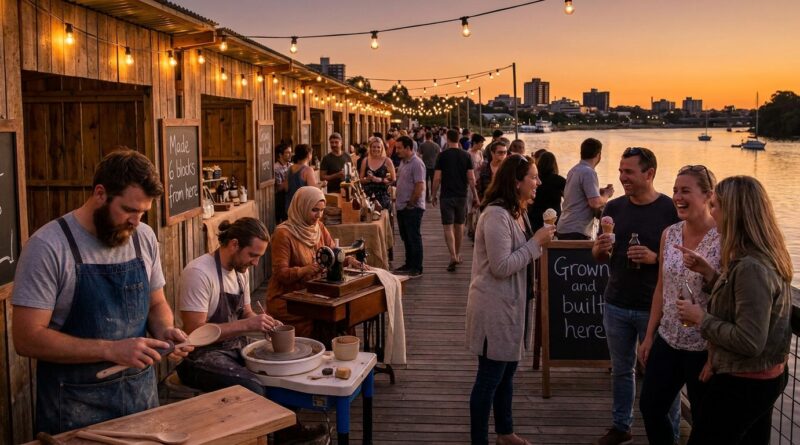
The Hyper-Local Night Market: How Pop-Up Streets Are Becoming Open-Air Factories For Neighborhood Makers
You can spend all week making candles, cutting leather, screen-printing shirts or turning bottle openers on a lathe, then watch your profit disappear in one night market booth fee, card charges, and a folding table that almost takes your back out. That frustration is real. A lot of hyper local night market makers love the energy, the music, the crowd, the photos. What they do not love is going home with a little cash, no customer list, and no clear idea whether the night helped the business at all.
The good news is that the best neighborhood night markets are starting to work less like old-school craft fairs and more like open-air factories for local demand. The smart move is not to treat the event as a one-night sales sprint. Treat it as a live showroom, a pre-order desk, a testing ground, and a place to meet nearby businesses that can become repeat buyers. Once you do that, the math changes. One folding table can lead to a month of orders, a standing pickup night, or a product collaboration that keeps paying after the string lights come down.
⚡ In a Hurry? Key Takeaways
- For hyper local night market makers, the real win is not one-night sales. It is repeat orders, pre-orders, and local partnerships.
- Bring a small, clear product line, a simple signup offer, and an easy way for people to order later by QR code or text.
- If markets are organized well, they help local money stay local and give residents a safer, more useful way to support neighborhood businesses they can actually meet.
Why night markets feel fun for shoppers and risky for makers
From the sidewalk, a night market looks easy. A few tents. Live music. Food trucks. Happy people carrying tote bags and iced drinks.
From behind the table, it is a different story.
You have setup time, parking trouble, weather stress, booth fees, inventory guesswork, and the weird pressure of trying to explain your whole business in about 15 seconds while someone is halfway to the dumpling stand.
That is why so many makers leave feeling like they rented a stage, not built a business.
The fix is to stop asking one event to do everything. A strong night market should do four jobs. It should help you sell a little now, collect interest for later, test products in public, and connect you with nearby businesses that already have local foot traffic.
The better model: a pop-up street as a micro-factory
When people hear “factory,” they picture a huge building. But for small makers, a factory can simply mean a place where demand gets made visible.
That is what a good market does. It shows you what neighbors want, what price they accept, what colors they pick up first, what sizes they ask for, and what custom requests keep coming up.
Instead of hauling 80 finished items and hoping they all fit the crowd, you can bring 15 samples and let the market create your next production run.
What that looks like in real life
A candle maker brings six scents, not twenty. The top two get restocked next week. The bottom two are retired.
A woodworker displays cutting boards with wood samples and takes paid pre-orders for engraving.
A bag maker shows one crossbody, one tote, and one wallet, then lets shoppers pick leather color for pickup next Friday.
A metalworker sells a few bottle openers on the spot and books a batch order for a local bar.
That is not a gamble. That is useful information turning into income.
How hyper local night market makers can make the numbers work
1. Shrink the table, grow the follow-up
The biggest mistake is overloading the booth. Too much inventory can make you look busy, but it also ties up cash and makes setup harder.
Try a tighter layout. Show your best sellers. Show one custom option. Show one “coming next week” item. Make it easy for people to understand what you make in five seconds.
Then give them a reason to stay in touch.
A simple sign works: “Join the Friday list for new drops and pickup times.”
Use a QR code that leads to one clean page. No maze. No long form. Name, email or phone, done.
2. Sell samples. Take pre-orders.
Pre-orders are where many makers finally breathe easier.
You do not need to guess how much to produce. You already know.
This works especially well for products that take labor, custom sizing, or expensive materials. It also helps if your market crowd is curious but not ready to carry a larger item home.
Examples:
- “Reserve tonight, pick up at next week’s market.”
- “Market special. Free monogram if you order here.”
- “Choose your scent now. Pickup on Thursday.”
- “Order a set tonight, local delivery Saturday.”
You turn browsing into commitment without needing to finish every piece before the market starts.
3. Use the booth as a live research station
Non-techy version. You are basically doing customer testing without fancy software.
Listen for repeated questions. They matter.
If ten people ask whether your soap comes unscented, that is not random. If families keep asking for smaller gift sizes, that is a clue. If shoppers love your display piece but say it is out of budget, maybe there is room for a mini version.
Keep a small notebook or phone note. Write down what people ask for in their own words. Those phrases often become your best product descriptions later.
The nearby vendor trick that too many makers miss
Some of the best money at a night market is not sitting in front of you. It is ten feet away.
The bakery needs branded merch. The bottle shop needs gift bundles. The coffee stand wants ceramic mugs, retail shelves, candle tie-ins, or stamped coasters. The neighborhood brewery may want custom flight boards, signs, or event giveaways.
This is where local ecosystems matter. The same small-business logic helping neighborhood beer spots survive can help makers too. If you have not read The Hyper‑Local Taproom: Why Tiny Neighborhood Breweries Are Surviving the Craft Beer Crash, it is a good reminder that people keep showing up for places that feel truly local and rooted in the block, not just the brand.
Easy collaboration ideas
Keep these simple. Nobody wants a 12-email project.
- Candle maker + brewery: limited scent poured in old beer bottles or branded jars.
- Leather worker + coffee stand: card sleeves or apron accessories for staff and sale.
- Woodworker + bakery: bread boards or pastry display risers.
- Printmaker + taco stand: poster nights, shirts, or neighborhood maps.
- Soap maker + inn or short-term rental host: locally made guest sets.
Do one small test batch first. Put a sign at both booths. Share each other’s Instagram posts, sure, but more important, collect actual orders and pickup names.
What market organizers can do to make makers come back
Not every problem sits on the vendor side. Some markets are badly set up.
If a town wants a healthy weekly market, it has to be useful, not just pretty in photos.
Good organizers do these basic things
- Keep booth fees realistic for very small sellers.
- Mix food, drink, and maker booths so shoppers do not skip entire rows.
- Offer decent lighting and clear signs.
- Build repeat dates, not random one-offs.
- Promote pickup and pre-order culture, not just impulse shopping.
- Provide seating so people stay longer.
- Give local businesses a reason to sponsor or cross-promote.
The best markets create a rhythm. Residents learn that Thursday night means they can grab dinner, pick up a custom candle, reserve a birthday gift, and chat with the person who made it.
That repeat habit matters more than one huge launch night.
A simple setup any maker can copy next week
Your booth should answer three questions fast
- What do you make?
- How much does it cost?
- How can I buy later?
Bring these basics
- One banner or sign with a readable name.
- Clear prices. No mystery.
- Three to eight best items, not the whole studio.
- One pre-order sheet or QR code.
- One market-only offer.
- A way to take cards, cash, and local pickup requests.
- Packaging with your name on it.
Your market-only offer can be very small
It does not have to crush your margin.
Try one of these:
- Free local pickup on pre-orders placed tonight.
- Free customization over a certain amount.
- Reserve now, pay balance at pickup.
- Two-item bundle with another vendor.
How to know if the market was worth it
Do not judge the night by cash sales alone.
That is the trap.
Instead, track five things:
- Total sales at the booth.
- Number of pre-orders taken.
- Number of new contact signups.
- Conversations with nearby vendors or stores.
- Products people touched, asked about, or requested most.
If you sold only $180 but booked $400 in pickups and landed a meeting with a cafe owner, that night did more than it looked like.
And if you sold a lot but collected zero contact info, you may still be starting from scratch next time.
Why this matters beyond one maker’s table
There is a bigger community story here.
When hyper local night market makers do well, the neighborhood does not just get a fun event. It gets a working local economy in miniature. Money changes hands close to home. Residents meet real producers, not just faceless shipping boxes. Kids see what making things for a living looks like. Nearby businesses find suppliers a few blocks away instead of three states over.
That is what makes these markets more than entertainment.
They become trust builders.
At a Glance: Comparison
| Feature/Aspect | Details | Verdict |
|---|---|---|
| One-night sales only | Maker brings full inventory, hopes for foot traffic, leaves with little customer data. | High effort, uneven payoff. |
| Pre-order and pickup model | Maker shows samples, takes custom orders, and fulfills based on real demand. | Best path to steadier revenue. |
| Vendor-to-vendor collaboration | Makers team up with breweries, cafes, bakeries, and shops for bundled or wholesale products. | Strong long-term local growth. |
Conclusion
Tonight, in places like Bremerton and small cities all over the country, boardwalk and street night markets are doing something worth paying attention to. They are putting local makers back in front of local people. That alone is powerful. But the real opportunity starts when makers stop treating these events like one more tiring craft fair and start using them as reliable micro-factories for pre-orders, product testing, pickup nights, and nearby business partnerships. For towns, the playbook is just as practical. Build a weekly market people can count on, keep fees sane, mix in food and drink, and make it easy for dollars to stay on the same streets where they are earned. When that happens, residents do not just buy a bag, a candle, or a machined bottle opener. They know who made it, and they come back.