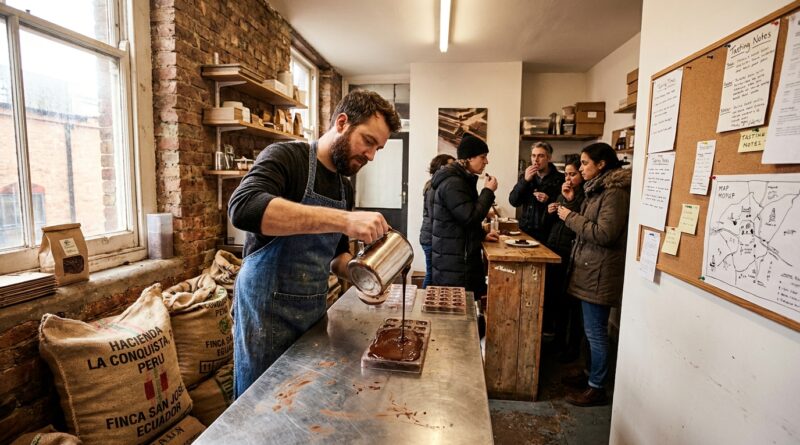
The Hyper‑Local Chocolate Boom: How Neighborhood Bean‑To‑Bar Makers Are Turning Cacao Into A Community Story
You are not imagining it. Chocolate has gotten more confusing. One week prices jump, the next week a favorite bar tastes a little different, and the wrapper still tells you almost nothing useful about where the cacao came from or who got paid along the way. That is exactly why neighborhood bean-to-bar makers are having a moment. They are giving people something the big global brands often do not. A clear story, a real place, and a product you can actually ask questions about. When you search for local bean to bar chocolate makers near me, you are not just hunting for a fancy treat. You are looking for proof. Proof that the beans were sourced with care, proof that the maker knows the farm or co-op, and proof that more of your money can stay in a local business instead of disappearing into a giant supply chain. Better yet, the chocolate often tastes more distinct because place shows up in flavor.
⚡ In a Hurry? Key Takeaways
- Local bean-to-bar chocolate makers usually offer more traceability, clearer sourcing, and more direct ties between flavor, farming, and price.
- Look for bars that name the farm, co-op, region, harvest details, and roasting location, not just vague terms like “premium” or “artisan.”
- A higher price can be worth it if the maker is transparent, pays fairly, and produces locally, but “small-batch” alone is not proof.
Why this chocolate boom feels different
Every few years, food gets a “craft” wave. Coffee had it. Bread had it. Beer definitely had it. Chocolate did too, but now the timing feels more urgent.
Cacao prices have been swinging hard. Weather problems, crop disease, political pressure, shipping issues, and fragile supply chains have all hit at once. Big manufacturers are reacting in ways most shoppers only notice later. Smaller bars. Tweaked recipes. More fillers. More sugar. Less clarity.
That opens the door for neighborhood makers who can say, very plainly, “Here are the beans. Here is the origin. Here is how we turned them into this bar.”
For a lot of buyers, that honesty matters as much as the taste.
What “bean-to-bar” actually means
Bean-to-bar means the chocolate maker starts with raw or fermented dried cacao beans and handles the major steps of production themselves. That usually includes sorting, roasting, cracking, winnowing, grinding, refining, conching, tempering, and molding.
That is different from a chocolatier who buys ready-made chocolate couverture and turns it into truffles, bonbons, or bars.
Both can be excellent. But if you want the closest connection between cacao origin and final flavor, bean-to-bar is the term to look for.
Why that matters to regular shoppers
It means the maker has more control. They can choose a bean from Belize, Ecuador, Ghana, Madagascar, or Peru because of its flavor, its farming story, or a relationship with a co-op. They can roast lightly to keep fruit notes, or darker to bring out fudge and toasted flavors.
In plain English, bean-to-bar chocolate lets you taste decisions, not just branding.
How neighborhood makers turn cacao into a community story
Here is the part many people miss. “Local” in chocolate does not usually mean local cacao, unless you live in one of the few places where cacao can grow. It means local making, local jobs, local retail, local events, and local trust.
A neighborhood chocolate maker often becomes part of the place around them. They host tastings. They partner with coffee shops. They supply gift stores. They do factory tours. They explain why one bar costs $11 and another costs $4. They turn a product with a global agricultural footprint into something people can understand up close.
That story has real value. It helps shoppers connect the dots between farming, food production, and what sustainable business can look like on a small scale.
What “community story” looks like in real life
It might be a maker printing the co-op name on every wrapper. It might be a bar themed around your city, sold at the weekend market. It might be a shop owner who can tell you exactly why they picked beans from one region over another. It might be a class where kids learn that chocolate comes from fruit, not factories.
That kind of local connection is hard for a global candy giant to fake.
Why your craft chocolate bar costs more
This is the question that comes up fast, especially when supermarket chocolate still looks cheaper at first glance.
The short answer is that small makers have higher costs and, in many cases, better ingredients.
Where the money goes
A local bean-to-bar maker may be paying more for quality beans, paying higher shipping costs per pound, producing on smaller equipment, using less filler, and packing bars in shorter runs. They also have rent, wages, energy bills, food safety compliance, and packaging costs that are spread over far fewer units than a multinational company can manage.
If they are doing things well, they may also be paying a premium above commodity cacao prices, especially when buying from named farms or reputable co-ops.
So yes, the price can sting. But the higher number is not always “fancy markup.” Often it reflects a more visible chain of labor and production.
What should make you suspicious
High price alone proves nothing. If the label is all mood and no facts, be careful. “Handcrafted,” “ethical,” and “small-batch” sound nice, but they do not tell you enough by themselves.
A good maker should be able to answer basic questions without getting defensive.
How to spot truly local craft chocolate
If you are trying to find local bean to bar chocolate makers near me, use a simple filter. Do they make the chocolate locally, or just brand it locally? There is a difference.
Green flags
Look for these signs:
- The company says it makes chocolate from cacao beans, not just from melted chocolate.
- The label lists a country, region, farm, or co-op.
- The maker explains sourcing on its website or in-store.
- The staff can describe flavor notes without sounding like they memorized ad copy.
- The business has a visible workshop, tasting room, factory space, or public production story.
- The bars mention harvest, percentage, or bean variety in a useful way.
Yellow flags
- “Artisan” is everywhere, but there is no mention of bean origin.
- The packaging focuses only on lifestyle images.
- The company avoids saying whether it makes chocolate from beans or buys finished chocolate.
- The word “local” refers only to the storefront, not the production process.
Red flags
- No sourcing details at all.
- No ingredient transparency.
- No answer when you ask where the beans came from.
- Claims about ethics with nothing specific behind them.
Questions worth asking at the counter
You do not need to turn a chocolate run into an interrogation. A couple of friendly questions can tell you a lot.
- Do you make this from cacao beans here, or do you buy finished chocolate?
- Where are the beans from?
- Do you work with a specific farm or co-op?
- What makes this bar different from your other origins?
- Why does this bar cost what it does?
A real maker usually enjoys answering these. Not because they are trying to impress you, but because the story is part of the work.
How flavor connects to place
This is one of the best reasons to try local bean-to-bar chocolate. It can make “origin” feel real instead of abstract.
Just as coffee and wine pick up traits from where they are grown, cacao can show strong regional character. One bar may taste bright and citrusy. Another may lean nutty and deep. Another might have berry, floral, or molasses notes.
You do not need a trained palate. You just need curiosity.
A beginner-friendly way to taste
Break off a small piece. Let it melt slowly. Notice what hits first. Is it bitter, fruity, creamy, earthy, toasted, tangy? Then compare a second bar from another origin. Suddenly the label is not just decoration. It means something.
That is where neighborhood makers shine. They often help people make that connection in a way that feels welcoming, not snobby.
How buying local keeps more value nearby
No, your local chocolate shop is not replacing global cacao farming. Cacao is still grown elsewhere in most cases. But local makers can keep more of the final spending in your region.
That includes local jobs, local retail rent, local taxes, local collaborations, and local food culture. A dollar spent there often ripples outward more visibly than a dollar spent on a multinational candy bar.
It also helps build resilience. If a town has more small specialty food makers, it has more local supply options, more direct customer relationships, and more businesses that can adapt quickly.
That does not solve every problem in chocolate. But it is a practical way for buyers to support a system they can actually see.
How to find the best local bean-to-bar chocolate makers near me
Start online, but do not stop there.
Best places to look
- Google Maps using “local bean to bar chocolate makers near me”
- Farmers markets and holiday markets
- Independent coffee shops and gourmet groceries
- Museum gift shops and local maker stores
- Food halls and small-batch dessert shops
- Instagram pages that show roasting, winnowing, or tempering in-house
What to check before visiting
- Does the website explain the bean-to-bar process?
- Can you see named origins or sourcing partners?
- Do reviews mention tours, tastings, or knowledgeable staff?
- Does the business talk about production, not just packaging?
What big brands are doing right now, and why people notice
Many large chocolate companies are under pressure. Raw material costs are up. Supply is unstable. Consumer expectations are shifting. That often leads to quiet recipe changes, smaller sizes, or more aggressive marketing around vague ethics claims.
None of that means every big brand is bad. Some large companies are making real sourcing efforts. But shoppers have gotten more alert. They can tell when the wrapper says a lot without saying much.
That is one reason smaller makers are gaining attention. They are easier to verify. You can visit them. Taste with them. Ask them things.
When local craft chocolate is worth it, and when it may not be
Let’s be honest. Not every occasion calls for a carefully sourced single-origin bar. Sometimes you need baking chocolate. Sometimes you want cheap candy for a movie night. That is fine.
Craft chocolate is worth the extra spend when you care about flavor, transparency, fairer sourcing, or supporting a neighborhood business. It may not be worth it if the maker cannot explain what makes the product different, or if the whole pitch is style over substance.
The goal is not guilt. It is being able to choose on purpose.
At a Glance: Comparison
| Feature/Aspect | Details | Verdict |
|---|---|---|
| Traceability | Local bean-to-bar makers often list farm, co-op, region, or origin details and can explain sourcing in person. | Usually much better than mass-market bars. |
| Price | Higher cost reflects small-scale production, ingredient quality, local labor, and often more careful sourcing. | Worth it if transparency and flavor are real. |
| Community Impact | More of your spend can support nearby jobs, retail spaces, tastings, events, and local food culture. | Strong reason to buy local when possible. |
Conclusion
Chocolate is not just a sweet now. It is a supply chain story, a farming story, and increasingly a local business story too. With prices swinging, recipes shifting, and trust in giant brands wearing thin, neighborhood bean-to-bar makers offer something refreshingly simple. They can show you where the beans came from, explain why the bar tastes the way it does, and tell you why it costs what it does. If you learn how to spot truly local craft chocolate, ask a couple of smart questions, and buy from makers who are open about sourcing, you turn an ordinary treat into support for real people. That could mean farmers abroad, makers in your town, and a more resilient local food scene close to home. In a market that often feels murky, that kind of clarity is worth savoring.