The Hyper-Local Supply Rescue: How Neighborhood Makers Are Quietly Becoming the Backup Plan When Global Manufacturing Stalls
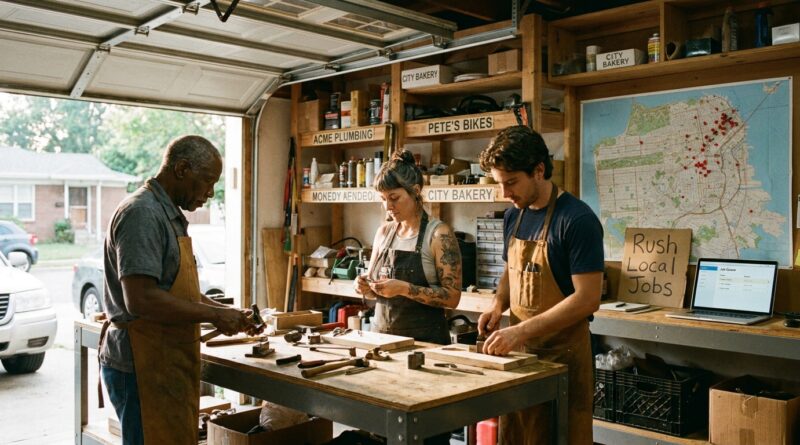
It is maddening when a customer needs one simple part, one sign bracket, one gasket, one custom spacer, and the answer from the usual supplier is, “Maybe in six weeks.” Small shops feel that pain from both sides. You need materials fast, but you also see local businesses scrambling because their normal overseas pipeline has gone soft. That chaos can feel like one more burden. It can also be a real opening. A neighborhood machine shop, print shop, woodworker, sewist, laser cutter, or 3D printing studio does not need to replace global manufacturing. It just needs to become the reliable backup for a short list of urgent items people cannot wait for. That is the sweet spot. If you can help nearby restaurants, contractors, schools, clinics, and repair techs get critical parts quickly, you stop being “a small local maker” and start being the local manufacturing supply chain backup they call first when the big system fails.
⚡ In a Hurry? Key Takeaways
- A hyper-local supply rescue works best when you focus on a few urgent, repeat-need items that nearby businesses cannot afford to wait weeks for.
- Start by asking local repair shops, contractors, and small businesses one question: “What part keeps holding up your work?” Then build your offer around those answers.
- Do not promise everything. Stick to safe materials, clear tolerances, and jobs you can actually deliver fast and consistently.
Why this keeps happening
Global supply chains are great at moving huge volumes cheaply. They are terrible at solving a small emergency on a Tuesday afternoon.
That is the gap local makers can fill.
When shipping slows down, customs gets messy, or a distant factory changes a product line, local businesses are left hanging. A restaurant cannot wait a month for a replacement bracket. A property manager cannot leave a broken latch unfixed because a container is late. A school maintenance team cannot pause for six weeks over a missing plastic clip.
That is where neighborhood production starts to matter. If you want a bigger picture view of how this is already happening, The Hyper-Local Porch Factory: How Tiny Neighborhood Micro‑Factories Are Quietly Rewiring Supply Chains Street By Street lays it out nicely. The short version is simple. Small local production is not trying to beat giant factories on price per unit. It wins on speed, access, trust, and problem-solving.
What a “supply rescue” business actually looks like
This is not about trying to make everything for everyone.
It is about becoming the go-to local manufacturing supply chain backup for a narrow set of parts, tools, or materials that are:
- Needed fast
- Simple or moderate to produce
- Frequently backordered
- Expensive when downtime is included
Good examples
- Replacement knobs, spacers, clips, feet, guards, and brackets
- Sign mounts and custom hardware plates
- Jigs, fixtures, and templates for local installers
- Small-batch packaging inserts or retail displays
- Sewn covers, straps, aprons, and protective sleeves
- Laser-cut gaskets, labels, panels, and shims
- Wood or plastic replacement parts for furniture and fixtures
Bad examples for most small shops
- Highly regulated medical or aviation parts without proper controls
- Complex electronics assemblies
- Anything requiring massive volume at razor-thin margins
- Safety-critical components when you cannot verify performance
The magic is in the middle. Not too simple to be a commodity. Not too complex to be risky.
Step one: Find the repeat pain, not the coolest project
This is where a lot of makers get stuck. They think about machines first. Customers think about headaches first.
So start there.
Make a list of 20 nearby businesses that fix, install, maintain, or replace things for a living. Call them. Visit them. Ask plain questions.
Questions worth asking
- What small part keeps delaying jobs?
- What item do you keep over-ordering because supply is unreliable?
- What breaks often but feels silly to wait weeks for?
- What would save you the most downtime if someone local stocked or made it?
- What do you currently buy overseas only because no one nearby offers it?
You are looking for patterns. If five people mention the same type of mount, cap, bracket, tray, or gasket, pay attention. That is your starting lane.
Step two: Pick three rescue products, not thirty
When demand is chaotic, simplicity keeps you sane.
Choose three product types you can produce reliably with your current tools, materials, and skills. Better to own one narrow category than be vaguely available for anything.
A good starter mix might be
- One fast-turn custom part
- One common stocked replacement item
- One service add-on like measurement, installation fit-check, or small-batch customization
Example: A local fabrication shop might offer replacement shelf brackets, custom wall mounting plates, and rush on-site measuring. A sewing shop might offer replacement straps, protective covers, and same-week repairs. A 3D print shop might offer obsolete plastic clips, machine guards, and reverse-engineering for broken parts.
Step three: Build for speed, not perfection theater
People calling for a supply rescue usually have one main question. “Can you get me something that works, quickly?”
That does not mean sloppy work. It means designing your process around fast quoting, clear approvals, and realistic lead times.
Create a simple rescue workflow
- Customer sends a photo, dimensions, and use case.
- You confirm material, fit, and expected load.
- You give a clear yes or no within a few hours.
- You quote rush and standard options.
- You produce one test piece first when needed.
- You document the finished spec so repeat orders are easy.
This last part matters more than people think. Every rescue job should become a future product, template, or saved file. The first order may be messy. The second should be easy.
Step four: Stock a tiny “ready now” shelf
You do not need a warehouse. You need a smart drawer cabinet.
If certain parts keep coming up, keep a handful on hand. This is where local businesses can beat large distant vendors. Immediate availability is often worth far more than the lowest possible unit cost.
What to stock
- Your top 5 repeat rescue items
- Raw materials for fast remakes
- Standard fasteners, adhesives, and finishing supplies
- Labeled samples for fitting and customer approval
Think of it like a neighborhood first-aid kit for supply problems.
Step five: Price the problem you solve, not just the material
This can feel awkward if you are used to competing with cheap imports.
But your buyer is not really comparing you to a low-cost factory 7,000 miles away. They are comparing you to downtime, missed jobs, upset customers, and crews standing around waiting.
If your part costs $40 locally and the imported version costs $8 but arrives in five weeks, the math is not close when a business is losing money every day.
A practical pricing structure
- Standard production price
- Rush fee for same-day or next-day work
- Setup or reverse-engineering fee for new items
- Repeat-order discount once the design is already documented
Keep it easy to understand. People in a pinch do not want a mystery invoice.
Step six: Market yourself as the backup plan
You do not need a giant branding campaign. You need to be remembered at the exact moment someone says, “Does anybody local make these?”
What to put on your website and social pages
- “Rush replacement parts made locally”
- “Short-run manufacturing for urgent business needs”
- “Custom brackets, clips, covers, and fixtures with fast local turnaround”
- “Local manufacturing supply chain backup for repairs and maintenance teams”
Use photos of real parts. Show before-and-after examples. Tell the story of what problem was fixed and how quickly.
Who to contact directly
- Property managers
- Restaurant groups
- School facilities teams
- HVAC and plumbing contractors
- Sign installers
- Maintenance companies
- Independent repair shops
These are the people who feel supply chain delays in their bones.
Step seven: Be honest about limits
This is what keeps a good local reputation from turning into a bad one.
If a part is safety-critical, say so. If a material is not suitable for heat, chemicals, food contact, or heavy loads, say so. If you can make a temporary stopgap but not a long-term certified replacement, say that clearly too.
Good phrases to use
- “We can make a temporary replacement for testing fit.”
- “This version is suitable for light-duty indoor use only.”
- “For safety-critical use, we recommend a certified OEM part.”
- “We can help bridge the gap until your original supplier catches up.”
That kind of honesty builds trust fast.
How buyers can support this locally
If you are on the buying side, not the maker side, the lesson is just as important.
Do not wait for a full-blown shortage to map local options. Build your backup network now. Find one or two neighborhood shops that can help with the little stuff before the little stuff becomes a big delay.
What buyers should do this month
- List the parts or supplies that most often stall work
- Identify which ones could be made, cut, sewn, printed, or assembled locally
- Place one small trial order with a nearby shop
- Save drawings, dimensions, and photos in a shared folder
- Ask local makers what information they need to help faster next time
This is how communities slowly rebuild practical resilience. Not with grand speeches. With a few solved problems and a phone number you trust.
At a Glance: Comparison
| Feature/Aspect | Details | Verdict |
|---|---|---|
| Speed | Local rescue shops can often quote and produce in hours or days, while overseas replacements may take weeks. | Best reason to go local for urgent needs. |
| Cost | Unit prices are usually higher locally, but downtime, missed installs, and idle staff often cost more than the part itself. | Local often wins when delays are expensive. |
| Reliability and fit | A nearby maker can measure, test, revise, and solve issues in person instead of sending emails across time zones. | Stronger for custom, odd, or repeat problem parts. |
Conclusion
People are tired of hearing that a basic item is stuck overseas somewhere. They are tired of anonymous sellers, fuzzy delivery windows, and support emails that go nowhere. That frustration is real, but it also points to a very practical opportunity. If you run a small shop or craft business, you do not need to become a giant factory to matter. You just need to become the trusted backup for a handful of critical items your neighbors cannot afford to wait on. And if you are a buyer, supporting that kind of local capacity keeps repair work close to home, shortens downtime, and sends money into real neighborhood workshops instead of far-away plants. Done right, a hyper-local supply rescue hub is not just a side hustle or a nice community idea. It is a concrete, useful way to build resilience one bracket, one cover, one clip, and one solved problem at a time.