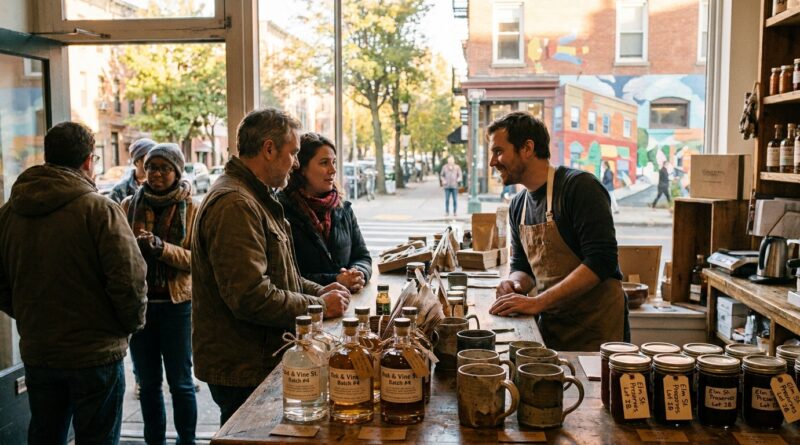
The Hyper-Local Limited Batch: How Neighborhood Makers Are Quietly Turning Tiny Drops Into Big-Deal Drops
You can feel the fatigue. Store shelves are full, but so much of it feels interchangeable. A candle from one city looks like a candle from every city. A jar of jam says “artisan,” but the story feels printed by committee. Meanwhile, a lot of local makers make the same mistake small businesses in tech make all the time. They try to grow too fast, too wide, and too neatly. That usually drains the fun, the quality, and the reason people cared in the first place. The better move is often smaller. Hyper local limited edition craft products are starting to win because they feel tied to a real block, a real season, and a real person. Tiny drops made with neighborhood ingredients, local references, or short-run designs can turn “small” into the whole point. For shoppers, that means better finds. For makers, it can mean less burnout and a stronger business.
⚡ In a Hurry? Key Takeaways
- Hyper local limited edition craft products stand out because they are specific, scarce, and rooted in a neighborhood story people can actually recognize.
- Makers do better when they start with tiny runs, clear themes, and one local hook instead of trying to serve everyone at once.
- Small-batch does not mean sloppy. Buyers should still check quality, freshness, and pickup details before they buy.
Why tiny neighborhood drops are suddenly a big deal
People are tired of polished sameness. They want something with fingerprints on it. Not literally, hopefully. But they do want signs that a product came from somewhere real.
That is why hyper local limited edition craft products are catching on. They answer two problems at once. Shoppers get something more personal. Makers get permission to stop pretending they are supposed to become a giant brand overnight.
A tiny drop can be a bakery box inspired by one street market. It can be soap made with herbs from a nearby urban farm. It can be a screen print that only makes sense if you know the corner store, bus route, or annual block party.
That specificity is not a weakness. It is the sale.
What makes a product “hyper local” instead of just “local”
“Local” can mean made somewhere in your state. “Hyper local” is much tighter. It usually points to a neighborhood, a district, or even one shared local ritual.
It uses a place people know
Maybe the product name references a park, a train stop, a school mascot, or a historic building. It gives nearby buyers a little jolt of recognition.
It uses ingredients or materials from nearby
Think rooftop honey, herbs from a community garden, flowers from an urban farm, reclaimed wood from local tear-downs, or fabric printed by a neighborhood artist.
It comes in a genuinely small run
Not “limited edition” with 20,000 units. More like 25 jars, 60 shirts, 12 loaves, or one weekend’s worth of ceramics. Scarcity matters here because the maker is not faking the size. The size is the method.
Why shoppers are responding to it
People like buying stories they can verify with their own eyes. If the label says the mint came from two blocks away, and you have actually walked by that garden, the product lands differently.
There is also a trust factor. Small neighborhood makers are often easier to talk to. You can ask what is in the product, when it was made, how long it lasts, and what makes this batch different from the last one.
And yes, there is some fun in the hunt. Tiny drops feel more like discovering something than clicking “add to cart” on the same item everyone else has.
Why makers burn out when they skip this lesson
A lot of makers assume success means scaling fast. More SKUs. More channels. Bigger shipping radius. More wholesale accounts. That sounds exciting until it turns a craft into logistics.
Then the maker spends more time on packaging, forecasting, and customer service than on making the thing people loved.
Staying small and specific can be the smarter business move. It keeps production realistic. It lowers waste. It builds anticipation. It lets the maker test ideas without betting the rent on a giant batch.
If you have seen small travel or transit towns do this well, the same pattern shows up there too. The Hyper-Local Train-Stop Workshop: How Rail-Town Makers Are Quietly Turning Tourist Layovers Into Craft Economies shows how a very specific local audience can become the whole engine for a craft economy.
A simple playbook for makers
1. Pick one neighborhood truth
Start with one thing your area is known for. A local fruit harvest. A famous mural alley. A waterfront fog. A Saturday market. A train line. A school rivalry. One truth is enough.
2. Build one batch around it
Do not launch a whole collection right away. Make one thing. Maybe one seasonal candle scent, one tote design, one hot sauce, one cookie box, or one floral syrup.
3. Keep the run small on purpose
Try 20 to 100 units, depending on the product. The goal is not to look exclusive for the sake of it. The goal is to stay in control of quality and avoid ending up with extra inventory sitting in your hallway.
4. Tell the local story simply
You do not need brand poetry. Just explain what makes this batch tied to the neighborhood. Use plain language. “Made with basil from Oak Street Garden” works. “Capturing the essence of urban vibrancy” does not.
5. Sell where the story makes sense
Farmer’s markets, neighborhood coffee shops, pickup lockers, local newsletters, school fundraisers, and small retail partners all work better than trying to be everywhere at once.
6. Make pickup part of the experience
If buyers pick up at the workshop, farm stand, or corner shop, the product gets even more local. It also cuts shipping cost and packaging waste.
7. Leave room to stop
Not every batch has to become a permanent item. Some of the charm comes from knowing it was for this month, this block, this season. Done is fine.
A simple playbook for shoppers
Look for receipts, not just vibes
Ask where ingredients came from. Ask how many were made. Ask when the batch was produced. Real makers usually answer clearly.
Follow neighborhood channels
The best drops often sell through local Instagram accounts, community boards, email lists, and market calendars before they ever hit a website.
Buy the thing with a real place attached to it
If one option says “small batch” and another says “made with peaches from the south lot orchard, bottled this Thursday,” you already know which one is more rooted.
Support repeatable smallness
Do not pressure every maker to expand. Sometimes the best support is buying consistently, preordering, and respecting that a batch sold out because it was supposed to be small.
What to watch out for
Not every “limited drop” is meaningful. Some brands use scarcity like a costume.
Fake scarcity
If a product is always “almost gone” but somehow restocks every day, that is a marketing trick, not a micro-batch.
Weak quality control
Small batch should still be clean, safe, labeled properly, and made with care. Food items should include dates and ingredient details. Skin products should list what is inside. Handmade is not an excuse to be vague.
Story doing all the work
A cute neighborhood reference is nice, but the product still has to be good. A local pun cannot save a bad candle or stale pastry.
How this helps a whole neighborhood
When people buy hyper local limited edition craft products, more money stays close to home. Nearby suppliers get work. Small storefronts get foot traffic. Urban farms get attention. Customers build habits around local buying instead of treating it like a once-a-year festival activity.
That matters more than it sounds. One tiny weekly purchase from a neighborhood maker can do more for a local economy than a lot of people realize.
At a Glance: Comparison
| Feature/Aspect | Details | Verdict |
|---|---|---|
| Neighborhood specificity | Uses a real local story, place name, ingredient, or community reference people nearby can recognize. | Best signal that the product is truly hyper local |
| Batch size | Short production runs help makers keep quality high and avoid overextending themselves. | Small is a strength, not a flaw |
| Buyer value | Shoppers get better stories, fresher goods, and a clearer sense of where their money goes. | Worth the extra effort over generic mass-produced goods |
Conclusion
The quiet win here is that nobody has to pretend small is a temporary stage anymore. Right now there is a real surge of craft brands and urban farms using neighborhood ingredients, local stories, and tiny production runs to stand out in a crowded market. That gives makers a healthier way to build, and it gives shoppers a simple way to buy with intention. If you are creating, start with one honest batch and one local truth. If you are buying, look for the products that could only come from your area. That is how money stays in the neighborhood, craftsmanship gets rewarded, and choosing local becomes something you can do every week, not just when a holiday market rolls around.