The Hyper-Local Factory Tour: How Neighborhood Workshops Are Quietly Turning Curious Visitors Into Loyal Customers
People are tired of buying from brands that feel like black boxes. You click, a box shows up, and you still have no idea who made it, where it came from, or whether your money helped anyone nearby. That frustration is real. It is also a huge opening for small makers. Hyper local factory tours give neighborhood workshops, food producers, studios, and small manufacturers a simple way to turn curiosity into trust. When people can walk in, smell the wood, hear the machines, ask questions, and meet the owner, the product stops being just a product. It becomes a story they want to support. The surprise is that these tours do not need to look like a giant brewery visit or a slick corporate visitor center. A safe, well-planned 20 minute tour of a bakery, ceramics studio, roasting space, or repair shop can do the job. It helps people feel connected, and connected customers come back.
⚡ In a Hurry? Key Takeaways
- Hyper local factory tours work because people trust what they can see, and that trust often leads to repeat sales.
- Start small with short, scheduled tours that fit your real workspace, not a polished fantasy version of it.
- Safety matters. Clear walking paths, simple rules, and limited group sizes protect visitors and your business.
Why hyper local factory tours matter right now
Shopping has gotten weirdly distant. Even when something says “local,” customers often cannot tell what that really means. Was it designed here, assembled somewhere else, or just marketed with a cozy neighborhood vibe?
That gap creates doubt. And doubt kills loyalty.
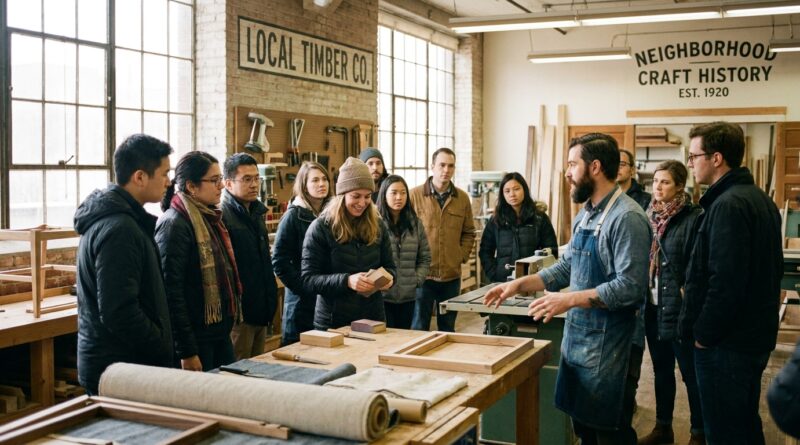
Hyper local factory tours fix that problem in a very human way. They let people see the process with their own eyes. They meet the person roasting the coffee, pouring the candles, stitching the bags, or cutting the metal parts. That experience answers questions that a label never can.
It also gives visitors something they are already hunting for. Not more stuff. A real experience.
What counts as a “factory tour” for a small maker?
The word “factory” scares people off. It sounds huge, expensive, and industrial. But for neighborhood businesses, a factory tour can be much simpler.
It might be:
- A 15 minute walkthrough of a small chocolate workshop
- A behind the scenes look at a print shop before the front counter opens
- A guided visit through a furniture maker’s studio
- A roasting demo in a coffee production space
- A batch day peek inside a soap or candle workshop
The point is not size. The point is access.
People do not need perfection
They need honesty. A clean, safe, working space is enough. In fact, a slightly scrappy workshop often feels more believable than something overly polished. Visitors want to see the real thing. Tools on the bench. Materials stacked on shelves. A person explaining why one step takes longer than most people think.
Why visitors turn into loyal customers
Once people see how something is made, the price makes more sense. The product feels less interchangeable. That is the shift small makers need.
Think about what happens on a tour:
- Customers learn what makes the product different
- They connect a face to the brand
- They remember the smell, sound, and feel of the place
- They tell friends about it later
That is not just marketing. That is memory.
And memory drives repeat business better than a coupon code.
How small businesses can start without making it a huge project
This is where many neighborhood makers freeze up. They assume tours need insurance upgrades, scripted presentations, new signs, and a fancy guest area. Some planning is needed, yes. But you can start much smaller than that.
1. Pick one safe route
Do not try to show everything. Pick a short path through the space that avoids hazards, tight corners, and messy storage zones. Visitors do not need full access. They need a good view and a clear story.
2. Keep the tour short
Twenty minutes is plenty. Thirty, max. Short tours are easier to run, easier to schedule, and easier for visitors to say yes to.
3. Focus on three moments
A good tour does not need twenty stops. It needs three:
- Where the materials come in
- Where the work happens
- Where the finished product is checked, packed, or displayed
That structure helps people understand the full journey quickly.
4. End where people can buy
This sounds obvious, but many makers miss it. The tour should finish near a small retail shelf, tasting table, booking desk, or order form. If people feel inspired, let them act on it right away.
What makes a tour feel special instead of awkward
The best hyper local factory tours feel personal, not corporate. Visitors are not expecting a theme park ride. They want to feel welcomed and let in on something real.
Tell the origin story simply
Skip the buzzwords. Say why the business started. Maybe you got tired of poor quality imports. Maybe the family recipe mattered. Maybe you wanted to make repairable goods instead of disposable ones. People remember simple motives.
Show one surprising detail
Every maker has one thing that makes people stop and say, “Wait, really?” It could be how long tempering chocolate takes, how many test prints get tossed, or how much hand sanding goes into one chair. That detail sticks.
For food makers especially, this works beautifully. If you want proof, look at The Hyper‑Local Chocolate Boom: How Neighborhood Bean‑To‑Bar Makers Are Turning Cacao Into A Community Story. It shows how process, sourcing, and neighborhood identity can turn a simple product into something people care about deeply.
Let visitors ask dumb questions
They are not dumb, of course. But people worry about asking basic things. Give them permission. Questions like “Why is this part done by hand?” or “What makes one batch different from another?” are exactly what create connection.
The business upside is bigger than ticket sales
Yes, you can charge for tours. But that is often the smallest part of the payoff.
A well-run tour can lead to:
- Higher average purchase size after the visit
- More repeat customers
- Word of mouth referrals
- School, community, or corporate group bookings
- Wholesale interest from local shops and cafes
- Collaboration ideas with nearby makers
That last one matters a lot. When one workshop opens its doors, others often see the opportunity too. Suddenly a neighborhood can package a Saturday route: coffee roaster, chocolate maker, ceramic studio, and bike repair shop. That is not just a tour. That is local economic glue.
Common worries, and the plain-English answer to each one
“Our space is too small.”
Small is fine. Limit the group to six or eight people. Small groups often feel more exclusive and personal anyway.
“Our process is too messy.”
Messy can be good. Unsafe is not. Clean up hazards, not all signs of real work.
“We are too busy to host tours.”
Then schedule them at one fixed time per week or month. Predictability beats constant availability.
“We are not good speakers.”
Visitors do not need a performer. They need someone genuine. A simple outline on a clipboard is enough if it helps.
“People will copy our ideas.”
Show the parts of the process you are comfortable sharing. You do not need to reveal trade secrets to build trust.
Safety and logistics matter more than charm
A friendly tour is great. A safe tour is non-negotiable.
Basic safety checklist
- Mark where visitors can and cannot walk
- Keep cords, spills, and loose materials out of the route
- Provide eye or hair protection if needed
- Post simple rules at the start
- Keep group sizes small
- Check insurance and local requirements before launching
You do not need to make the place feel scary. Just clear. People are comfortable following rules when they understand them.
How to promote hyper local factory tours without sounding cheesy
The invitation should feel specific and grounded. Avoid big promises. Just tell people what they will actually see.
Good examples:
- See how our ceramics are glazed and fired, then shop seconds and one-offs
- Take a 20 minute Saturday tour of our roasting room and taste the difference between batches
- Walk through our workshop, meet the makers, and see how each bag is cut and stitched
Post photos of the real space. Mention the group size. Mention how long it lasts. Mention whether visitors can sample, shop, or ask questions at the end. Specific beats clever every time.
At a Glance: Comparison
| Feature/Aspect | Details | Verdict |
|---|---|---|
| Customer trust | Visitors can see the process, ask questions, and meet the people behind the product. | Strong win for loyalty and repeat business. |
| Setup effort | Requires a safe route, clear timing, simple script, and basic promotion, but not a huge budget. | Very manageable if started small. |
| Revenue impact | Can lead to direct sales, bigger baskets, group bookings, wholesale leads, and local partnerships. | Often worth more than the tour ticket itself. |
Conclusion
Hyper local factory tours are not just for giant brands with tasting rooms and gift shops. They are one of the simplest ways neighborhood makers can show their value in a world full of faceless products. When people see how things are made, they trust the work more. They remember it. They talk about it. This helps the community today because visitors are already searching for authentic, local experiences instead of passive shopping, and hyper-local “factory tours” turn that demand directly into revenue and loyalty for neighborhood makers. A single well-run tour can introduce dozens of residents to the makers on their own block, create new wholesale and collaboration leads, and keep more spending anchored in the local economy at a time when big-box and fast-delivery giants keep pulling people away from Main Street.