The Hyper-Local Repair Table: How Neighborhood Fixers Are Quietly Beating Throwaway Culture One Broken Thing At A Time
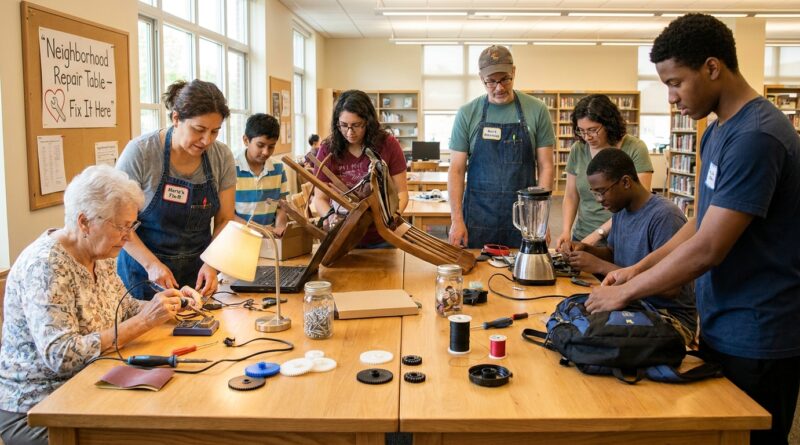
You feel it the moment a toaster stops heating, a lamp switch gives out, or a zipper fails on a winter coat. The answer is almost always the same. Just replace it. That advice gets old fast, especially when prices are up, shipping takes forever, and the “new” version often feels cheaper than the thing you already own. People are not being stubborn when they want to repair something. They are being practical. That is why the hyper local repair economy is getting real traction, one folding table at a time. A neighborhood repair table is exactly what it sounds like. A recurring spot at a library, market, church hall, sidewalk, or community center where residents bring one broken item and a local fixer helps them diagnose, patch, stitch, solder, tighten, or rebuild it. It is small-scale, visible, and surprisingly powerful. It saves money now, cuts waste now, and rebuilds trust in local skill right in front of you.
⚡ In a Hurry? Key Takeaways
- A neighborhood repair table is a simple, recurring place where local fixers help residents repair everyday items instead of replacing them.
- Start small. Bring one item, ask what failed, and learn one basic repair skill you can use again.
- It saves money and reduces waste, but it also needs common-sense safety rules for electronics, batteries, gas appliances, and structural damage.
Why this idea is catching on now
The throwaway habit used to seem convenient. Now it often feels expensive and a little insulting. You know the drill. A plastic latch breaks. A tiny power jack loosens. A chair leg wobbles. The object is 95 percent fine, but one weak point turns the whole thing into “trash.”
That is where the hyper local repair economy steps in. It does not wait for giant brands to improve quality. It works around them. Local fixers, bike mechanics, sewists, retired electricians, woodworkers, phone repair techs, and handy neighbors share knowledge face to face. No call center. No shipping label. No guessing.
The best part is that this is not an abstract campaign about sustainability. It is practical relief. You keep using the thing you already paid for. You meet someone nearby who knows how it works. You learn enough to handle the next small failure yourself.
What a repair table actually looks like
Picture a few folding tables under a canopy at a farmers market, or inside a library meeting room on Saturday morning. One station handles small appliances. Another handles clothing and fabric repairs. A third helps with bikes, toys, lamps, or furniture hardware.
Common items people bring
Most repair tables do best with everyday objects that fail in predictable ways:
- Toasters, kettles, lamps, fans, and radios
- Jackets, backpacks, pants, and curtains
- Bikes, scooters, and strollers
- Wooden chairs, drawers, and side tables
- Toys with loose wires, broken battery doors, or missing screws
The point is not to promise miracles. It is to give ordinary objects a fair second chance.
Why the model works better than “just search for a tutorial”
Online videos are useful. But when your coffee grinder is in pieces on the kitchen table, it helps to have a real person say, “That gear is stripped,” or “This cord is fine, the switch is the problem.”
A neighborhood repair table does three things that the internet alone cannot do.
1. It removes the fear factor
Many people are willing to try a repair, but they are afraid of making it worse. A local fixer can tell you what is safe to attempt and what is not worth the risk.
2. It makes hidden knowledge visible
You learn that many “dead” products fail for boring reasons. Loose connections. Dry rubber seals. Missing fasteners. Worn-out switches. Split seams. Simple stuff, once someone shows you.
3. It builds repeat skill in the neighborhood
One person learns to replace a lamp cord. Another learns how to patch denim. A third starts printing replacement knobs with a desktop 3D printer. That is how a hyper local repair economy grows. It spreads by repetition, not hype.
The quiet economic upside
This is not charity dressed up as nostalgia. Repair tables can create real local income. A free or low-cost community table often becomes a front door for paid follow-up work when a job is too complex to finish on the spot.
A tailor who helps reattach buttons may get custom alteration work. A bike mechanic who tunes brakes may gain regular customers. A maker who fabricates a hard-to-find plastic clip may realize there is demand for a small-batch replacement part.
That is how tiny repair jobs can turn into micro-businesses. Someone notices the same blender coupler fails every month. Someone else starts making better versions. Suddenly a local annoyance becomes a local product.
You can see a similar neighborhood-first pattern in The Hyper-Local Train-Stop Workshop: How Rail-Town Makers Are Quietly Turning Tourist Layovers Into Craft Economies, where local skill becomes visible, useful, and economically real because people can actually see it happening.
What makes a good repair table succeed
Not every event works. The good ones are organized enough to feel safe, but relaxed enough to feel welcoming.
Clear scope
People need to know what kinds of items are accepted. “Small household items only” is better than “bring anything.” It keeps expectations realistic.
Simple intake process
A tag with the owner’s name, the item, the symptom, and whether the repair is approved if parts are needed can prevent chaos.
Basic tools and supplies
Screwdrivers, pliers, hex keys, thread, needles, glue, sandpaper, soldering tools, contact cleaner, fuses, tape, zip ties, spare cords, and assorted screws cover a surprising amount of ground.
Safety rules
There should be a clear line between “repairable here” and “not safe for a public table.” Lithium batteries, microwaves, gas devices, cracked e-bike battery packs, and anything with major fire risk need stricter handling.
If you want to visit one, here is how to get the most from it
Bring one item, not a trunk full of stuff. Choose something small, common, and meaningful enough that you care about learning the fix.
Best first items to bring
- A lamp that flickers
- A chair with one loose joint
- A backpack with a split seam
- A bike with rubbing brakes
- A small appliance with an obvious mechanical issue
What to bring with the item
- The power cord or charger
- Any missing screws, knobs, or loose parts
- The model number if you can find it
- A short note describing the problem
Then ask two key questions. What failed? And what could I do next time before it gets this bad? That turns a one-time fix into a useful habit.
If you want to start one in your neighborhood
You do not need a full workshop or a nonprofit grant to begin. Start with a monthly table at a library, school, church, makerspace, or community market.
Keep the format simple
- Set a two-hour window
- Focus on two categories, like clothing and small household items
- Invite three or four fixers with different skills
- Post clear safety limits
- Track the kinds of repairs people ask for most
That last point matters. The repeat failures tell you what your local economy needs. Maybe everyone needs zipper replacement. Maybe cheap floor lamps keep failing at the same switch. Maybe stroller wheels need bushings no store carries. Those patterns can lead to part kits, workshops, or local production.
What not to romanticize
Repair is not magic, and not everything should be saved. Some products are badly designed, unsafe to open, or too degraded to trust. There is also a labor question here. Skilled repair takes time, and local fixers deserve to be paid fairly when a job moves beyond quick advice.
So yes, celebrate repair. But do it honestly. A good repair culture values skill, safety, and boundaries. It does not guilt people into fixing things that are truly done.
Why this matters beyond the object itself
When people gather around a repair table, they are not just fixing a fan or hemming a sleeve. They are rebuilding confidence. They are proving that knowledge can stay local. They are showing kids that broken does not automatically mean worthless.
That matters during shaky supply chains and rising household costs. It also matters socially. A repair table is one of the few public places left where practical skill is shared across age, income, and background without much fuss.
At a Glance: Comparison
| Feature/Aspect | Details | Verdict |
|---|---|---|
| Cost savings | Many common fixes need only minor parts, basic labor, or a simple adjustment instead of a full replacement. | Strong immediate value for households |
| Learning and community | Residents meet skilled neighbors, watch repairs happen, and pick up repeatable skills. | Best long-term benefit |
| Safety and limits | High-risk electronics, batteries, gas devices, and structural failures need stricter rules or professional service. | Worth doing, with clear boundaries |
Conclusion
The appeal of a neighborhood repair table is simple. It helps right now. Not someday, not after a policy debate, not after the next shipment clears a warehouse. Right now. You bring one broken object, meet someone nearby who knows how to fix things, learn a skill you can use again, and leave with a working item, less waste, and a little more faith in the place where you live. That is the real strength of the hyper local repair economy. It saves money under pressure, creates small new income streams for local fixers and makers, and turns resilience into something you can actually see on a sidewalk or in a library hall. In a time when big-box answers feel flimsy and distant, that kind of local competence is not quaint. It is important.