The Hyper-Local Desktop Factory: How AI-Powered Makers Are Quietly Bringing Manufacturing Back Home
You know the feeling. You order something online that looked unique, then a week later you spot the same lamp, shelf, tote bag, or planter in three other homes and six Instagram posts. A lot of people want goods that feel tied to their own neighborhood, not stamped out for everyone everywhere. The problem is that local manufacturing has long sounded expensive, slow, and a little unrealistic unless you had a full workshop, deep pockets, or a team of engineers. That is starting to change. A quiet shift is happening in garages, community makerspaces, and small design studios. With better desktop tools, small-batch production gear, and AI help for design, planning, and prototyping, makers can now create products for their own streets without trying to become giant factories. That is what hyper local AI manufacturing really means. Not robots taking over. More often, it is one craftsperson making smarter decisions, faster, and keeping production close to home.
⚡ In a Hurry? Key Takeaways
- Hyper local AI manufacturing means small neighborhood workshops using AI tools to design, test, and produce goods locally in short runs.
- If you are a maker, start with one product line and use AI for sketches, sizing, material planning, or customer feedback summaries, not for replacing your craft.
- The real value is control. You can keep quality, local identity, and small-batch flexibility without needing to scale into a faceless factory.
What hyper local AI manufacturing actually looks like
Forget the image of a giant automated plant with no humans in sight. That is not the whole story.
In the real world, hyper local AI manufacturing often looks like a woodworker in a shared shop using AI to test product variations before cutting a single board. It looks like a ceramic artist using software to predict kiln shrinkage. It looks like a neighborhood apparel maker using AI to turn customer requests into made-to-order patterns for a small sewing run.
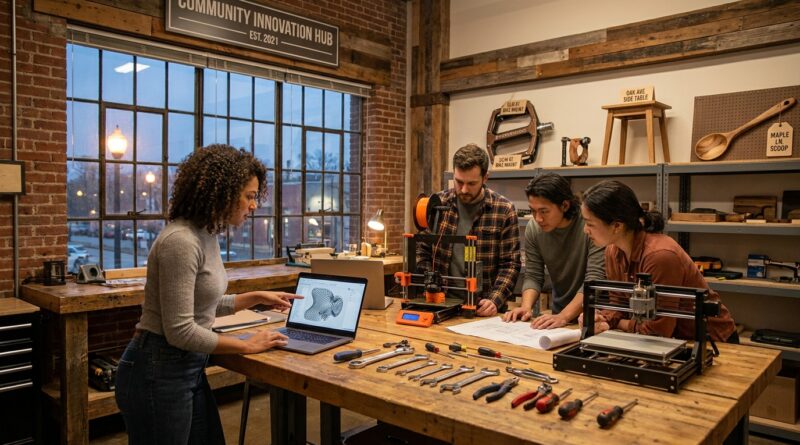
The “factory” part can be surprisingly modest. A laser cutter. A desktop CNC. A 3D printer. A heat press. A small embroidery machine. A shelf of materials. A laptop doing more of the planning work than it used to.
The point is not to make everything with AI. The point is to use AI to remove some of the costly guesswork that used to make local production hard.
Why this matters now
People are tired of sameness. They are tired of products that claim to be personal but feel like they were approved by a focus group on another continent.
At the same time, small makers are under pressure. Materials cost more. Shipping is messy. Competing with giant brands on price is nearly impossible. So the winning move is not trying to beat mass production at its own game. It is offering something mass production struggles with, which is context.
A neighborhood maker can create a product that fits a specific block, building style, local climate, or community story. AI helps make that process faster and less risky.
You can already see this broader local shift in retail and hospitality too. A good example is The Hyper-Local Hotel Pantry: How Neighborhood Makers Are Quietly Moving Into Luxury Lobbies, where local goods are showing up in places that used to be filled with generic products. Manufacturing is following the same path.
How AI helps small workshops without turning them into tech companies
Design gets faster
AI image and concept tools can help a maker rough out ideas quickly. That does not mean pressing a button and calling it art. It means starting with a few visual directions, narrowing them down, and then using real skill to make something that works in the physical world.
If you make furniture, for example, AI can help you mock up styles that match a neighborhood’s architecture. If you make home goods, it can help you test colorways tied to local landmarks, schools, or seasonal events.
Prototyping gets cheaper
One of the biggest problems in product making is wasting material on bad first drafts. AI can help predict dimensions, fit, tolerance issues, and customer preferences before you cut, print, or sew.
That matters when your margins are thin. Every failed prototype costs real money.
Small batch production becomes practical
Big factories win by making thousands of the same thing. Small workshops win by making dozens of slightly different things well. AI can help sort orders, group similar jobs, suggest efficient material layouts, and reduce downtime between custom runs.
That means a neighborhood maker can say yes to more special requests without chaos.
Local demand is easier to read
Small businesses often rely on gut instinct. Gut instinct is useful, but it is not perfect. AI can summarize customer reviews, sort survey responses, spot repeat requests, and help identify what people in a certain area actually want.
That is especially useful if your audience is very specific, like dog owners in one district, apartment dwellers in converted warehouses, or parents shopping for school fundraiser gifts.
What this looks like on the ground
Here are a few realistic examples of hyper local AI manufacturing.
A garage wood shop
A local woodworker designs entryway shelves sized for narrow rowhouse hallways common in one neighborhood. AI helps test bracket shapes, estimate material waste, and generate listing copy for each variation. The product is made two miles from the buyer.
A community textile studio
A group of sewists creates tote bags and small home goods using fabrics that reflect local transit maps, street grids, or historic signage. AI helps them produce pattern variations and track which designs sell in which zip codes.
A ceramics maker in a shared studio
An artist makes planters shaped and glazed to match local architecture. AI helps sort customer requests, suggest batch groupings for efficient firing, and draft custom dimensions for small apartment windowsills.
A neighborhood bike accessory brand
A small shop uses desktop fabrication tools to make mounts, tags, and storage parts tailored for local cycling habits and weather. AI helps test form factors and speed up revisions based on rider feedback.
What hyper-local makers should not do
There is a trap here. It is easy to hear “AI” and think you need to automate everything.
You do not.
Most small makers should avoid trying to become mini Silicon Valley startups. The goal is not to chase every new tool. The goal is to protect your time, reduce mistakes, and make local production sustainable.
That means using AI for support tasks first.
- Early concept sketches
- Material estimates
- Production planning
- Customer message summaries
- Product description drafts
- Simple market research
Keep the human parts human. Taste. Craft. Relationships. Local knowledge. Those are the reasons customers come to you in the first place.
How to start if you are a local maker
1. Pick one product, not ten
Start narrow. A single product family is easier to test than a full catalog. Think custom house numbers, local-themed trays, made-to-fit shelving, neighborhood gift boxes, or event-specific decor.
2. Find the local problem first
The best products solve something nearby. Tiny apartment storage. Weatherproof porch decor. Gifts tied to school pride. Small-batch hospitality goods for inns, cafes, or boutique hotels.
3. Use AI where mistakes are expensive
If wasted material hurts your budget, use AI for layout planning. If revisions eat your week, use it for concept testing. If custom orders overwhelm your inbox, use it to organize incoming requests.
4. Stay physically local when possible
The magic is not just in making a product. It is in keeping the loop short. You can talk to customers face to face, adjust designs quickly, and build things that actually reflect local life.
5. Tell customers how it is made
People hear “AI” and sometimes assume cheap automation. Explain the real process. “Designed here. Tested here. Made here.” That builds trust.
Why customers respond to this
Most people do not want random customization for its own sake. They want things that feel considered.
A shelf that fits their old building. A welcome sign that reflects a local street name. A set of pantry goods, ceramics, or textiles that actually feels of the place, not just sold in the place.
That is the sweet spot for hyper local AI manufacturing. It keeps the soul of local making while helping with the boring or costly parts behind the scenes.
At a Glance: Comparison
| Feature/Aspect | Details | Verdict |
|---|---|---|
| Speed to prototype | AI can help test ideas, dimensions, and variations before materials are used. | A big win for small shops with tight budgets. |
| Local identity | Products can reflect neighborhood style, local needs, and direct customer feedback. | This is where small makers can beat mass-produced goods. |
| Scale and control | Small workshops can stay intentionally small while using AI to handle planning and admin work. | Best for makers who want growth without losing their local roots. |
Conclusion
Most headlines about AI and manufacturing focus on giant plants, huge budgets, and systems so big they feel far removed from everyday life. No wonder so many people feel like the future is happening somewhere else. But hyper local AI manufacturing tells a different story. It shows that AI can be a neighborhood tool, used in makerspaces, garages, and studios to help real people make better local goods without giving up their independence. For shoppers, that means products with more meaning and less sameness. For craftsmen, it offers a way to stay competitive without selling out or trying to scale far beyond their own streets. That is a future worth paying attention to, because it feels a lot more human.