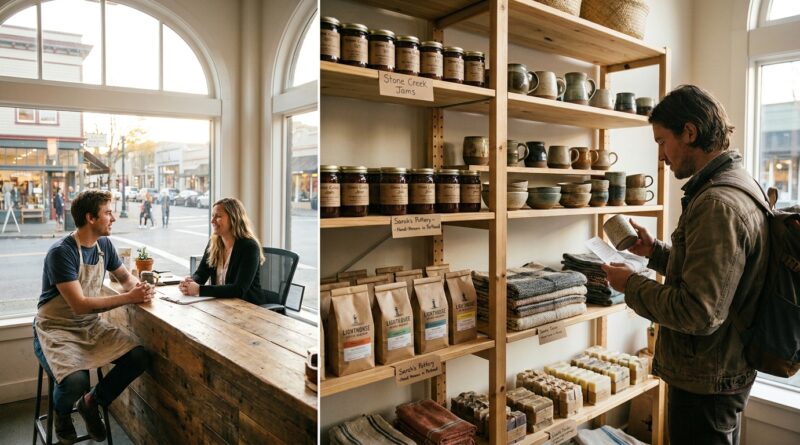
The Hyper-Local Hotel Pantry: How Neighborhood Makers Are Quietly Moving Into Luxury Lobbies
You check into a beautiful hotel, admire the framed photos of the neighborhood, then walk over to the lobby pantry and find the same chips, candy bars, and keychains you saw at the airport. It is a letdown. Travelers notice that disconnect, and local makers feel it too. They hear all the talk about “authentic local experience,” yet many still cannot get steady shelf space close to home. That gap is exactly why hyper local hotel partnerships with local makers are starting to matter so much. When hotels stock regional jam, small-batch soap, locally roasted coffee, or handmade ceramics, everybody wins. Guests get something real. Hotels get a better story to tell. Makers get year-round wholesale orders instead of hoping for a good weekend market. The idea is simple, but the best versions are thoughtful, practical, and surprisingly easy to start when both sides know what the other actually needs.
⚡ In a Hurry? Key Takeaways
- Hyper local hotel partnerships with local makers work best when hotels treat local goods as part of the guest experience, not as random gift-shop filler.
- Start small with 5 to 10 well-priced products, clear wholesale terms, and short product story cards staff can actually use.
- Food safety, labeling, supply consistency, and restocking plans matter just as much as charm if you want the partnership to last.
Why this shift is happening now
Hotels and guesthouses are under pressure to feel more rooted in place. Guests want fewer generic experiences. They want to say, “I found this at my hotel in that town,” not, “I think I saw this in three other cities too.”
At the same time, plenty of neighborhood makers are talented but stuck in a feast-or-famine cycle. One great holiday season can be followed by a very slow spring. Farmers markets are helpful, but they are not always predictable. A hotel lobby, minibar, welcome basket, or checkout shelf can become a steadier sales channel.
That is the heart of the opportunity. Hotels already have foot traffic. Makers already have stories and products. The missing piece is often a simple buying system that works for both sides.
What guests actually want from a local hotel pantry
Most travelers are not asking for a giant craft fair in the lobby. They want a small, well-edited mix that feels useful, giftable, and specific to the area.
Think practical, local, and easy to pack
The best sellers are usually products that fit into one of three buckets:
- Small edible treats like honey, spice blends, tea, chocolate, hot sauce, or roasted nuts
- Personal care items like soap, lip balm, candles, or bath salts
- Simple keepsakes like mugs, postcards, ceramics, or kitchen goods that are not too bulky
Guests do not want clutter. They want something they can enjoy that night, take home in a carry-on, or give as a thoughtful gift.
The story matters, but it must be short
A product does not need a long speech. It needs a clean label and one good sentence. “Made three blocks away with wildflower honey from neighborhood hives” works. It gives front-desk staff something easy to say and gives the guest a reason to care.
This is also where related local production trends come into focus. If you want a broader look at how small food businesses are building more stable neighborhood-scale production, From Backyard Bees To Blockwide Brands: How Hyper‑Local Food Producers Are Quietly Building New Micro‑Manufacturing Models shows why so many makers are looking for dependable wholesale outlets beyond pop-ups and weekend markets.
Why local makers say yes to hotel partnerships
For many makers, the dream is not fame. It is predictable orders.
A good hotel account can mean repeat business every month, not just a rush in November and December. It can also introduce products to travelers who later reorder online. That matters a lot for makers who have outgrown hobby scale but are not big enough to land national retail deals.
What hotels offer that markets cannot
Hotels can provide:
- Regular wholesale buying
- Exposure to out-of-town customers
- A more polished retail setting
- Photo and social media opportunities
- Cross-promotion through welcome emails, room guides, or concierge tips
That kind of steady visibility can help a small brand plan better. It is easier to buy ingredients, schedule production, and hire help when orders are not a mystery every month.
The playbook for hotels that want to do this well
This is where some well-meaning properties stumble. They like the idea of local goods, but they handle it casually. That usually leads to empty shelves, mismatched packaging, or staff who do not know what they are selling.
1. Curate, do not cram
Start with a tight mix. Five to ten items is enough for a pilot. Choose products that make sense for your guest profile.
A luxury inn might do artisan caramels, local sparkling water, bath products, and ceramic mugs. A beach guesthouse might do reef-safe sunscreen, local coffee, sea salt, and handmade soap.
Less is better than a cluttered shelf full of “sort of local” items.
2. Set wholesale rules early
Hotels should be clear about unit pricing, payment timing, minimum order quantities, lead times, and restocking expectations. Makers should be honest about capacity. If a producer can only make 40 jars a month, that is fine. It is better to know that upfront than to promise 200 and disappoint everyone.
3. Check packaging and compliance
This part is not glamorous, but it is important. Food items need proper labeling. Bath and body products need safe, accurate packaging. Anything breakable needs display and storage planning. If the shelf looks beautiful but the operations are messy, the program will not last.
4. Give staff a cheat sheet
Front-desk teams should not have to memorize a local history lecture. Give them a one-page guide with the maker name, neighborhood, product highlights, and one sentence on why it is special. That turns a shelf into a conversation.
5. Use more than the gift corner
The smartest hotels spread local products across the stay:
- Welcome snacks in the room
- Minibar upgrades
- Lobby pantry shelves
- Turn-down gifts
- VIP amenity baskets
- Conference or wedding guest welcome bags
That gives makers more order volume and gives guests multiple chances to notice something good.
What local makers need to have ready
Hotels are often willing to buy local, but they still need the basics handled professionally.
Be gift-shop friendly
If you are a maker, ask yourself a few blunt questions:
- Can this product sit on a shelf neatly?
- Is the label easy to read?
- Does the packaging feel clean and sturdy?
- Can I offer wholesale pricing that still leaves room for the hotel’s margin?
- Can I restock without drama?
A beautiful product that arrives late, unlabeled, or inconsistently packed will not survive in hospitality.
Make ordering easy
Hotels love simple systems. A short wholesale line sheet, clear case quantities, reorder email, and reliable invoice process go a long way. You do not need a huge tech stack. You do need consistency.
Offer a “starter set”
One smart move is to create a ready-made hotel bundle. For example: 12 soaps, 24 mini jams, 12 candles, and a display card set. That helps a buyer say yes faster because the decision feels manageable.
Common mistakes that sink these partnerships
The idea is charming. The execution has to be boring in the best possible way.
Mistake 1: Choosing products only because they are local
Local is not enough. The item still needs to taste good, look good, travel well, and fit the guest’s price comfort zone.
Mistake 2: Forgetting the price ladder
A good pantry has options. Think one item under $10, several in the $10 to $25 range, and maybe one or two premium items above that. If everything is expensive, sales slow down. If everything is too cheap, the display can feel forgettable.
Mistake 3: Ignoring supply reality
Some makers are seasonal. Some use ingredients that run out. Some are one-person businesses. That is not a problem if the hotel plans for it. Rotate products seasonally instead of expecting every item to be available forever.
Mistake 4: Telling a local story with non-local goods
This is the biggest own goal. If your website talks nonstop about neighborhood pride but your retail shelf is full of generic stock, guests notice. It weakens trust.
How to make the shelf feel truly regional
The best hyper local hotel partnerships with local makers are not just about putting products in a corner. They create a sense of place.
Build around local categories
Instead of “souvenirs,” think in themes:
- Made within 5 miles
- Neighborhood pantry staples
- Bath products inspired by local plants
- Artists and makers from this district
- Tastes of the town
That framing helps guests understand why these products are here.
Use simple signage
Small signs can do a lot of work. “Roasted in the next neighborhood.” “Made by a family bakery 10 minutes away.” “Poured by hand in town.” Clear beats clever every time.
Refresh with the seasons
Seasonal rotation keeps the shelf alive. Summer might feature cold brew, citrus soap, and picnic snacks. Fall might bring spiced honey, candles, and preserves. Repeat guests will notice, and makers get more chances to test new products.
What success looks like
A good local pantry program does not need to become a huge store. Success can be modest and still meaningful.
Maybe guests start adding a jar of jam to their checkout bill. Maybe wedding welcome bags switch from mass snacks to neighborhood treats. Maybe the concierge begins sending guests to the maker’s studio or market stall. That is real economic value staying closer to home.
For the hotel, the reward is not only retail margin. It is a sharper identity. For the maker, it is not only shelf space. It is more stable income and wider reach.
At a Glance: Comparison
| Feature/Aspect | Details | Verdict |
|---|---|---|
| Generic minibar and gift stock | Easy to source and consistent, but often disconnected from the hotel’s local brand story | Convenient, but forgettable |
| Hyper-local maker shelf | Stronger sense of place, better guest interest, and new wholesale income for nearby artisans, but needs planning and restocking discipline | Best fit for hotels that want a real local identity |
| Hybrid approach | Keeps a few standard convenience items while adding a curated set of regional goods in key categories | Smart starting point for most properties |
Conclusion
There is a simple reason this idea is gaining traction. It fixes a very visible mismatch. Right now, hospitality brands are doubling down on hyper-local experiences and regional storytelling to stand out, but many are still stocking mass-produced products that do not match the pitch. A practical playbook changes that. When hotels and guesthouses build thoughtful partnerships with nearby artisans, local makers get steadier wholesale income, visitors get something truly rooted in place to take home, and front-desk staff get a better, easier story to tell about the town. That is good business, but it is also good hospitality. And at a moment when travelers are looking for more meaningful, community-first trips, that mix matters more than ever.