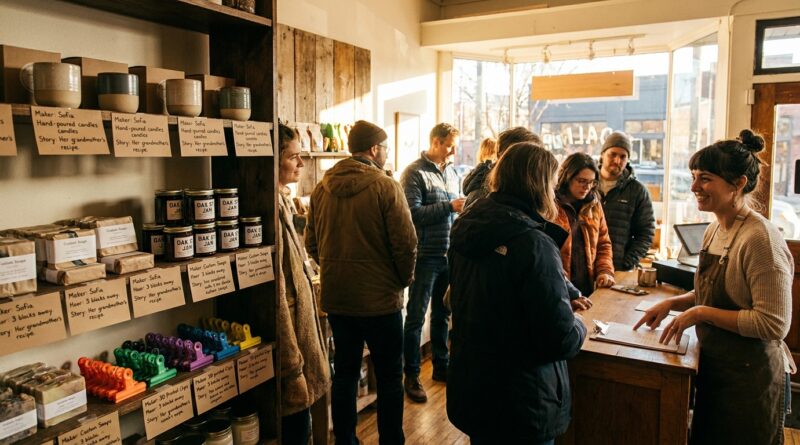
The Hyper-Local Assortment Shop: How Corner Stores Are Quietly Becoming Curators For Neighborhood Makers
People know the feeling. You walk into a store down the street and it looks exactly like the one three towns over. Same snacks. Same soaps. Same candles with fake rustic labels. It gets boring fast. Store owners feel that sameness too, but many of them are stuck. They want to carry goods from nearby bakers, artists, coffee roasters, soap makers, and small food brands. The hard part is doing it without turning shelf space into a guessing game. That is where hyper local assortment local products in neighborhood stores starts to make sense. The idea is simple. Keep most of the reliable staples, then set aside a small slice of inventory for nearby makers. Done well, that small slice can make a store feel alive again. It gives shoppers a reason to pop in, and it gives local producers a real place to test what people actually buy, not just what gets likes online.
⚡ In a Hurry? Key Takeaways
- Hyper-local assortment means using a small part of your shelf space, often around 10 percent, for products made nearby.
- Start with short test runs, simple sales targets, and clear reorder rules so local products do not hurt cash flow.
- The payoff is bigger than feel-good branding. Stores can gain loyalty, better margins, and more foot traffic while giving local makers a fair shot.
Why neighborhood stores are starting to act like curators
For years, small retailers were told to compete on convenience or price. That is a tough fight. Chains buy bigger. Online shops move faster. Inflation squeezes everyone.
So independent stores are trying a different angle. They are becoming editors, not just stockers. Instead of asking, “What does every other shop carry?” they are asking, “What fits this block, this school district, this commuter crowd, this weekend market crowd?”
That change matters because people do notice when a store reflects the area around it. A neighborhood pharmacy with local lip balm near the register feels different. A cafe selling cookies from a baker two streets away feels different. A bodega with hot sauce made by a nearby family business feels different too.
What “hyper-local assortment” really means
This is not about replacing your core inventory with a flea market. It is about making room for a rotating set of local goods that add personality and discovery.
The 90/10 approach
A practical model is simple. Keep 90 percent of your inventory focused on known sellers. Use the remaining 10 percent for local tests. That protects the basics while giving new products a chance.
That 10 percent can sit in one small display, at the counter, on one shelf endcap, or in a cooler section. It does not need to take over the store.
Think “test kitchen,” not permanent commitment
The safest way to start is to treat local products as limited runs. Four weeks. Eight weeks. Maybe one season. That lowers risk for both sides.
If the item moves, it earns a longer stay. If it stalls, you swap it out without drama.
Why shoppers respond to local products in neighborhood stores
People are tired of shopping in places with no sense of place. A hyper local assortment local products in neighborhood stores strategy gives people a small surprise. That matters.
It also creates easy conversation. Shoppers ask, “Who makes this?” Staff can answer. That turns a transaction into a tiny relationship.
And local products often make better impulse buys. A chain-store granola bar is invisible. A granola bar made by a runner from the neighborhood with a handwritten shelf card is a story. Stories sell.
The store owner’s fear is real, and valid
Let’s be honest. Local products sound great until you start doing the math.
Will it sell? Will the maker deliver on time? Is the packaging good enough? Is the barcode readable? What happens if the maker disappears after two weeks? And what if a product takes up shelf space that should have gone to a sure seller?
These are not small concerns. They are the whole game. The good news is there is a simple playbook.
A simple playbook for discovering local makers
Start with places where makers already gather
Do not wait for perfect cold emails. Go where local producers already are. Farmers markets. School fundraisers. Neighborhood fairs. Community business groups. Small wholesale platforms. Instagram, if used carefully, can help too, but seeing the product in person is better.
Set a few basic rules before you talk to anyone
This saves time and awkwardness. Tell makers up front what you need:
- Clear labeling and ingredient details if the product is edible or used on the body
- Reliable packaging that survives transport and shelf handling
- A minimum wholesale margin that works for the store
- Simple delivery or drop-off expectations
- A trial period, not an open-ended promise
That way, “supporting local” does not turn into “ignoring basic retail discipline.”
How to test local products without wrecking margins
Keep opening orders tiny
This is where many stores go wrong. They buy too much because they want to be nice. Nice does not pay rent.
Instead, buy lean. Think small first orders. Enough to make the shelf look real, not enough to create dead stock. If possible, work on consignment for first tests, especially with unproven items.
Use simple scorecards
You do not need fancy retail software to judge a test. Track a few things:
- Units sold per week
- Gross margin per unit
- Repeat purchase rate, if staff can spot it
- Customer comments
- Whether the maker restocks on time
If a local product sells slower than a national brand but creates bigger basket sizes or repeat visits, it may still be worth keeping.
Make the shelf work harder
Placement matters. Many local products fail because they are hidden. Put them where discovery happens. Near checkout. Beside coffee. At eye level. In a “Made Nearby” section with a photo or one-line maker story.
What kinds of products usually work best first
Start with categories where people are open to trying something new and where the price point is not scary.
- Snacks and treats
- Coffee, tea, and bottled drinks
- Hot sauces, jams, and pantry items
- Candles and soaps
- Greeting cards and small gift items
- Seasonal products tied to neighborhood events
These items tend to work because they are easy to understand and easy to try once.
How to rotate products so the section stays fresh
The magic is not just local. It is rotation.
If the same “local section” sits untouched for six months, shoppers stop seeing it. Treat it more like a mini gallery. Monthly themes help. Back-to-school snacks. Holiday gifts from within five miles. Summer sauces. Weekend brunch add-ons.
This gives customers a reason to check back, and it gives more makers a fair shot at a small retail test.
What local makers need from stores, besides shelf space
For many small producers, getting into one neighborhood store is a bigger deal than it sounds. It is their first real-world lab. They learn pricing, packaging, reorder pace, and what strangers buy when no one is standing there pitching the product.
That feedback is gold. Good retailers share it. “Your item sold fast on Fridays.” “People liked the taste but wanted a smaller size.” “The label looked great, but customers could not tell what flavor it was.”
That kind of honesty helps makers improve and makes the partnership stronger.
What success looks like after a few months
If this is working, you should notice a few things.
- Customers mention the local shelf to friends
- People come in to check what is new
- Average margins improve on selected items
- Staff have more natural conversations with shoppers
- Your store feels less interchangeable
That last point is a big one. Independent stores rarely win by looking generic.
Common mistakes to avoid
Buying with your heart only
It is great to support a neighbor. It is not great to fill a shelf with products nobody understands or wants. Be warm, but be clear-eyed.
Skipping the basics
If labeling, shelf life, pricing, or delivery are messy, the product is not ready yet. That is okay. Better to say “not yet” than force a bad fit.
Failing to tell the story
Local products often need one extra sentence of context. Without that, they can look like random expensive alternatives. Shelf tags help a lot.
Letting the section go stale
Freshness is the point. Rotate often enough that regulars keep noticing it.
At a Glance: Comparison
| Feature/Aspect | Details | Verdict |
|---|---|---|
| Shelf Strategy | Keep core staples in place, then dedicate about 10 percent of space to nearby makers on trial runs. | Best balance of safety and discovery. |
| Product Testing | Use small opening orders, short time windows, and simple sales tracking before making products permanent. | Smart way to limit risk. |
| Customer Impact | Shoppers get novelty, neighborhood pride, and a reason to return more often. | Strong upside for loyalty and foot traffic. |
Conclusion
Small stores do not need to outspend chains to stand out. They need to feel like they belong to the street they are on. That is the real promise of hyper local assortment local products in neighborhood stores. It gives retailers a practical way to stay useful and memorable at a time when inflation and e-commerce are squeezing every decision. It also gives local makers something they rarely get, a real shelf, real customers, and real feedback. Start small. Use one shelf, one cooler door, one counter display. Track what moves. Rotate what does not. Over time, that little 10 percent can become a living catalog of neighborhood talent, and a good reason for people to keep coming back.