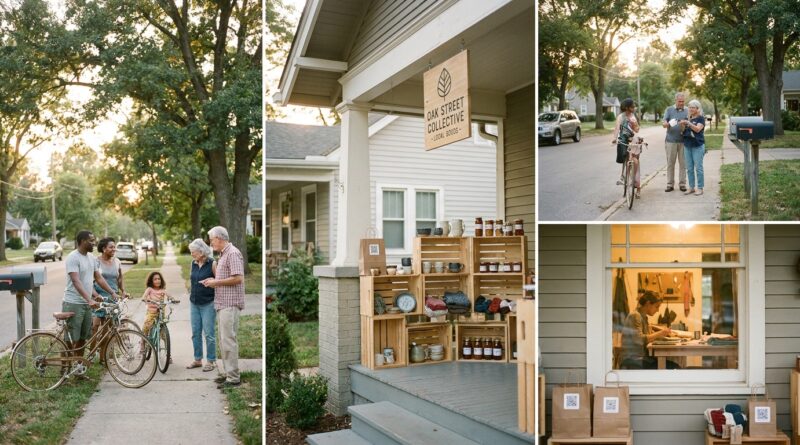
From Etsy To Your Street: How ‘Porch Brands’ Are Quietly Turning Neighborhood Homes Into Hyper‑Local Micro‑Factories
If you make beautiful things at home, you probably know the feeling. You spend hours sanding, stitching, pouring, packing, and then hand a chunk of the sale to a marketplace that can change the rules whenever it likes. Fees creep up. Search results get crowded. Your work starts to feel like one more thumbnail in a giant scrolling wall. Meanwhile, the strange part is this: people living ten houses away would probably love what you make. They just do not know you exist. That gap is where the “porch brand” comes in. It is a simple idea. Instead of thinking like a seller on a platform, think like a tiny local manufacturer with a real address, a familiar name, and products your neighborhood can actually see, trust, and talk about. If you are wondering how to start a hyper local home-based micro factory, the good news is that it usually starts smaller, cheaper, and closer to home than most people expect.
⚡ In a Hurry? Key Takeaways
- Start with one product, one street-level identity, and one easy local pickup or delivery method.
- Use simple signals like porch signs, neighborhood markets, local Instagram posts, and QR codes so nearby buyers can find you without Etsy.
- Check zoning, noise, food-safety, and insurance rules before you scale, because a great home workshop can still run into local limits.
What a “porch brand” really is
A porch brand is not just a side hustle with nicer packaging. It is a home-based maker business that becomes visible and trusted in a very small geographic area. Think of the candle maker whose front porch pickup shelf is now a local fixture. Or the furniture repair shop operating from a garage that neighbors recommend in the group chat. Or the soap maker who drops small batches at the corner cafe every Friday.
The point is not to become a factory in the old industrial sense. The point is to become easy to recognize, easy to buy from, and easy to talk about locally.
That is why so many makers are quietly shifting away from “sell to everyone online” and toward “be known by the people nearby first.” It is often a smarter, calmer way to grow.
Why this is happening now
A few things are all hitting at once.
People want trustworthy products
Buyers are tired of mystery goods, fake reviews, and items that look handmade but arrive from a warehouse. A local maker with a real home workshop feels more human and more reliable.
Shipping has become a pain
Boxes, breakage, postage, delays, returns. Local pickup and neighborhood delivery cut a lot of that mess out.
Platforms are getting crowded
Even talented makers can disappear in search results. If the algorithm does not favor you this week, your sales can vanish for reasons that have nothing to do with quality.
Communities are ready for local production again
People like the idea of buying from someone nearby, especially if the product is useful, beautiful, repairable, or personal. The demand is there. The visibility often is not.
How to start a hyper local home-based micro factory
This sounds bigger than it is. In practice, it is a step-by-step shift from hobby seller to local brand.
1. Pick one product line people can understand fast
Do not start with twelve categories. Start with one thing your neighbors can explain in a sentence.
Examples:
- Refinished vintage side tables for apartments
- Small-batch goat milk soap
- Hem and repair services for everyday clothes
- Custom house-number planters
- Neighborhood gift boxes for new parents or new movers
If someone has to ask for five minutes what exactly you do, it is too broad.
2. Make the brand local on purpose
This is the part many makers skip. They build a shop, but not an identity.
Your name, packaging, and photos should make sense to someone nearby. Use your neighborhood, town, local street feel, or regional style if it fits. You want people to say, “Oh right, that is the soap maker near the park,” or “That is the garage woodshop on Maple.”
That kind of recognition matters more than a polished logo in the early days.
3. Create one dead-simple buying path
If local people have to click through six pages, create an account, and pay shipping for a pickup order, you will lose them.
Better options:
- A one-page website with product photos and pickup times
- A simple order form
- Instagram with a clear “order here” link
- A text-to-order or email-to-order option for repeat buyers
The easier you make it, the more likely neighbors are to actually buy.
4. Design for pickup, drop-off, or tiny-radius delivery
This is where the micro-factory model starts to beat the big-platform model. You do not need national shipping to prove demand. You need a repeatable local handoff.
Try one of these:
- Front porch pickup shelf
- Weekly pickup window
- Bike or car delivery within one or two miles
- Pickup at a partner cafe or shop
Now your home is not just where the product is made. It becomes part of the customer experience.
The visibility problem is usually physical, not digital
This is the surprising part. Many makers think they have a marketing problem, when they really have a discoverability problem in their own neighborhood.
People nearby cannot buy from you if they have no clue you exist.
Simple ways to become visible without feeling pushy
- A tasteful sign near the porch or gate
- Packaging that includes your street-area identity and reorder info
- Business cards at the local coffee shop, barbershop, or bulletin board
- A QR code at pop-ups and community events
- Before-and-after photos posted in local Facebook groups if allowed
- A monthly open studio hour
You are not trying to look massive. You are trying to look real, consistent, and easy to find again.
What works better than Etsy for local demand
Etsy still has a place. It can be useful for reach, proof, and occasional out-of-town buyers. But if your best customers are likely within a short drive, local channels often work harder for less money.
Use neighborhood networks
Local Facebook groups, Nextdoor, school fundraisers, church fairs, library boards, and farmers markets still move product. Not because they are flashy. Because they are close to actual buyers.
Use small wholesale partnerships
A florist, coffee shop, boutique, refill store, or gift shop may be happy to test a few units. You do not need a giant retail deal. You need a shelf or counter in a place people already trust.
Use repeat orders, not constant discovery
The dream is not endless one-off traffic. The dream is the neighbor who buys your soap every month, the realtor who orders your gift boxes every closing, or the cafe that restocks your mugs quarterly.
That is steadier and usually less exhausting.
Do not skip the boring part: rules and logistics
This is where friendly reality has to enter the picture. A home-based micro-factory still has rules. Even if you are quiet, clean, and considerate, your town may care about traffic, signage, smells, tools, storage, food handling, or customer visits.
If you are serious about growth, read When Zoning Laws Meet Home Workshops: How Neighborhood Rules Are Quietly Deciding The Future Of Hyper‑Local Making. It explains a problem many makers only discover after they have already bought equipment or built momentum.
Check these early
- Zoning and home occupation rules
- Noise limits and business-hour restrictions
- Parking and customer visit rules
- Insurance for tools, inventory, and liability
- Food or skincare regulations if you make consumables or body products
- Fire safety and electrical load if you are using serious equipment
This is not meant to scare you. It is meant to save you from expensive surprises.
Build a micro-factory that still feels like a good neighbor
The best porch brands do not just sell locally. They fit locally.
Keep the footprint small and respectful
Think low noise, tidy storage, clear pickup instructions, and minimal traffic jams. If the business annoys the block, it will not stay charming for long.
Set expectations clearly
Post pickup times. Tell customers where to park. Explain turnaround times. If you do custom work, say what you can and cannot take on.
Make quality visible
Show your process. Show materials. Show your hands at work. People are not just buying the item. They are buying confidence.
A practical starter playbook
If you want a realistic first month, keep it simple.
Week 1: Define the offer
- Choose one product or service
- Write a one-sentence description
- Set a local price that includes your time
Week 2: Set up the local buying path
- Create a basic website or order form
- Add pickup instructions
- Take clear, honest photos
Week 3: Test neighborhood visibility
- Tell nearby friends and existing customers
- Post in one or two local groups
- Place cards or flyers in approved local spots
Week 4: Measure what people actually respond to
- Which product got questions?
- Which price felt easy to accept?
- Did people prefer pickup or delivery?
- What repeated comments can shape your next batch?
This is how small home workshops become real local brands. Not with a giant launch. With tight feedback loops and steady visibility.
At a Glance: Comparison
| Feature/Aspect | Details | Verdict |
|---|---|---|
| Selling on a big marketplace | Easy setup and broad reach, but fees, search competition, and weak local identity can hurt margins and loyalty. | Good as a side channel, not always the best home base. |
| Porch brand model | Local pickup, repeat customers, lower shipping friction, and stronger trust through real-world visibility. | Often the smartest path for makers with neighborhood-friendly products. |
| Rules and neighborhood fit | Zoning, safety, traffic, and insurance can shape what you can do from home and how far you can grow. | Check early. It is easier to build right than fix problems later. |
Conclusion
The big idea here is simple. You do not have to win the whole internet to build a healthy maker business. Right now the economy is pushing production back closer to home, and people are actively looking for human-made, trustworthy products. The trouble is that too much of that demand still gets captured by giant platforms instead of the person quietly making things in the spare room, garage, or porch workshop. A clear local identity, a simple ordering path, and a buyer experience built around your actual neighborhood can change that. When home-based manufacturers become recognizable micro-brands, more money stays in the community, streets feel more interesting and resilient, and customers get a real connection to what they buy. For many makers, the next good customer is not somewhere out in the algorithm. They might be right down the block.