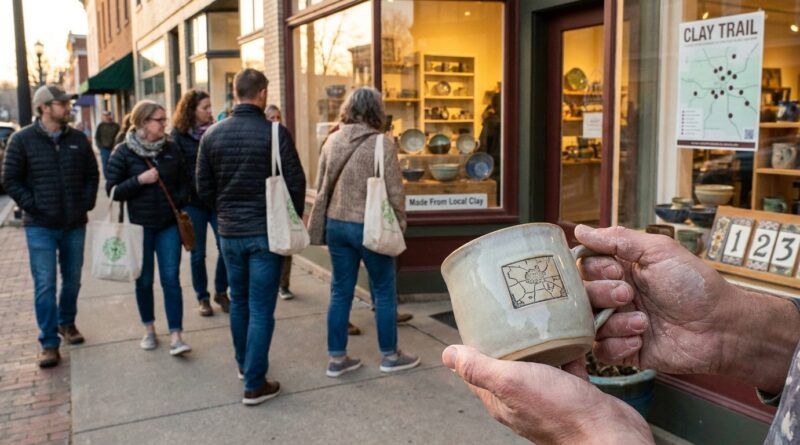
From Local Clay To Community Currency: How Neighborhood Ceramics Are Quietly Rebuilding Main Street
You know the feeling. You want something for your home that does not look like it came from the same warehouse as everyone else’s fruit bowl, mug, or planter. You want the piece with a story. Better yet, a piece made by someone who lives nearby, buys coffee where you do, and knows what this town actually feels like. The problem is not interest. The problem is access. Most people do not know where local potters sell their work unless they happen to catch a holiday market, an art fair, or a once-a-year studio tour. That leaves buyers stuck with generic decor, makers stuck with feast-or-famine sales, and neighborhood shops missing an easy chance to carry something that feels rooted in place. A local ceramics trail is a surprisingly simple fix. It turns a few everyday stops into a walkable map of handmade work, and it makes shopping local feel less like homework and more like part of a normal Saturday.
⚡ In a Hurry? Key Takeaways
- A local ceramics trail gives residents an easy, repeatable way to buy handmade pieces close to home.
- Start small. Match three or four potters with three or four cafes, bookstores, florists, or gift shops on one walkable route.
- The real value is consistency. Makers get steady visibility, shops get fresh inventory, and buyers get work with a clear local story.
Why This Idea Lands Right Now
People are worn out by vague advice to “shop local.” It sounds good, but it often does not tell you what to actually do on a Tuesday afternoon.
A local ceramics trail fixes that by making the choice concrete. Instead of asking residents to hunt down makers across social media, scattered pop-ups, and seasonal markets, it gives them a simple route. One coffee shop might carry mugs. A nearby bookstore might display small vases. A florist could stock handmade planters. A bakery might feature serving plates made by a potter a few blocks away.
That is not just charming. It is practical.
It brings local craft into everyday life, where people already spend time and money.
What a Local Ceramics Trail Actually Looks Like
Do not picture a giant arts festival with permits, tents, and a marching band. Think smaller and smarter.
The basic setup
A local ceramics trail is simply a loose network of neighborhood businesses that each host work from one or more ceramic artists. The stops are close enough to walk in a single outing. Each location has a sign, a maker card, and a reason to linger.
For example:
- A cafe features handmade espresso cups and breakfast bowls.
- A plant shop stocks local ceramic pots and wall planters.
- A home goods store carries pitchers, candle holders, and soap dishes.
- A small gallery or bookstore hosts a rotating shelf for new makers.
Now the customer is not trying to decode a maker’s weekend schedule from Instagram stories. They just follow the trail.
Why the route matters
The walkable part is important. If people can hit all the stops in an hour or two, the whole thing feels approachable. It becomes an outing, not an errand.
That matters because habits drive spending. If residents know there is a reliable local ceramics trail, they are more likely to think, “I need a gift,” or “I want a better serving bowl,” and head there first.
How It Helps Makers Without Asking Them to Do Everything
Many working ceramic artists are excellent at making. They are not always thrilled about constant self-promotion, event applications, packing for markets, or managing online shops that need fresh photos every week.
A local ceramics trail takes some of that pressure off.
More steady sales, less boom-and-bust
Holiday markets can be great, but they are not a full business plan. They create spikes. What working makers need is a dependable trickle between those spikes.
Even modest weekly sales across several neighborhood hosts can make a real difference. A few mugs here. Two planters there. A custom restock next month.
That is not flashy. It is stable. And stable is useful.
Better visibility with less noise
When handmade work shows up where people already go, makers reach buyers who might never attend an art market. A person grabbing coffee can discover a potter by accident, which is often how loyalty starts.
It also helps the work feel lived with, not precious. A handmade mug on a cafe shelf says, “You can use this every day.” That is a stronger sales pitch than a polished online post for many buyers.
Why Neighborhood Businesses Should Care
This is not charity. It is good business.
Low lift, real payoff
Small businesses do not need a full remodel or a giant budget to join a local ceramics trail. They need a little shelf space, clear pricing, simple terms with the maker, and maybe a small card explaining who made the work.
That is a light lift compared with launching a whole new product category from scratch.
A built-in story customers remember
Shops and cafes are always looking for a reason people should come to them instead of the place two blocks over. Local ceramics gives them one.
“These cups were made from local clay by a potter in the next neighborhood” is memorable. It gives staff something easy to talk about. It gives customers a reason to come back. And it makes the business feel connected to the place, not dropped in from nowhere.
Why Buyers Respond to It So Quickly
Most people are not looking for a lecture about ethical consumption. They are looking for a good mug, a wedding gift, or a fruit bowl that does not feel bland.
A local ceramics trail meets people where they are.
It turns values into a simple errand
This is the beauty of the idea. It takes a fuzzy goal, support local makers, and turns it into a route with addresses.
That is much easier to act on.
The pieces mean more
When you know who made something, where it was made, and even where the clay came from, the object carries more weight. Not in a fussy way. In a human way.
You remember the cafe where you found it. You remember the maker’s name. You remember that the piece came from your town, not an anonymous supply chain.
How to Start a Local Ceramics Trail in Your Town
This is the part that makes the idea useful. You do not need a formal arts district or a major grant to begin.
1. Pick one small, walkable area
Start with a route people already use. A downtown strip. A main street with coffee, shopping, and lunch spots. A neighborhood cluster near a weekend market.
If the route is too spread out, people will not do it casually.
2. Match the right makers with the right shops
Do not overcomplicate this. Just look for good fit.
- Mugs and cups belong naturally in cafes.
- Planters work in florists and garden shops.
- Serving pieces fit bakeries, specialty food stores, and home shops.
- Small decorative pieces can work in bookstores or gift shops.
The goal is to make the ceramics feel at home in each space.
3. Keep the display information clear
Every stop should answer three questions fast:
- Who made this?
- How much is it?
- Can I buy it right now?
Add a short maker card with a photo, neighborhood, and a sentence or two about the work. A QR code can help, but it should not do all the heavy lifting.
4. Rotate often enough to stay fresh
You do not need weekly turnover. Monthly or seasonal refreshes are enough to keep the trail alive and give people a reason to revisit.
5. Make one simple map
This can be a printed handout, a basic web page, or a shared social post. The map matters because it turns separate displays into a real local ceramics trail.
Without the map, it is just scattered stock.
Common Problems, and How to Avoid Them
Good ideas can still go sideways if nobody handles the boring bits.
Pricing confusion
Makers and hosts need clear terms from the start. Is it wholesale? Consignment? What is the payment schedule? Who handles damaged pieces?
Put it in writing, even if everyone is friendly. Especially if everyone is friendly.
Displays that feel like afterthoughts
If the ceramics are shoved near the register beside old flyers, they will not sell well. Give the work a proper spot. Good lighting helps. So does enough empty space around the pieces.
No one knows the trail exists
This is the easiest mistake to make. A local ceramics trail needs a shared name, a basic map, and simple in-store signage so people understand they are part of something bigger.
You are not trying to build a giant brand. You are trying to make the route visible enough that people can follow it.
What Success Looks Like
Success does not have to mean busloads of tourists.
It might look like this:
- A potter gets regular monthly restock orders instead of waiting for December sales.
- A cafe sells through a shelf of handmade mugs and decides to host another maker.
- A resident starts buying birthday gifts on the trail instead of defaulting to online marketplaces.
- Main Street gains a little more personality, one shelf at a time.
That is how community currency really works. Money stays in motion close to home. The buyer gets something better. The maker gets paid. The host business gets traffic and a story worth telling.
At a Glance: Comparison
| Feature/Aspect | Details | Verdict |
|---|---|---|
| Buying decor online | Easy and fast, but often generic, hard to trace, and disconnected from local makers. | Convenient, but low on meaning and local impact. |
| Seasonal craft markets | Great for discovery, but inconsistent for makers and easy for shoppers to miss. | Fun, but not enough on their own. |
| Local ceramics trail | Walkable, repeatable, rooted in existing businesses, and easier to support year-round. | Best mix of access, story, and steady local benefit. |
Conclusion
A hyper local ceramics trail hits three needs at once right now. It gives working makers a predictable trickle of sales outside of big seasonal events. It gives residents a concrete way to shift a bit of their weekly spending away from anonymous imports. And it gives neighborhood businesses an easy way to plug into the maker economy without massive investment. If people are tired of broad slogans about supporting local, this is the kind of answer that actually helps. Pick a walkable route, match three or four potters with three or four cafes or shops, and your town suddenly has a living gallery of things made from the literal ground under your feet. Small idea. Real effect. That is often how Main Street gets rebuilt.