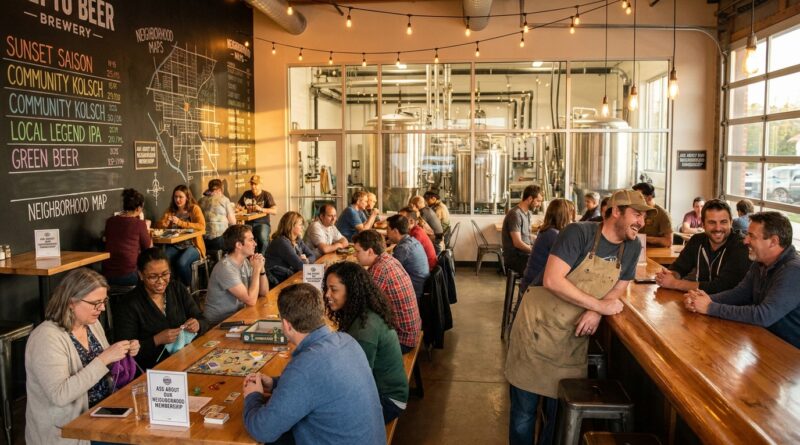
The Hyper-Local Brewery Crossroads: How Neighborhood Beer Makers Are Surviving The Cost Crunch By Getting Smaller, Not Bigger
Neighborhood breweries are in a rough spot, and plenty of owners are tired of hearing the same old advice: sell more beer, open another location, get into more stores. That sounds simple until grain, cans, rent, insurance and payroll all go up at once. Then add flat taproom traffic and distributors who mostly care about volume. It leaves small brewers feeling trapped between “grow fast” and “close quietly.” The surprise is that some are finding a third path. They are getting smaller on purpose, not as a retreat, but as a way to stay alive. That means fewer risky wholesale bets, more direct sales, tighter beer lists, paid memberships, private events and smarter use of the space they already have. If you are wondering how local breweries can survive rising costs, the answer is often less about chasing scale and more about building steadier neighborhood revenue, one regular, one club night and one recurring order at a time.
⚡ In a Hurry? Key Takeaways
- Local breweries are surviving rising costs by focusing on smaller, steadier direct revenue instead of chasing mass distribution.
- Start with low-cost moves: midweek memberships, beer club subscriptions, private taproom bookings and a tighter core beer lineup.
- This matters beyond beer. The same playbook can help coffee roasters, kombucha makers and other neighborhood producers stay viable.
The old growth plan stopped working
For years, the script was obvious. Brew more. Can more. Get into more accounts. Hope volume makes the math work.
Now that math is breaking down. Ingredients cost more. Aluminum costs more. Kegs, cleaning chemicals, refrigeration and insurance all cost more. Even when sales hold steady, margins shrink.
Wholesale used to look like the path to stability. For many small breweries, it now does the opposite. Bars rotate taps faster. Retail shelves are crowded. Distributors naturally give more attention to brands that move big numbers. A tiny local brewery can get lost fast.
That is why the most practical answer to how local breweries can survive rising costs is not always “grow.” Sometimes it is “get focused.”
What “getting smaller” actually means
Getting smaller does not mean giving up. It means cutting the parts of the business that eat time, cash and energy without giving enough back.
Less wholesale, more direct sales
A pint sold in your own taproom usually makes a lot more sense than a heavily discounted keg sent through the chain. The same goes for to-go cans sold direct. Breweries that trim weak wholesale accounts can often protect cash flow, even if total volume drops.
Fewer beers, better turns
A giant menu can feel exciting, but it can also create waste, messy inventory and small-batch inefficiency. Many neighborhood breweries are tightening to a handful of reliable sellers, plus one or two rotating experiments. That lowers ingredient complexity and helps beer move fresher.
Smaller footprint, busier room
If the taproom is slow five nights a week, the problem may not be capacity. It may be unused time. A smaller operation can work if the space is used more often and more intentionally.
The smartest breweries are selling belonging, not just beer
People say they want to support local. The challenge is turning that feeling into a repeatable habit.
That is where memberships, subscriptions and club models come in. Think of them as a neighborhood utility bill for the place people say they love.
Midweek memberships
A simple monthly plan can do wonders. Members pay a flat fee and get perks like one weekly pint, first access to releases, discounted guest passes or a reserved mug club night. This brings in predictable cash and helps fill slow evenings.
For residents, it is often easier to commit to a modest monthly amount than to remember to “come by more often.”
Beer CSA-style pickups
Community-supported agriculture changed how people buy produce. The same idea works for beer. Subscribers prepay for a monthly mixed pack, bottle release or brewer’s choice pickup. That gives the brewery money upfront and a better read on demand.
Member-only community events
Trivia is fine. So is live music. But the more durable model is programming that makes regulars feel like participants, not customers passing through. Homebrew feedback nights, neighborhood issue forums, book clubs and volunteer meetups all build habit.
Your taproom is real estate. Use all of it.
One of the biggest missed opportunities is empty space sitting idle between rushes. A brewery that cannot justify another fermenter might still have room to earn more from the square footage it already pays for.
Private bookings
Club meetings, birthday parties, alumni groups, mutual aid organizers, office off-sites and language exchanges all need places to gather. A brewery can become the default local venue if booking is simple and pricing is clear.
Do not make people email back and forth for a week. Put the package options on the website. Spell out the headcount, food rules and minimum spend.
Recurring community use
A standing Tuesday chess night or first-Wednesday tenants group may not sound glamorous. It does something better. It creates baseline traffic. The room feels alive. Some people drink beer. Some bring friends. Some become regulars.
This is one reason the ideas in From Taproom To Toolroom: How Local Breweries Are Quietly Becoming Micro‑Manufacturing Labs matter. These spaces can do more than pour pints. They can act like flexible neighborhood production and gathering hubs.
Cut complexity before you cut your identity
When costs rise, the first instinct is often broad cuts. Fewer staff. Shorter hours. Less maintenance. That can backfire if the customer experience gets noticeably worse.
A better first move is to cut hidden complexity.
Simplify packaging
If three can sizes, seasonal label runs and endless one-off SKUs are creating waste, reduce them. Standardizing materials can save both money and headaches.
Trim low-performing hours
Not every open hour earns its keep. Look at traffic by daypart, not just by day. If Monday lunch is dead, close it. Put that labor into an event night or pickup window that has a clearer purpose.
Build around your best customers
It is tempting to chase everyone. Families, beer nerds, concert crowds, tourists, office workers. Most small breweries do better when they know exactly who comes back and then shape offers around them.
What owners can do this month
If you run a neighborhood brewery, here are practical moves that do not require a huge capital plan.
1. Rank every revenue stream by actual margin
Not by vibe. Not by volume. By real dollars after labor, packaging and delivery. You may find that your “growth channel” is your weakest business.
2. Launch one recurring offer
Pick one. A mug club. A monthly case share. A founders membership. A pre-paid Friday pickup plan. Keep it simple enough to explain in one sentence.
3. Turn one slow night into a standing use case
Do not wait for random walk-ins. Partner with one local organizer and make the event repeat every month.
4. Shrink the menu with purpose
Keep the beers people miss when they are gone. Cut the ones that mainly create clutter.
5. Ask regulars for commitment, not just support
People want to help, but they need a concrete ask. “Join by the 15th.” “Reserve your monthly pickup.” “Book your club here.” Clear beats vague every time.
What neighbors can do, beyond saying “support local”
Customers matter more than they realize. A brewery does not stay open because a lot of people like the idea of it. It stays open because enough people build it into their routine.
Choose recurring over occasional
One monthly membership can help more than a big once-in-a-while Saturday tab. Predictability is gold when costs are jumpy.
Use the space for real life
Need a place for your running club, PTA social, game night or fundraiser? Book the taproom before you default to a chain restaurant or generic event room.
Buy direct when you can
A four-pack from the brewery itself usually helps more than grabbing the same beer from a far-off store shelf.
Pay attention to the middle of the week
Friday nights are nice. Tuesday nights can be make-or-break.
Why this matters beyond beer
Breweries are often the first neighborhood manufacturers to feel pressure from changing habits, higher input costs and lopsided distribution systems. That is why they are such a useful signal.
If a brewery can stabilize by building memberships, direct subscriptions and better use of its physical space, a local roaster can probably do something similar. So can a kombucha maker, baker or sauce company with a strong local following.
The lesson is simple. Hyper-local production does not always need bigger scale. It often needs tighter loops between maker and community.
At a Glance: Comparison
| Feature/Aspect | Details | Verdict |
|---|---|---|
| Wholesale growth | Can add volume, but often brings lower margins, distributor dependence and more packaging costs. | Risky for small neighborhood breweries unless demand is already strong and consistent. |
| Direct local revenue | Taproom sales, memberships, subscriptions and event bookings usually offer better margin and stronger customer ties. | Best near-term path for many breweries trying to survive rising costs. |
| Smaller, focused operation | Fewer beers, simpler packaging and tighter hours can reduce waste while keeping the brand strong. | Often more sustainable than chasing growth for its own sake. |
Conclusion
Small breweries are not failing because people suddenly stopped caring. Many are getting squeezed by a business model that rewards volume at the exact moment local costs are climbing and habits are changing. The encouraging part is that there are workable responses right now. Focus on regulars. Start a membership. Sell a monthly pickup plan. Book the taproom for the groups already meeting somewhere else. Cut complexity before quality. That is useful not just for brewers, but for coffee roasters, kombucha makers and other neighborhood producers trying to hold their ground. It also gives residents a clearer role. “Support local” is nice. A midweek membership, a standing club night or a direct purchase is better. That is why this matters today. Small breweries are often the first warning sign for hyper-local manufacturing, and also the first place we can practice keeping it alive on our own block.