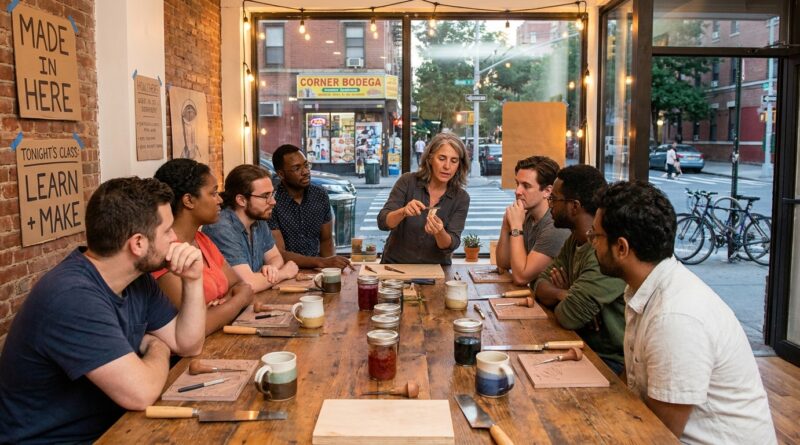
The Hyper-Local Class Boom: How Neighborhood Hobby Schools Are Turning Makers Into Micro-Businesses
You know the feeling. You save a video on sourdough, screen printing, candle pouring, or beginner welding, tell yourself you will try it this weekend, then nothing happens. The gap is not inspiration. It is access. Most people do not need more content. They need one real person nearby who can say, “Come over Tuesday, here’s the tool, here’s how you hold it.” At the same time, plenty of local makers have real skill but no good business lane. Craft fairs are hit or miss. Online shops are crowded and cheap. That is why hyper local craft classes are catching on in such a big way. A two-hour sewing lesson in a church basement or a backyard pottery night is not just a cute community event. It is a practical way for neighbors to learn useful skills, pay local experts upfront, and help turn hobbies into steady micro-businesses that can actually last.
⚡ In a Hurry? Key Takeaways
- Hyper local craft classes give learners a simple, trusted way to build hands-on skills while giving local makers direct income.
- Start by checking community boards, local libraries, neighborhood groups, makerspaces, and small businesses that already host workshops.
- Small classes work best when they are clear on safety, tools, price, and skill level before anyone signs up.
Why these neighborhood classes are suddenly making sense
People are worn out by endless scrolling. Watching someone tuft a rug or glaze a mug is relaxing. Learning to do it yourself is another story.
Most online tutorials skip the messy middle. They do not tell you which beginner tool is actually worth buying, what can go wrong in the first ten minutes, or whether your first attempt is supposed to look terrible. A local class does. You can ask a dumb question. You can borrow equipment. You can see how a real person sets up their space.
That matters more than it sounds. It lowers the friction that keeps people stuck.
For the teacher, the model is just as useful. Instead of chasing one-off product sales, they can earn from teaching what they know. One jewelry maker can host six beginners on a Saturday afternoon and make more predictable money than from hoping a weekend market goes well.
What “hyper local” really means here
This is not about giant adult-ed catalogs or expensive destination workshops. Hyper local craft classes are small, nearby, and personal. Think walking distance, short drive, or one neighborhood over.
Common examples
Sewing intros in a tailor’s back room. Knife sharpening at a hardware store. Fermentation nights at a neighborhood cafe. Soap making in a home studio. Basic wood repair in a garage workshop. Printmaking in a library meeting room.
The point is not polish. The point is trust and access.
Why this is more than a hobby trend
It helps to stop thinking of these classes as side entertainment. They are often the first step in rebuilding practical local production.
Someone takes a mending class and starts repairing clothes for neighbors. Someone learns candle making and starts selling small batches for events. Someone attends a bread workshop, then begins taking weekly preorders on the block.
That is a pipeline. Small, yes. But real.
If you want the bigger picture, The Hyper-Local Makerspace Wave: How Neighborhood Workshops Are Becoming the New Factory Floor captures this shift well. The basic idea is simple. Local skill-sharing spaces are not a novelty. They are becoming part classroom, part production floor, part safety net for communities that want more control over what they make and fix.
How to find hyper local craft classes without wasting time
This is where many people give up too early. They search one app, find nothing, and assume nothing exists nearby.
Look in boring places first
The best classes are often the least marketed. Check library calendars, community college boards, neighborhood Facebook groups, church newsletters, food co-ops, local fabric stores, garden centers, and independent coffee shops.
Ask businesses one useful question
Instead of “Do you have classes?” ask, “Do any of your regulars teach beginners?” That gets better answers. Owners often know the ceramicist, bike mechanic, or baker who has been thinking about teaching but has not posted it widely.
Search by skill, not by platform
Try phrases like “beginner welding class near me,” “community sewing workshop,” or “fermentation class neighborhood” alongside the search term hyper local craft classes. You will often uncover event pages, bulletin boards, and local organizers that never show up in the usual class apps.
Check the setup before you book
Look for class size, tool access, cancellation policy, exact location, and whether materials are included. If those basics are vague, ask.
What makes a class worth joining
Not every workshop is good just because it is local.
Good signs
A clear beginner label. Small group size. Photos of the workspace. Specific supply lists. Honest examples of student results. A teacher who explains what you will finish by the end.
Red flags
Too many students for one instructor. No mention of safety. Confusing pricing. A class that expects you to buy lots of gear before you even know if you like the craft.
For beginners, the sweet spot is often one short intro class with shared tools. That keeps the cost low and your expectations realistic.
For makers, this can be a better business than selling more stuff
If you are a maker, classes can smooth out the feast-or-famine cycle. Products are hard. Materials cost money upfront. Shipping is annoying. Market foot traffic is unpredictable.
Teaching flips the timing. Students pay first. Materials can be planned. Waste is lower. Revenue is easier to forecast.
A simple starter format that works
Choose one beginner-friendly project. Keep it to 90 minutes or two hours. Limit the group to six or eight people. Include materials. Price it so your time counts, not just your supplies.
Examples are everywhere. A visible-mending class. Intro to hand-built pottery. Basic spoon carving. Natural dyeing with kitchen scraps. Stamp carving for gift tags. Small-batch hot sauce. Each one can lead to repeat sessions, private bookings, or starter kits for sale.
Teach the first rung, not the whole ladder
Many skilled people overcomplicate their first class. Beginners do not need your full ten-year journey. They need one win. One project they can finish. One skill they can repeat at home.
How to host a neighborhood class without turning your home into chaos
You do not need a polished studio. You do need structure.
Keep the first class simple
Start with a single table-based activity if possible. Fewer moving parts. Less cleanup. Lower risk.
Use a real sign-up system
Even a basic booking page or shared form helps. Collect names, payment, emergency contact details if needed, and a short note on allergies or comfort with tools.
Set rules ahead of time
Spell out age limits, closed-toe shoe requirements, start time, and what happens if someone shows up late. It feels formal, but it prevents awkwardness later.
Do not wing safety
If the class involves blades, heat, chemicals, food handling, or power tools, say so clearly and plan around it. You may also need permits, insurance, or food safety compliance depending on where you live and what you teach.
Why upfront payment matters more than social media support
A like is nice. A paid seat is better.
One of the strongest parts of this trend is that it moves support from passive attention to direct spending. That is huge for local makers. Instead of telling a friend, “You should totally sell these,” neighbors can book a workshop, bring a friend, and put cash into the business right now.
That changes confidence. It also changes planning. A maker with three full classes on the calendar can justify buying better tools, renting a small space, or adding a second revenue stream.
What communities get out of this besides a fun night out
The payoff is bigger than a handmade mug or loaf of bread.
Communities with more hands-on classes tend to build more local trust. People learn who can fix a chair, alter a jacket, sharpen a tool, or teach a teen to solder. Skills stop feeling abstract. They become visible and close by.
That is a quiet kind of resilience. It is the difference between saying, “I have no idea where to start,” and “Actually, there’s someone two streets over who teaches that.”
At a Glance: Comparison
| Feature/Aspect | Details | Verdict |
|---|---|---|
| Learning experience | Small groups, live feedback, shared tools, and real-time troubleshooting make it easier for beginners to actually start. | Better than tutorials for getting unstuck fast. |
| Income for local makers | Teachers get paid upfront for their time and materials instead of relying only on uncertain product sales. | A strong path to steadier micro-business revenue. |
| Community impact | Classes build local skills, trust, and practical production capacity in sewing, woodwork, food making, repair, and more. | More important than most towns realize. |
Conclusion
Hyper local craft classes may look small from the outside. A few folding chairs. A garage bench. A bakery back room on a Thursday night. But that is exactly why they matter. These classes are quietly becoming one of the easiest ways to help people learn useful skills and help local makers earn real money without waiting for an algorithm to notice them. If you join one, host one, or simply help spread the word, you are doing more than planning a fun evening. You are helping build a more resilient local supply chain, one person and one project at a time. Every backyard pottery session, kitchen-table printmaking lesson, or beginner sewing circle can become the seed of a micro-business, a repair culture, or a stronger neighborhood connection that big global brands cannot copy.