The Hyper-Local Taproom Shift: How Neighborhood Breweries Are Quietly Turning Local Ingredients Into Community Hubs
You want to buy local. Fair enough. The annoying part is that it is surprisingly hard to tell which brewery is actually putting money back into nearby farms, neighborhood makers, and local workers, and which one is just using the word “local” as a vibe. Most people do not have time to quiz bartenders about grain bills, hop contracts, or where those taproom mugs came from. So weekend spending drifts to the loudest brand, not the most rooted one.
That matters more than it sounds. A local craft brewery supporting local farmers can keep dollars moving through your own region instead of sending them off to national suppliers. It can also turn a simple night out into a small act of community support. The good news is that many neighborhood breweries are already doing this work. They are buying local grain, pouring collaboration beers, hosting food trucks, and featuring nearby artists. The problem is visibility. Once you know what signs to look for, it gets much easier to spot the taprooms that are truly building something close to home.
⚡ In a Hurry? Key Takeaways
- Breweries that name their farms, maltsters, artists, and food partners are usually the ones putting real money into the local economy.
- Check the beer menu, website, social posts, and taproom walls for specific sourcing details before you choose where to spend your weekend budget.
- “Locally owned” is good, but “locally sourced” has bigger ripple effects for farmers, makers, and living-wage jobs nearby.
Why this quiet shift matters
For years, a lot of craft beer was sold on personality. Clever names. Cool cans. A reclaimed-wood bar. None of that is bad. But something more practical is happening now.
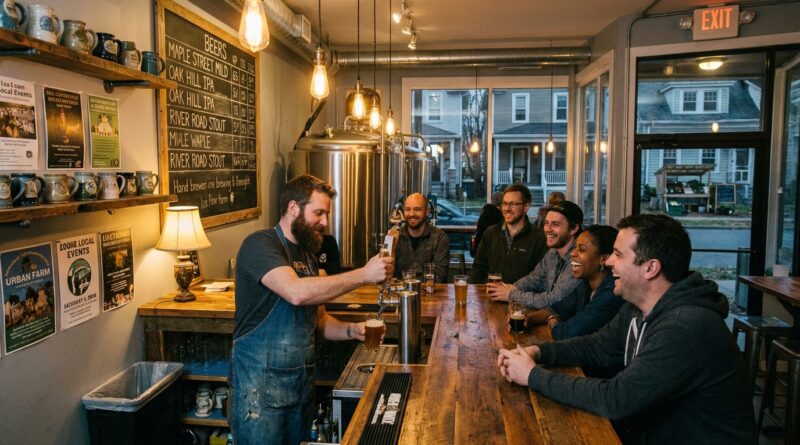
Small breweries are starting to act like neighborhood anchors. They are working with regional grain growers, nearby hop farms, local coffee roasters, bakers, ceramicists, screen printers, and pop-up kitchens. It is less about chasing hype and more about building a dependable local circle.
That is good for the brewery. It is good for the supplier. And it is good for residents who want their money to stay close to home without turning every purchase into a research project.
What “local” really means in a taproom
This is where things get fuzzy. A brewery can be locally owned but still buy most of its ingredients from far away. Another brewery might be quieter about branding but source grain from a farm two counties over and pour beer in mugs made by a ceramicist down the street.
If you are trying to find a local craft brewery supporting local farmers, look for specifics, not slogans.
Good signs to watch for
These are the clues that usually mean a brewery is doing the real work:
- The menu names the farm, malt house, or hop grower.
- The brewery posts harvest visits or supplier spotlights on social media.
- Seasonal beers are tied to local crops, not just generic fall or summer themes.
- Food trucks are local regulars, not random one-off bookings.
- Merch, glassware, or decor comes from local artists or makers.
- Staff can easily answer where ingredients or products come from.
Red flags to notice
You do not need to be suspicious of every business. But a few patterns are worth noticing.
- “We support local” with no names attached.
- No mention of suppliers anywhere online or in the taproom.
- Decor and collaborations feel mass-produced, even when the branding says community-first.
- Staff seem unsure when asked simple sourcing questions.
How breweries become community hubs without making a big speech about it
The best neighborhood taprooms often do this quietly. They host a farmers market pop-up on Saturday. They bring in a taco truck that started three blocks away. They sell candles, mugs, prints, or shirts from local makers at the bar. They turn trivia night or a new beer release into a place where people actually meet one another.
That sounds small. It is not.
A taproom has one big advantage over lots of other local businesses. People already use it as a social stop. Friends were going to meet somewhere anyway. If that “somewhere” also supports nearby agriculture and craft work, the community return gets much bigger without asking people to change their habits much.
A simple 5-minute check before you go out
If you want your spending to do more good, you do not need a spreadsheet. Use this quick scan.
1. Check the brewery website
Look for pages called “About,” “Our Partners,” “Sourcing,” or “FAQ.” If a brewery is proud of local suppliers, it usually says so clearly.
2. Read the beer list closely
Specific language matters. “Brewed with River Bend Malt” tells you more than “made with local ingredients.”
3. Scan Instagram or Facebook
Many breweries are better at showing local partnerships than explaining them on their websites. Look for tagged farms, artists, food trucks, bakeries, or event partners.
4. Ask one easy question at the bar
Try this. “Do you all work with any local farms or makers?”
You are not interrogating anyone. You are giving the brewery a chance to tell its story. The answer usually tells you a lot, fast.
5. Reward the places that are transparent
If a brewery makes local sourcing visible, support that effort. Buy a pint. Bring a friend. Share the place with neighbors. Transparency only spreads if customers respond to it.
What residents get out of this, beyond the beer
There is a practical reason to care. Local supply chains create more touchpoints for real people in your area. More farm orders. More packaging work. More design gigs. More shifts for taproom staff. More chances for a small food business to get discovered.
And there is a social reason too. Places that regularly mix residents, growers, cooks, artists, and workers tend to feel more alive. Not in a buzzword way. In a real way. People recognize each other. They hear about local events. They find new businesses through friends instead of ads.
What makers and farmers get out of the trend
For a farmer, maltster, ceramicist, printmaker, or food vendor, breweries can be one of the fastest local markets to enter. A collaboration can start with a single event or seasonal product instead of a long retail contract.
That lowers the barrier. A hop grower can get featured in a harvest ale. A ceramicist can make a small run of mugs for a stout release. A food truck can test a neighborhood audience in one evening. These are manageable experiments, not giant bets.
When they work, they often lead to repeat business. That is where the real value shows up.
How to talk about it without sounding preachy
You do not need to turn drinks with friends into a lecture on regional economics. Keep it simple.
Try saying, “This place actually buys from nearby farms,” or “They do events with local makers a lot.” That is enough. Most people like the idea once they hear it in plain English.
The goal is not guilt. It is visibility.
If you run a brewery, make the local work easier to see
A lot of breweries are already doing the hard part. They just are not showing it clearly enough.
What helps customers notice
- Name suppliers on menus and can labels when possible.
- Add a simple sourcing section to the website.
- Use table cards or chalkboards to explain collaborations.
- Tag partner farms, artists, and food vendors in social posts.
- Train staff with a few easy talking points.
People cannot reward what they cannot see. The more visible the local chain is, the easier it is for customers to choose it.
At a Glance: Comparison
| Feature/Aspect | Details | Verdict |
|---|---|---|
| Locally owned vs locally sourced | A brewery may be owned in town but still buy most ingredients and products from outside the region. | Best option is both, but local sourcing creates the bigger economic ripple. |
| Marketing claims vs named partners | General “support local” language is common. Naming farms, maltsters, artists, and food vendors is much more meaningful. | Specifics beat slogans every time. |
| One-off events vs ongoing collaborations | A single pop-up is nice. Recurring food trucks, repeat farm partnerships, and regular maker features show stronger commitment. | Look for repeat patterns, not just special-event optics. |
Conclusion
The best part of this shift is how easy it can be to support once you know what to look for. Small breweries are already doubling down on local grain, hops, and collaborations with nearby food trucks, ceramicists, and artists, but a lot of that effort still stays hidden in plain sight. When residents can quickly spot the taprooms doing the most local good, weekend spending starts helping regional agriculture, living-wage production jobs, and the everyday social life of a neighborhood. And for makers, these breweries can be a fast, reachable market that leads to real partnerships in weeks, not years. So next time you meet friends for a drink, ask one simple question about sourcing. That tiny bit of curiosity can keep a lot more value close to home.