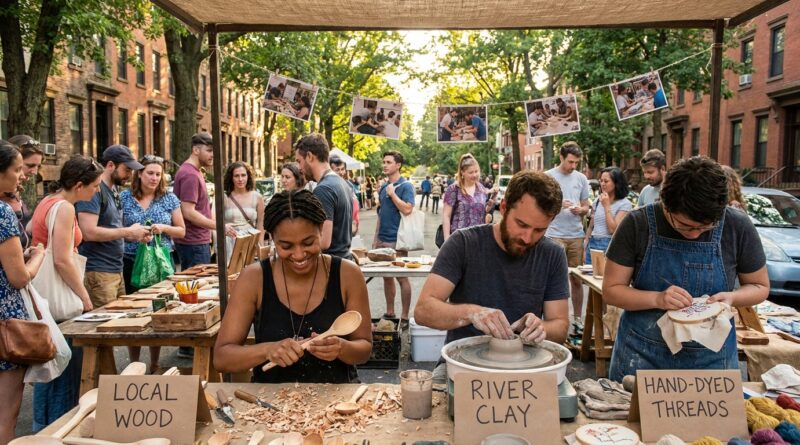
The Hyper-Local Craft Fair Shake-Up: How Real Makers Are Quietly Reclaiming Their Own Markets
You can feel the disappointment almost immediately at some “local” craft fairs. You show up hoping to meet the person who glazed the mug, stitched the bag, or poured the candle. Instead you get phone-case resellers, bulk-import jewelry, and a row of MLM tables with rehearsed sales scripts. If you are a real maker, it is worse. You pay the booth fee, haul your setup across town, and spend the day explaining why your handmade price cannot compete with factory-made stuff pretending to be handmade. That frustration is pushing many craftspeople and shoppers toward the same idea. Stop waiting for better events and start building smaller, stricter, truly local ones. If you have been wondering how to start a local craft fair for real makers, the good news is that it does not take a convention center or a giant budget. It takes clear rules, careful curation, and the nerve to say no to junk.
⚡ In a Hurry? Key Takeaways
- To start a local craft fair for real makers, begin with strict vendor standards and a small curated event, not a giant open-call market.
- Use a simple application that asks who made the work, where it is made, and how it is produced. Then verify it.
- Your value is trust. Shoppers will come back when they know the money stays in the community and the goods are genuinely handmade.
Why so many craft fairs lost the plot
It usually happens slowly. An organizer wants to fill more booths. Vendor fees help cover costs. A few exceptions get made. Then a few more. Before long, “handmade” means almost anything, and “local” means someone can drive to the venue in under an hour.
That drift hurts everyone except the resellers. Real makers get undercut. Shoppers lose confidence. The event may still be busy, but it stops being useful.
This is the opening for a better model. Smaller. Pickier. More neighborhood-minded. Less interested in filling every square foot and more interested in protecting trust.
How to start a local craft fair for real makers
The biggest mistake is starting with tables and tents. Start with standards. If the rules are fuzzy, the market will get fuzzy too.
1. Write a plain-English maker policy
Keep it short enough that people will actually read it. A good policy answers three things.
- What counts as handmade.
- What counts as local.
- What is not allowed.
For example, you might define handmade as designed and physically produced by the seller or a small in-house team. Local might mean made within your county or within 30 miles of the event. Not allowed might include drop-shipped goods, wholesale imports, white-label products, and MLM participation.
Be specific. “No resale” sounds nice, but people will argue around it. “No imported bulk goods repackaged as handmade” is much harder to dodge.
2. Keep the first event small
You do not need 80 vendors. In fact, 15 to 25 strong makers is often better. It feels full, shoppers can actually meet people, and quality control is easier.
A church hall, school courtyard, brewery patio, community center lot, or library lawn can work well. The best venues already have neighborhood foot traffic and built-in trust.
This is one reason local breweries have become such strong community anchors. The same instinct that makes people seek out ingredient transparency also shows up in shopping habits. If you liked the way community businesses are building real local identity, The Hyper-Local Taproom Shift: How Neighborhood Breweries Are Quietly Turning Local Ingredients Into Community Hubs makes a similar point from the food and drink side.
3. Use an application, not just a sign-up form
If anyone can pay and appear, you are not curating. You are renting parking spaces.
Your application should ask:
- What do you make?
- Where is it made?
- Who makes it?
- What materials do you use?
- Do you use any production partners?
- Website, social media, or studio photos
This is not about being nosy. It is about protecting the event. Most real makers will be relieved that you are asking.
4. Verify without turning into a detective show
You do not need a forensic lab. You do need basic checks.
Look for process photos. Compare product shots across marketplaces. Watch for suspiciously broad catalogs, like a booth that sells laser-cut signs, gemstone bracelets, phone accessories, tumblers, and baby clothes all at once. That does not automatically mean fraud, but it should prompt questions.
If needed, ask one direct, friendly follow-up. “Can you share a quick photo of your workspace or a short description of your process?” Honest makers usually answer quickly.
5. Set booth fees to support quality, not clutter
Cheap fees can attract a flood of low-effort applications. Very high fees punish actual artisans. The sweet spot is enough to cover venue, insurance, signs, and promotion, while staying fair for small businesses.
Many successful neighborhood markets also keep things simple:
- Flat booth fee
- No percentage of sales
- Discount for returning approved vendors
- Shared booth option for two compatible makers
When makers know what they are paying for, they are less resentful. Spell it out. Tables? No. Electricity? Maybe. Staff help with load-in? Yes. Promo support? Absolutely.
What shoppers actually want from a “real maker” market
Most customers are not asking for perfection. They are asking for honesty.
They want to know that the pottery was made by the potter standing there. They want to ask how the soap is scented. They want to buy a gift with a story that is true.
That means your event branding should focus less on cute graphics and more on trust signals.
Use trust-building details everywhere
- “Handmade by local makers only”
- “No resale. No MLMs.”
- “Every vendor is reviewed before acceptance”
- “Meet the person who made it”
Those are not minor details. They are the whole pitch.
Ask vendors to display process, not just product
A few work-in-progress photos on each table can change the whole tone of the market. A weaver showing yarn stages, a woodworker showing rough-cut boards, or a printmaker showing carving tools reminds shoppers that handmade work has time and skill behind it.
That helps with pricing too. People are more willing to pay fairly when they can see the labor.
How to pitch the event to venues, sponsors, and your town
If you are wondering how to start a local craft fair for real makers without sounding like you are just planning another weekend pop-up, frame it as a community trust project.
Your pitch should be simple:
- It keeps spending local.
- It supports working artists and craftspeople.
- It gives residents a verified place to buy local gifts and goods.
- It adds foot traffic to nearby businesses.
This matters when talking to downtown groups, small business alliances, chambers of commerce, and neighborhood associations. They may have heard “craft fair” a hundred times. They pay attention when they hear “curated local maker market with anti-resale rules.”
What to include in a one-page pitch
- Event mission
- Vendor standards
- Estimated number of makers
- Expected attendance
- Parking and setup plan
- Insurance and permit needs
- Community benefit
Keep it neat. Keep it practical. People say yes faster when they can picture the day.
Rules that save you from drama later
Every organizer wants to be nice. Good. Be nice. But put the rules in writing anyway.
Include these in your vendor agreement
- All displayed goods must match approved application categories
- No substitute inventory without prior approval
- No MLMs or direct-sales companies
- No wholesale resale unless the event has a separate clearly labeled vintage or curated goods section
- Organizer may remove non-compliant items or vendors without refund
- Setup and teardown times
- Weather and cancellation policy
That last line about refunds feels harsh until you need it. Then it feels necessary.
Marketing a hyper-local market without wasting money
You do not need a giant ad buy. You need repeated local reminders.
Focus on three channels first
- Neighborhood Facebook groups and local event calendars
- Instagram posts that introduce each maker
- Printed flyers in coffee shops, libraries, taprooms, and small stores
The most effective promotion is usually vendor-led. Give makers a promo kit with square graphics, caption ideas, and event details. The audience already trusts them.
Also, do not just advertise products. Advertise standards. “A market of juried local makers” tells people why this one is different.
Use maker spotlights
Post one maker a day in the two weeks before the event. Share one photo of the finished work and one photo of the process. That tiny bit of transparency does a lot of heavy lifting.
How to run the day so it feels good, not chaotic
People remember the vibe. If load-in is a mess, signage is missing, and half the vendors look confused, the market feels shaky even if the products are great.
Day-of basics that matter more than you think
- Clear check-in point
- Booth map sent in advance
- Visible signs at entry and parking areas
- Water and bathroom access
- A volunteer or two for quick vendor help
- A staffed info table with event rules and maker list
If possible, walk the event before opening and look for anything that breaks the promise of the market. Random retail racks. Boxed inventory that looks suspicious. Signage from direct-sales brands. It is much easier to fix problems at 9:45 than at 1:15 after shoppers notice.
How to handle the hard part, saying no
This is where many good markets slide backward. Someone seems nice. Someone is a friend of a sponsor. Someone says they are “small business too.” All true, maybe. Still not the right fit.
You can say no politely:
“Thanks for applying. At this time, our market is limited to handmade goods produced by local makers, so we are not able to accept resale or direct-sales businesses.”
Short. Respectful. Final.
The clearer your standards, the less personal these decisions feel.
How real makers can band together if organizers will not fix it
If your local events keep ignoring the problem, a handful of committed artisans can start their own market. In many places, that is exactly what is happening. Potters, textile artists, printmakers, woodworkers, bakers, and candle makers are comparing notes and building something smaller but more credible.
You do not need unanimous buy-in from the whole town. You need a core group that agrees on standards and is willing to protect them.
A practical starter model
- 8 to 12 respected local makers
- One affordable venue
- One clear mission statement
- One shared vendor review process
- Quarterly events instead of monthly burnout
That kind of market often grows by reputation, not by scale. Which is exactly the point.
At a Glance: Comparison
| Feature/Aspect | Details | Verdict |
|---|---|---|
| Open-call craft fair | Easy to fill, but often mixes handmade goods with resale items, imports, and MLMs | Fast to organize, weak on trust |
| Curated hyper-local maker market | Smaller vendor count, reviewed applications, clear handmade and local standards | Best option for serious makers and confident shoppers |
| Vendor screening process | Requires applications, process photos, and written rules, but cuts down on disputes later | A little more work upfront, much stronger event overall |
Conclusion
There is a real split right now between people who honestly want to support nearby makers and events that use the word “local” as decoration while sending money out of the community. The fix is not complicated, but it does require backbone. If you want to know how to start a local craft fair for real makers, start with standards, keep the first event manageable, verify who is selling, and make trust the whole product. When that happens, everybody wins. Residents get a reliable place to spend close to home. Serious craftspeople get a market where their work is not buried under mass-produced junk. And your neighborhood gets something more valuable than a shopping day. It gets a place where authenticity is visible, personal, and rooted right there on the ground.