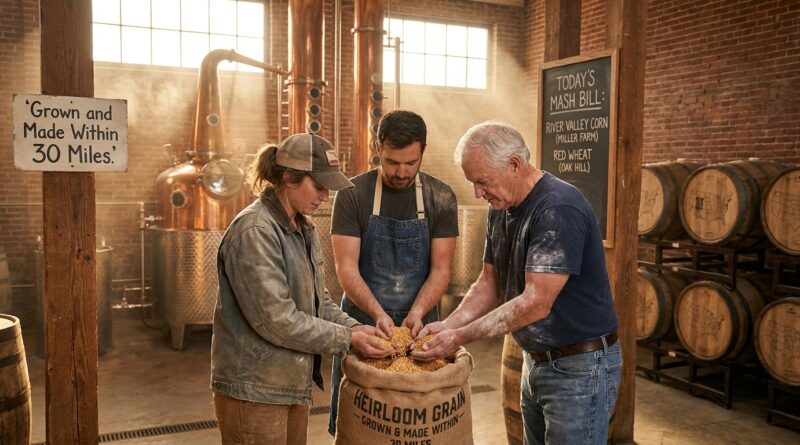
The Hyper-Local Grain Loop: How Neighborhood Distillers Are Quietly Turning Nearby Farms Into Flavor Powerhouses
You are not imagining it. A lot of bottles wear words like “craft,” “small batch,” and “local” while telling you almost nothing about where the grain came from, who grew it, or whether any of your money stays in the region. That is why the hyper local grain to glass distillery movement matters. It cuts through the vague label language and asks a simple question. Did this spirit start with nearby farms, nearby malt, and nearby hands? In the best cases, the answer is yes, and that changes more than flavor. It means a distiller is buying grain from local growers, working with area malt houses, hiring local people, and building a tighter supply chain that keeps money and know-how close to home. For drinkers, that turns a bottle from a clever story into something you can actually verify, support, and taste.
⚡ In a Hurry? Key Takeaways
- A real hyper local grain to glass distillery can usually tell you which farms grew the grain, where it was malted, and where it was distilled.
- Check the label, website, tasting room menu, or just ask staff directly for farm names and sourcing distances.
- True local sourcing often costs more, but it usually supports better regional jobs, stronger farm income, and more transparent production.
What a “grain loop” actually means
Think of a grain loop as a neighborhood supply chain. A farm grows rye, corn, barley, or wheat. A nearby malt house cleans and malts it, if the spirit needs malted grain. A local distillery ferments, distills, ages, and bottles it. Then local shops, bars, and drinkers buy it. Money circles back into the same region instead of leaking out to giant commodity suppliers far away.
That sounds simple, but it is a big shift from how much of the booze world normally works. Plenty of small brands buy bulk neutral spirits or sourced whiskey, then blend or finish it under a local-looking label. That is not automatically bad. It just is not the same thing as a hyper local grain to glass distillery that starts with raw grain and a relationship with nearby agriculture.
Why people are paying attention now
Two things happened. First, shoppers got tired of fuzzy marketing. Second, farmers and distillers started seeing the upside of working together more directly. When local grain is used intentionally, the result can be more traceable ingredients, more interesting flavor, and steadier demand for regional crops.
This also helps rebuild skills that disappeared in many places. Malting. Variety selection. Soil-focused grain farming. Small-scale milling and fermentation knowledge. These are not trendy extras. They are the plumbing of a more resilient local food and drink economy.
Why local grain can change the taste
Spirits people talk about terroir, and yes, sometimes that can sound a little precious. But there is a practical point underneath it. Grain variety, local climate, soil conditions, and malting choices can all shape flavor.
It is not just “barley is barley”
Heirloom corn can bring deeper sweetness. Different rye varieties can push spice in different directions. Local maltsters may toast or kiln grain in ways that give a distillery a signature profile. In a commodity system, the goal is consistency at scale. In a local loop, the goal is often character.
Distillers can work closer to the source
When the farm is an hour away instead of several states away, the distiller can talk directly with the grower. They can request certain varieties. They can plan around crop quality. They can even turn a great harvest year into a limited release that actually reflects that place and season.
How to tell if a bottle is the real thing
This is where many shoppers get stuck. The bottle may look earthy and honest, but the proof is in the details.
Good signs to look for
If a distillery is truly local-first, it usually says so clearly. Look for specific farm names, county names, grain percentages, or mileage from farm to still. “Made with New York rye from Smith Family Farm” means something. “Inspired by local agriculture” means almost nothing.
Questions worth asking
If you are at a tasting room or bottle shop, ask these:
- Which farms grew the grain?
- Is the grain malted locally or shipped out?
- Do you distill on site?
- Is this your own spirit or sourced from another producer?
- How much of your grain bill comes from within the region?
A real hyper local grain to glass distillery should be able to answer without squirming.
Watch for vague wording
“Crafted by,” “produced for,” and “hand finished” can all appear on bottles that were not distilled by the brand selling them. Again, that does not make the spirit bad. It just means the local story may be thinner than it looks.
Why this matters beyond the bottle
The flavor story gets the attention. The economic story is just as important.
More money stays local
When distillers buy nearby grain, they create demand that local farmers can count on. When local malt houses exist, they add another layer of regional jobs and skilled work. The spending does not stop at the distillery door. It spreads to trucking, equipment repair, hospitality, label printing, warehousing, and tourism.
Farms can diversify
Commodity agriculture can be brutal. Margins are tight, and growers often have little control over pricing. Selling to local distillers can open up a smaller but more stable niche, especially for specialty grains, heirloom varieties, or identity-preserved crops.
Soil stewardship can become part of the product
Some of the most promising grain loops include cover crops, crop rotation, reduced chemical use, and better water practices. The point is not that every local distillery is automatically sustainable. The point is that a shorter, more transparent chain makes it easier to reward the producers who are doing the work well.
How to find a hyper local grain to glass distillery near you
You do not need a trade badge or a whiskey podcast habit to do this. Start simple.
1. Read past the front label
The front is branding. The back is where some truth lives. Look for phrases like “distilled from estate-grown grain,” “100% region-grown rye,” or named farm partnerships.
2. Check the distillery website
Good producers are proud of this stuff. They often have a sourcing page, a farm partners page, or product notes that name the grain origin. If the site talks a lot about heritage and almost nothing about actual sourcing, that tells you something too.
3. Visit the tasting room
This is often the fastest way to sort the real thing from the marketing thing. Ask what is in the mash bill and where it came from. If the staff lights up and starts naming farms, you are onto something.
4. Ask local bars and bottle shops who knows their producers
The best independent shops usually know which brands are truly local in substance, not just style. A good buyer will often steer you right.
What to expect when you buy one
Do not expect it to taste like a mass-market whiskey or vodka. That is often the point.
Prices may be higher
Small-batch, local-input spirits cost more to make. The grain can cost more. The labor definitely does. Bottling at a smaller scale is pricier too. If you want the local farm link to be real, that premium is usually part of the deal.
Flavor may be more distinct
Sometimes that means richer and more memorable. Sometimes it means a little quirky. Small regional systems are not designed to iron out every difference. They are designed to keep identity in the glass.
Availability may come and go
That can be annoying, but it is also a sign that the supply chain is real. Harvests vary. Batches sell out. Malt schedules change. Real local production is not always endless.
What distillers need from buyers
Support is not just about buying one bottle and feeling virtuous. If you want these grain loops to grow, repeat business matters. So does curiosity. Ask stores to carry transparent local producers. Order them at bars. Bring them to gatherings. Tell people why the sourcing matters.
That kind of demand helps local distillers justify longer-term contracts with growers. Those contracts help farms plan acreage. That planning gives malt houses confidence to expand. Small actions can stack up fast when the loop is tight.
At a Glance: Comparison
| Feature/Aspect | Details | Verdict |
|---|---|---|
| Sourcing transparency | Real local producers name farms, maltsters, grain types, and often distances. | Best sign you are buying the genuine article. |
| Economic impact | More of the bottle price can support nearby farms, craft labor, and regional suppliers. | Worth paying attention to if you want local dollars to stay local. |
| Flavor and consistency | Hyper-local spirits may show more character and batch variation than commodity-based products. | Great for drinkers who want identity, less ideal if you only want sameness. |
Conclusion
If you are tired of “craft” meaning everything and nothing, this is a useful place to start. A true hyper local grain to glass distillery gives you something solid to look for. Named farms. Local malt. On-site distilling. Clear sourcing. Better yet, your purchase can do more than stock your shelf. It can help keep farming, skilled production, and soil-minded agriculture rooted close to home. That is the real promise of these quiet grain loops. They are not just making interesting bottles. They are rebuilding regional supply chains one batch at a time. And when you choose them on purpose, you help turn everyday buying into a small but real push for stronger local agriculture, better-paid craft work, and more resilient neighborhood economies.