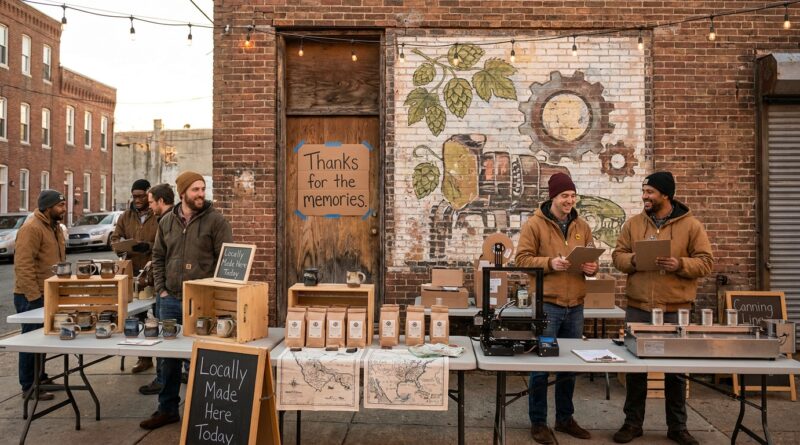
The Hyper-Local Closure Shock: How Neighborhood Makers Can Turn Big Craft Shutdowns Into a Backyard Reboot
It stings when a favorite brewery, roastery, or little maker shop shuts its doors. One week it is where neighbors gather, where local bands play, where someone remembers your usual. The next week it is dark windows and a hand-lettered goodbye. That loss is real. It is not just about beer or candles or handmade goods. It is about routine, trust, and a small piece of local identity going missing.
But a closure also leaves clues. If you are wondering how local makers can respond to craft brewery closures, the answer is not to copy the old business and hope for better luck. It is to look closely at what the place was really doing for the neighborhood. What did people come for? What products are now harder to get? What skills, gear, suppliers, and habits are suddenly sitting idle? That is where a backyard reboot can start. Smaller. Cheaper. More local. And often, more durable.
⚡ In a Hurry? Key Takeaways
- When a craft spot closes, do not just mourn the brand. Map the demand, habits, and gaps it leaves behind.
- Start with small collaborations like pop-ups, shared production, neighborhood markets, and preorder clubs instead of trying to build a full replacement overnight.
- Keep it legal and realistic. Food, drink, and home production rules matter, and simple low-risk pilots usually beat big expensive launches.
First, see the closure for what it really is
A neighborhood craft business usually does three jobs at once.
It sells a product. It creates a ritual. And it acts as a tiny piece of local infrastructure.
Take a brewery. People may miss the IPA, sure. But they may miss trivia night more. Or the patio. Or the easy place to meet friends without planning much. The same goes for a roastery or woodshop supply store. Customers are not only buying things. They are buying a reliable local pattern in their week.
That is the first shift in thinking. A shutdown is not just a missing storefront. It is a broken chain of local habits. If you can rebuild even one piece of that chain, you can start something useful.
Map what was lost before you try to replace it
Look for three kinds of gaps
Grab a notebook and keep it simple. Ask what the closed place used to provide in these categories:
- Product gap: What specific thing is now harder to buy nearby?
- Gathering gap: What event, vibe, or routine disappeared?
- Production gap: What equipment, know-how, or supplier relationship is no longer being used?
For example, a brewery closure may leave behind demand for fresh small-batch drinks, a Friday-night social spot, and a trained group of former staff who know fermentation, events, and local distribution.
Talk to real people, not just social media
Facebook comments are loud, but they are not always useful. Better questions come from short, direct conversations.
Ask neighbors things like:
- What did you actually buy there?
- What do you miss most?
- Would you preorder from a local maker if it were easy?
- Would you show up for a monthly market, tasting, or workshop?
You are looking for repeated answers. Patterns matter more than opinions.
Do not rebuild the old business model by default
This is where many well-meaning people get stuck. They see a brewery fail and think the solution is another brewery. Same size. Same rent burden. Same equipment bill. Same pressure to grow fast.
That can be a trap.
A smarter move is to rebuild only the parts the neighborhood truly needs. Maybe that means a shared tap pop-up hosted inside a restaurant. Maybe it means a local bottle club featuring small producers. Maybe it means a maker market with coffee, bread, hot sauce, ceramics, and live music once a month.
You do not need to replace a whole business to restore local energy. Sometimes you only need to restore access and momentum.
Small beats flashy right now
Start with low-cost tests
If you want a practical answer to how local makers can respond to craft brewery closures, here it is: run small tests before you pour money into a permanent space.
Good early experiments include:
- Preorder-only product drops
- Weekend pickup events
- Shared booth nights with several neighborhood makers
- Ticketed tasting events at an existing venue
- Subscription boxes built around local goods
- Workshop nights, like home fermentation, roasting, or soap making
These ideas do two things. They keep risk down, and they show you what people will actually pay for.
Use the backyard version first
Not everything starts in a commercial unit. Depending on your local rules, you may be able to begin with a garage workspace, a shared kitchen, a patio market, or a community center event.
The point is not to stay tiny forever. The point is to prove demand while costs are still manageable.
Find the hidden assets a closure leaves behind
When a craft business closes, people often see only the empty building. Look wider.
Hidden assets may include:
- Former employees with specialized skills
- Customers who still want local alternatives
- Unused equipment available secondhand
- Suppliers who lost an account and want new buyers
- Event organizers who need a new partner
- Local artists and food vendors who lost a venue
This is where neighborhood makers have an edge over outside chains. You are close enough to connect these dots fast. A distant company sees a failed location. A local maker sees ingredients for three smaller businesses and six community events.
Build a micro-alliance, not a hero story
One person rarely fixes a local scene alone. A group can.
Think in terms of a micro-alliance. Maybe it is a baker, a ceramic artist, a former brewer, a coffee roaster, and a restaurant owner. None of them can replace the old anchor by themselves. Together, they can create a new local rhythm.
What a good micro-alliance looks like
- One person handles scheduling
- One person manages the customer list
- One person secures a venue once a month
- Each maker commits to a clear product or service
- Everybody agrees on simple revenue splits and responsibilities
Keep the structure plain. If the plan needs a dozen meetings just to sell the first batch of goods, it is already too heavy.
Protect the community ritual
This part gets overlooked. A lot.
People return to local craft spaces because they become rituals. Friday pickup. Saturday market. Trivia night. Seasonal release. Workshop Wednesday. These patterns matter just as much as the product.
So if a brewery closes, ask which ritual you can preserve. Maybe the answer is not “make beer.” Maybe it is “keep Thursday nights alive.” That might look like a rotating maker social in a borrowed courtyard or a monthly street-level tasting event with local snacks and music.
When you save the ritual, you keep the social glue.
Keep money in the neighborhood on purpose
Local rebuilding works better when dollars circulate nearby instead of flying off to a big chain or distant marketplace.
That means being intentional about where you buy and who you partner with.
Simple ways to keep the loop local
- Use nearby printers, welders, designers, and food vendors
- Source ingredients and materials regionally when possible
- Create bundles with other neighborhood businesses
- Offer local pickup instead of shipping everything
- Share customer traffic through joint events
This is not just feel-good economics. It builds resilience. The more local links you have, the less exposed you are when one big player disappears.
Stay realistic about rules and risk
This part is less fun, but it is important.
If your reboot touches alcohol, prepared food, cosmetics, heat tools, or manufacturing equipment, check local regulations first. Home-based production rules vary. So do event permits, insurance needs, and labeling requirements.
You do not want a promising community effort derailed by preventable legal trouble.
A safer way to start
If the dream is complex, begin with the part that is easiest to do legally.
For example:
- Run community events before opening a production space
- Sell shelf-stable goods before perishable ones
- Use a licensed shared kitchen instead of a home kitchen
- Partner with an existing venue instead of signing a fresh lease
Slow and compliant may not sound exciting. It is often what keeps a good idea alive.
What shop owners can do this month
If you already own a local business, you may be closer to a solution than you think.
You probably have floor space, customer trust, and a payment system. That is enough to test a lot.
Good moves for existing local businesses
- Host a “former favorites, new locals” tasting or sample night
- Offer shelf space to neighborhood makers on consignment
- Turn slow nights into mini-markets or workshops
- Split event costs with two or three other local brands
- Start a preorder board for products people now miss
You are not only helping others. You are increasing foot traffic and making your own business more useful to the neighborhood.
What neighbors can do even without a business
You do not need a storefront to help restart local momentum.
Neighbors can organize demand, which is often the hardest part.
Useful things regular people can do
- Start a group preorder for local goods
- Offer a driveway, yard, or shared space for a legal pop-up
- Make a simple list of missing local products and services
- Connect former staff with local hosts and buyers
- Commit to recurring support, not just one grand opening visit
That last one matters most. One Instagram post is nice. Twelve months of showing up is what rebuilds a local scene.
What success looks like now
Success may not look like the old days.
It may be smaller. More spread out. Less branded. More collaborative.
That is okay.
A healthy neighborhood maker economy does not need one giant local star. It needs enough connected small players to keep products, skills, and social life moving. Think less “replacement empire,” more “mesh network.” If one part drops, the whole thing still works.
At a Glance: Comparison
| Feature/Aspect | Details | Verdict |
|---|---|---|
| Replacing a closed brewery | High rent, high equipment costs, long setup time, bigger risk if demand has changed | Usually too heavy as a first move |
| Running small local pilots | Pop-ups, preorders, shared events, and borrowed venues test demand fast and cheaply | Best place to start |
| Building a maker alliance | Spreads cost, shares audiences, and restores both products and community rituals | Most resilient long-term option |
Conclusion
Closures in craft brewing and niche local manufacturing are picking up, and too much of the talk stops at nostalgia or blame. That does not help the people still standing on the block, wondering what now. A better response is to map the opportunity hidden inside the loss. Look for unmet demand. Notice which community rituals vanished. Track the skills, supply links, and small-batch capacity left behind. Then pull neighbors and makers into small collaborations that can actually survive. You do not need to wait for another venture-backed brand to sweep in and “save” the scene. In many cases, the stronger answer is already nearby. Smaller. Closer. Smarter. You can mourn what is gone and still get to work. That is how a dark storefront becomes the starting point for a backyard reboot.