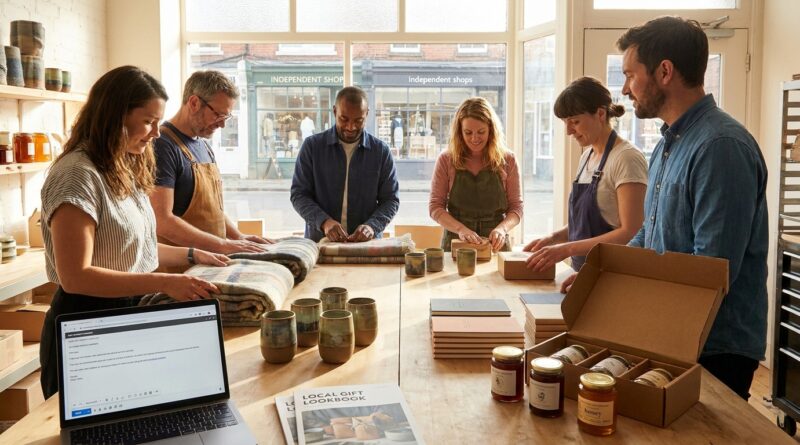
The Hyper-Local Corporate Gift Pivot: How Neighborhood Makers Can Quietly Replace Cheap Swag With Story-First Merchandise
Everyone is tired of the same sad conference tote. You know the one. Thin fabric, generic logo, maybe a plastic pen that stops working by lunch. Office managers know it gets ignored. Event planners know half of it ends up in a hotel trash can. And local makers, sitting a few blocks away with better products and better stories, often assume corporate budgets are locked up by giant promo companies. That gap is the opportunity. Companies are quietly looking for local corporate gifts from neighborhood makers because those items feel more thoughtful, more useful, and easier to talk about. A hand-poured candle from a nearby studio or a small-batch notebook from a local print shop says a lot more than imported swag ever could. The trick is not to pitch your work like craft fair inventory. Pitch it like branded hospitality, employee appreciation, and community-backed storytelling that happens to come in a box.
⚡ In a Hurry? Key Takeaways
- Local corporate gifts from neighborhood makers are already a fit for office welcome kits, client thank-yous, conferences, and holiday gifting.
- Start with a small, story-first offer such as 25 to 100 units, clear pricing, simple branding options, and a short note explaining who made it and where.
- Buyers want reliability as much as charm, so makers need realistic lead times, repeatable packaging, and easy reordering.
Why cheap swag is finally losing its grip
For years, the corporate gift world ran on convenience. Big catalogs. Fast ordering. Endless rows of mugs, USB drives, and stress balls. It worked well enough until buyers started noticing a problem. Cheap swag does not feel generous. It feels obligatory.
That matters more now because every gift carries a message. If a company says it cares about sustainability, community, or small business, a forgettable imported trinket undercuts that message fast. People notice. Employees notice too.
At the same time, supply chain headaches have pushed buyers to think closer to home. That is one reason pieces like The Hyper-Local Porch Factory: How Tiny Neighborhood Micro‑Factories Are Quietly Rewiring Supply Chains Street By Street ring true. More companies are open to buying nearby if it means better flexibility, clearer sourcing, and a gift people might actually keep.
The quiet shift buyers are making
Corporate buyers are not always saying, “We need artisan goods.” Usually they say something more practical.
- We need gifts that do not feel wasteful.
- We need a better story for this event.
- We want local options.
- We need something premium without looking flashy.
- We need 50 units now, then maybe 200 later.
That is where neighborhood makers can step in. Not by pretending to be a giant fulfillment company, but by offering something the giant promo vendors cannot. Specificity. Traceability. Real human connection.
What counts as a strong local corporate gift
Not every handmade product belongs in a corporate gifting program. The sweet spot is simple. It should be easy to package, easy to repeat, and nice enough to feel special without becoming fussy.
Good candidates
- Candles, soaps, and self-care items
- Letterpress cards and premium notebooks
- Ceramic mugs or tumblers, if packing is solid
- Small-batch snacks, coffee, tea, or spice blends
- Desk items, coasters, trays, or catchalls
- Textiles like tea towels, beanies, or tote bags with quality construction
Harder sells
- One-of-a-kind items with no consistent sizing or finish
- Fragile goods without tested shipping methods
- Products with lots of customization choices
- Anything that takes too long to reproduce at scale
Buyers do not want to manage complexity. They want a short menu and clear choices.
Reframe your product. You are not selling crafts.
This is the part many makers miss. Corporate buyers are rarely shopping for “beautiful handmade goods.” They are shopping for outcomes.
So instead of saying, “I make hand-poured candles,” say this:
“We create premium welcome gifts for new hires, client thank-you boxes, and holiday sets. Each piece is made in our neighborhood studio and can include a branded card about the maker and the sourcing.”
See the difference? Same product. Better frame.
Useful ways to position the same item
- Employee onboarding gift
- Speaker or VIP thank-you gift
- Holiday appreciation box
- Conference room drop gift
- Real estate closing gift
- Donor or board member appreciation gift
That language helps a buyer immediately picture where your product fits in their world.
Build a simple corporate gift offer
You do not need a giant catalog. In fact, please do not make one. Start with three offers.
Offer 1: The starter gift
A low-friction item in the $18 to $35 range. Think a candle, notebook set, coffee pouch, or desk accessory.
Offer 2: The boxed set
A more premium package in the $45 to $85 range. Two or three coordinated items, packed neatly, with optional branded insert cards.
Offer 3: The custom local story set
A higher-end option for holidays, executives, donors, or VIPs. This can include collaboration with another nearby maker. That turns one product into a fuller neighborhood story.
For each offer, spell out:
- Minimum order quantity
- Lead time
- Price per unit
- Packaging details
- Branding options
- Delivery or pickup area
That alone makes you easier to buy from than many talented makers who only show pretty photos on Instagram.
What buyers actually want to hear in your pitch
Good news. You do not need a slick sales script. You need a calm, useful one.
Keep the email short
Something like this works:
“Hi, I run a small studio in [neighborhood]. We make [product] that has worked well for employee gifts, event welcome bags, and client thank-yous. I thought of your team because more companies are looking for local options with a clear story and simple ordering. If helpful, I can send a one-page gift menu with pricing for 25, 50, and 100 units.”
That is it. No pressure. No dramatic claims. No begging for a meeting.
Lead with relevance, not biography
Your backstory matters, but not in sentence one. Start with the buyer’s problem. Then connect your product to a use case. Then add the story.
Make the story short and concrete
Buyers love details they can repeat internally.
- Made three blocks from our downtown office
- Poured in small batches by a two-person studio
- Printed on recycled stock by a neighborhood press
- Packed locally with zero plastic filler
Those details travel well in approval meetings.
Where to find nearby buyers without feeling awkward
You do not need a national outreach campaign. Start ridiculously close.
- Hospitals and health systems
- Colleges and universities
- Real estate brokerages
- Hotels and event venues
- Chambers of commerce
- Museums and nonprofits
- Mid-size employers with recruiting teams
- Coworking spaces and local agencies
Look for people with titles like office manager, event coordinator, people operations manager, HR manager, executive assistant, procurement specialist, or community partnerships manager.
Your first win may not be a holiday order for 500. It may be a 30-person retreat gift set. Perfect. Small orders prove reliability. Reliability turns into repeat business.
Make it easy for them to say yes
This part is not glamorous, but it matters a lot.
Have a one-page PDF ready
Include product photos, price tiers, lead times, branding options, and contact details. One page. Maybe two. Not twelve.
Offer sample packs
A buyer may spend thousands after touching a $25 sample. Make that sample feel organized and gift-ready.
Use plain pricing
Avoid mystery quotes unless the project is truly custom. Buyers like ranges they can work with quickly.
Be honest about production limits
If you can only do 75 units in two weeks, say so. A realistic yes beats an overpromised mess every time.
The story-first angle that makes local gifts worth more
Here is the key point. Neighborhood-made gifts are not “more expensive swag.” They are a different category.
They do three jobs at once:
- They thank the recipient.
- They reinforce the company’s values.
- They circulate money locally.
That is why a $48 local gift box can make more sense than a $14 pile of generic branded items. One gets used, photographed, and remembered. The other gets dumped in a drawer.
This is especially true when the packaging includes a short card about the maker, the neighborhood, and the materials. You are giving the buyer language they can pass on. That story is part of the product.
Common mistakes neighborhood makers make
Trying to customize everything
Custom work sounds appealing until it slows production and destroys your margin. Keep branding light. Think sleeve, hangtag, sticker, insert card, or color choice.
Underpricing because it feels “too corporate”
If your goods are made locally in small runs, price them that way. You are not competing with offshore bulk pricing. You are offering premium, traceable merchandise.
Pitching only at the holidays
Holiday gifting matters, but there are gift needs all year. Onboarding. Conferences. Client milestones. Board meetings. Team retreats. Think ongoing program, not one season.
Ignoring repeatability
If each batch looks wildly different, buyers get nervous. Keep your signature look, but make sure the corporate version can be repeated.
A simple starter plan for the next 30 days
Week 1
Choose three products that are easy to repeat and ship. Write one sentence for each describing the business use case.
Week 2
Create a one-page gift sheet with photos, minimums, prices, lead times, and branding options.
Week 3
Make a sample kit and a short email pitch. Build a list of 20 nearby organizations.
Week 4
Send the email. Follow up once. Then ask a few friendly local contacts if they know office managers, HR leads, or event planners who buy gifts.
That is enough to start. Really.
At a Glance: Comparison
| Feature/Aspect | Details | Verdict |
|---|---|---|
| Generic swag | Cheap per unit, easy to order, often forgettable and loosely tied to company values | Fine for bulk basics, weak for impact |
| Local corporate gifts from neighborhood makers | Higher per-unit cost, stronger story, better perceived value, clearer sourcing, more memorable | Best for appreciation, onboarding, events, and values-led branding |
| Maker readiness | Needs simple pricing, repeatable packaging, realistic lead times, and light customization options | Worth setting up before outreach |
Conclusion
There is a real opening here. Buyers are actively looking for values-aligned alternatives to anonymous promotional products, and many of them would rather buy nearby than order another box of stuff nobody wants. The mistake is thinking those budgets belong only to giant swag vendors. They do not. If you reframe your work as premium, traceable corporate gifting, keep the offer simple, and approach nearby companies with a low-pressure, story-first pitch, local corporate gifts from neighborhood makers can become a steady line of business. That means more resilient income for small producers, better gifts for companies, and more money staying in the neighborhood where it can do some actual good.