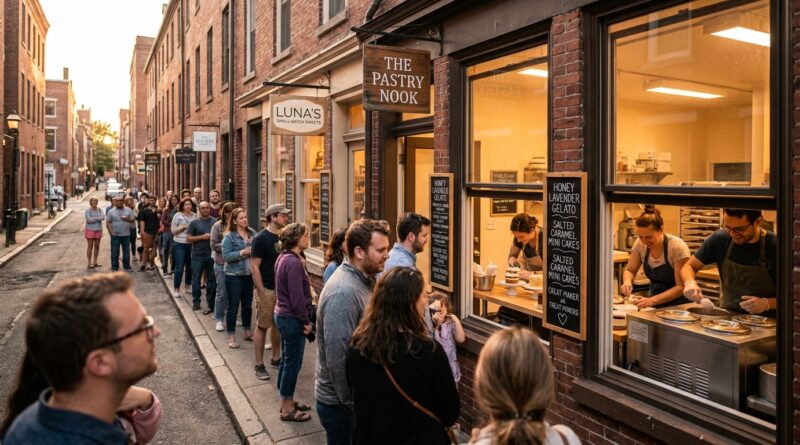
The Hyper-Local Little Treat Boom: How Neighborhood Sweet Spots Are Quietly Becoming Micro-Manufacturers
It is easy to miss what is happening on your own block. A tiny ice cream shop opens. A home baker starts weekend pickups. A dessert counter takes over a narrow storefront that used to sit empty. None of it looks like “manufacturing” in the way people picture factories or big food plants. That can be frustrating, especially if you are a local maker trying to understand where you fit. Most stories still point to big chains, packaged snack brands, or flashy food startups. Meanwhile, the real shift is often happening in one-room kitchens and scoop shops that mix, bake, freeze, pack, and sell a few steps from where people live. That is the heart of the hyper local dessert makers neighborhood treats boom. These businesses are not just selling sugar and comfort. They are quietly becoming micro-manufacturers, turning local ingredients, small spaces, and foot traffic into neighborhood infrastructure that feels personal, affordable, and surprisingly resilient.
⚡ In a Hurry? Key Takeaways
- Small dessert shops and cottage bakers are acting like micro-manufacturers by making products on-site and selling close to home.
- If you are a maker, start small with a tight menu, nearby suppliers, and pickup-friendly production that matches neighborhood demand.
- For communities, these businesses bring low-cost local spending, walkability, and more resilient food production without needing a huge facility.
This is not just a food trend
People want little treats. They also want them close by.
That matters more than it sounds. A $5 cookie box, a single scoop, or a slice of cake is a small luxury people can justify even when bigger spending feels shaky. And when that treat is a five-minute walk away, it becomes part of daily neighborhood life instead of a special trip.
That is why small dessert businesses are doing more than filling cravings. They are creating a local production loop. They source ingredients, test flavors, batch products in small runs, package them on-site, and sell directly to nearby customers. That is manufacturing at a neighborhood scale.
Why the biggest story is happening in the smallest spaces
When people hear “maker economy,” they often imagine large workshops, breweries, or shiny production kitchens. But dessert businesses show that a lot can happen in 400 square feet.
Small batches make the model work
A neighborhood brownie shop does not need to ship nationwide. It needs a reliable oven, a focused recipe list, and enough local demand to turn fresh batches quickly. That smaller rhythm can actually be an advantage. It cuts waste. It keeps menus flexible. It lets owners respond fast to weather, school events, and foot traffic.
Walkable sales change the math
If customers come from three or four nearby streets, a business can spend less on shipping, less on large-scale packaging, and less on broad marketing. The store itself becomes the ad. So does the smell.
The product is emotional, but the operation is practical
Desserts are fun. The business behind them is very grounded. These shops often use tight prep schedules, limited menus, simple equipment, and direct sales. That is exactly why they can survive and grow without looking like a traditional manufacturer.
What makes a dessert shop a micro-manufacturer?
Three things usually show up.
1. On-site or near-site production
Ice cream gets spun in the back. Cookies are baked before pickup windows. Frosting is piped a few feet from the register. The making is local, not hidden in a distant plant.
2. Short supply loops
Many of these businesses use milk from a nearby dairy, fruit from seasonal farms, local coffee, local honey, or even neighborhood-made toppings. Not every ingredient is local, of course. Cocoa and vanilla still travel. But enough of the mix can come from nearby to keep dollars circulating close to home.
3. Immediate neighborhood distribution
The product often travels only a few blocks, maybe a few miles. That means less dependence on complex logistics and more chance to build regulars who come back every week.
Why this boom is showing up now
A few pressures have lined up in the same place.
People want affordable comfort
Big nights out cost more. Travel costs more. Even casual dinners add up fast. A small treat feels manageable. It is a controlled indulgence.
Neighborhood habits changed
More people now notice what is close to home. Some work remotely. Some spend more time in their own district. Some just want one nice thing without crossing town. That has opened the door for hyper local dessert makers neighborhood treats to become part of the weekly routine.
Vacant small storefronts are getting second lives
Narrow spaces that are too small for bigger retailers can be perfect for cookies, gelato, soft serve, mochi donuts, pudding cups, or pickup baking. A compact footprint lowers the barrier to entry.
What local makers should learn from this
If you run a one-room kitchen, cottage bakery, or tiny dessert counter, the lesson is simple. You do not need to scale like a national brand to matter. You need a repeatable local system.
Start with one thing people talk about
Most strong neighborhood treat spots are known for a signature. Maybe it is a cinnamon roll Saturday. Maybe it is a rotating soft serve flavor. Maybe it is late-night cookies. Do not try to be the whole dessert aisle on day one.
Build production around the block, not the country
Ask basic questions. When do your neighbors walk by. What sells after school. What moves on rainy days. What can be made fresh in batches small enough to stay special but large enough to earn money.
Make pickup easy
Hyper-local works best when the buying process is friction-free. Clear hours. Reliable preorders. Fast takeaway. Good signs. A simple online menu. Nothing fancy required.
Talk about where ingredients come from
You do not need a long manifesto. Just be specific. “Strawberries from the farm ten minutes away” lands better than vague feel-good branding.
What neighborhoods get out of it
This is not only a win for business owners.
More walkable spending
Money stays closer to home when people can satisfy a craving on foot. That helps nearby shops too. A dessert stop often turns into a coffee run, a bookstore visit, or one more errand on the same block.
Safer-feeling, busier corridors
Small treat shops create evening and weekend foot traffic. A street with people lingering over cones and pastry boxes usually feels more alive than one full of dark windows.
Low-drama local manufacturing
Not every community is going to land a major factory. But many can support ten small makers producing food every day. That still counts. It creates jobs, uses local supply chains, and builds neighborhood identity without huge infrastructure fights.
The risk: big brands will copy the vibe
This is usually how it goes. Small operators prove there is demand. Then larger players move in with polished branding and a “local” look that is mostly marketing.
That does not mean independent makers lose by default. But it does mean they should claim their advantage early. Be genuinely local. Be specific. Be visible in the neighborhood. Let people see the mixing bowl, the freezer case, the tray rack, the pickup shelf. Real proximity is hard to fake.
How communities can support the shift right now
You do not need a giant economic development plan to help.
Choose the nearby option more often
One treat purchase a week from a local shop adds up. So do preorders for birthdays, school events, office snacks, and holiday boxes.
Help makers with predictable demand
Regular ordering matters more than one viral rush. If you manage a school, office, church, or neighborhood group, recurring small orders can stabilize a young business.
Make small spaces easier to use
Property owners and local officials should pay attention here. Tiny production-and-retail spaces can turn dead corners into active ones. Clean permits, fair leases, and simple signage rules go a long way.
At a Glance: Comparison
| Feature/Aspect | Details | Verdict |
|---|---|---|
| Production scale | Small-batch baking, freezing, mixing, and packing done on-site or very close by. | Ideal for testing demand and keeping quality high. |
| Neighborhood impact | Adds foot traffic, fills small storefronts, and keeps spending local within walking distance. | Strong value for corridors that need steady, low-cost activity. |
| Business resilience | Lower overhead than bigger food operations, but success depends on repeat local customers and clear operations. | Promising if the menu is focused and demand is consistent. |
Conclusion
The big idea here is refreshingly simple. A tiny dessert shop can be real local manufacturing infrastructure. It does not need steel tanks, loading docks, or national shipping to count. It just needs to make something on-site, source smartly, sell nearby, and become part of the block’s daily rhythm. That is why this moment matters. Small treat businesses are turning quiet corridors into walkable, feel-good destinations while showing that production can be human-sized and community-shaped. For residents, that means an easy way to support resilient local business right now. For makers, it offers a model worth copying before bigger brands dress up and call it their own.