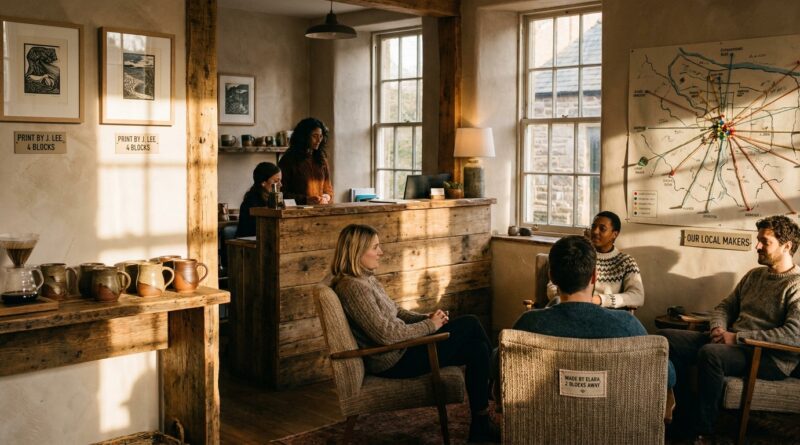
The Hyper‑Local Maker Hotel: How One Building Can Become A 24/7 Showcase For Neighborhood Craft
Most people meet local makers in flashes. A Saturday market. A holiday pop up. Maybe a craft fair you meant to revisit but never did. That is frustrating for shoppers, and even worse for the people trying to make a living with their hands. At the same time, plenty of hotels still fill their rooms with the same mass ordered lamps, prints, soaps, and chairs you could find in any city. A hyper local maker hotel fixes both problems in one move. It turns a building people already use every day into a living showroom for neighborhood craft. Guests sleep in locally made furniture, wash with locally made soap, drink from locally thrown mugs, and can buy what they actually touch. For cities trying to support small producers while downtowns change shape, this is not just a nice design idea. It is a practical way to connect visitor dollars to local work, all week long, not just on market day.
⚡ In a Hurry? Key Takeaways
- A hyper local maker hotel uses guest rooms, lobbies, and amenities as a 24/7 retail and storytelling space for neighborhood makers.
- Start small by sourcing high touch items first, like soap, ceramics, textiles, art, and minibar goods, then add furniture and workshops over time.
- The model works best when quality, safety, durability, and reliable reordering are built in from day one, not treated as an afterthought.
What is a hyper local maker hotel?
A hyper local maker hotel is exactly what it sounds like. It is a hotel that fills its spaces with goods made close by, then makes those goods part of the guest experience.
Not just a painting in the hallway with a tiny label no one reads. I mean the whole place works like a neighborhood catalog you can walk through. The bedside lamp comes from a local woodworker. The robe was sewn in town. The bathroom shelves hold soap from a nearby maker. The lobby coffee bar uses cups from a local ceramic studio. The guest can scan a code, read the story, and buy the item.
It is part hospitality, part retail, part local economic engine.
Why this idea matters right now
Cities are in a weird spot. Downtowns are changing. Office traffic is less predictable. Tourism is more competitive. At the same time, small manufacturers, artists, and craftspeople need steady demand, not just occasional applause.
A hotel already has foot traffic, purchasing budgets, replacement cycles, and guests looking for a sense of place. So instead of importing a generic “boutique” look from a vendor catalog, the property can use local work and keep more money in the neighborhood.
That solves a few problems at once.
It gives makers repeat business
A market sale is nice. A standing order from a hotel is better. If a hotel needs 200 soap bars every month, replacement mugs every quarter, or new framed prints for rotating rooms, that starts to look like real business support.
It gives guests something memorable
People say they want authentic travel. Then they check into rooms that look like they were copied from the same Pinterest board. A hyper local maker hotel gives visitors a real connection to the place they are in.
It shortens the supply chain
When furnishings and amenities come from nearby, reorders can be faster and easier. You are not waiting months for another shipment from far away if a lamp breaks or a basket wears out.
What it looks like in real life
The easiest way to picture this is to think zone by zone.
Guest rooms
This is the heart of the idea. Rooms can feature locally made headboards, bedside tables, woven blankets, ceramics, candles, bath products, and wall art. Small tags or QR codes can explain who made each piece and whether it is for sale.
Lobby and common spaces
The lobby becomes a mini gallery and store without feeling like a gift shop. Seating can come from local furniture studios. Shelving can hold rotating maker collections. A checkout desk can also handle purchases.
Food and beverage
Minibars, snack shelves, coffee bars, and welcome baskets are perfect for hyper local products. This is where the idea connects nicely with small food producers too. If you want a good example of how neighborhood producers are building small scale manufacturing systems, see From Backyard Bees To Blockwide Brands: How Hyper‑Local Food Producers Are Quietly Building New Micro‑Manufacturing Models.
Events and workshops
A maker hotel can host live demos, pop up classes, repair nights, tasting events, or “meet the maker” weekends. That keeps locals coming in too, which matters because a hotel that serves only out of town guests misses half the opportunity.
Why hotels are a better showroom than a market stall
A market asks people to make a decision fast. They walk by, glance at a table, and either buy or move on. A hotel gives products more time to make their case.
Guests sit in the chair. They use the mug. They smell the soap. They see the blanket in morning light. That kind of hands on exposure is powerful. It removes a lot of the guesswork that keeps people from buying handcrafted goods.
There is also a trust effect. If a hotel chose these items for daily use, guests assume they have been tested for quality and durability. That matters.
How to start without turning the whole property upside down
This part is important because the concept can sound expensive if you imagine replacing everything at once. Do not do that.
Start with consumables
Soap, tea, coffee, snacks, candles, and bath salts are easy entry points. They are lower cost, easy to rotate, and simple to tie to local stories.
Move to small durable goods
Think mugs, trays, planters, throws, and framed prints. These create visible impact without requiring a full renovation.
Add signature furniture pieces
One custom bench in the lobby or one locally built headboard design for a room type can become a signature feature. You do not need 120 handmade dressers on day one.
Build a clear reorder system
This is where good intentions often fall apart. Hotels need consistency. Makers need realistic production schedules. Agree on lead times, replacement standards, packaging, pricing, and what happens if an item is discontinued.
The business side nobody should ignore
A hyper local maker hotel sounds charming. It also needs grown up logistics.
Durability matters
Hotel use is rough. Towels get overwashed. Mugs get dropped. Chairs get dragged. Products must be designed for commercial use, not just a pretty photo.
Safety and compliance matter
Textiles may need to meet fire rules. Bath products need proper labeling. Food items need approved production standards. Furniture has to be stable and safe.
Pricing has to be honest
Local makers should not be pushed into wholesale terms that make the work unsustainable. At the same time, hotels need margins and replacement budgets. The model works when both sides can stay in business.
Storytelling needs to be simple
Guests should be able to understand what is local, who made it, and how to buy it in under 30 seconds. QR codes, room guides, shelf cards, and a simple in room shop page help a lot.
What cities and developers can do
This idea does not need to wait for some giant national brand to bless it. Cities, neighborhood groups, and small developers can help it happen now.
Create a vetted maker directory
Hotels are busy. They may love the concept but have no time to hunt down 40 suppliers. A city or business district can make that easier with a list of local makers, product types, lead times, and contact info.
Offer small pilot grants
A modest grant can help cover first orders, signage, product photography, or compliance testing. That lowers the risk for both the hotel and the makers.
Use vacant downtown space creatively
If an older building is being repositioned for mixed use or hospitality, this model can become part of the redevelopment plan from the start.
What guests actually get out of it
Guests are not just buying objects. They are buying context.
Instead of asking, “What is there to do around here?” they start learning the neighborhood from inside the room. The lamp, the snack, the artwork, the tile, the scent in the bathroom. All of it says something about the place.
That kind of experience is hard to fake. And it is much more memorable than another hotel trying to look “curated” with products sourced from nowhere nearby.
Common mistakes to avoid
There are a few traps here.
Do not make it all decorative and no commerce
If the local goods are present but impossible to buy, the economic value gets weak fast. The buying path should be easy.
Do not overload makers with custom one offs
Too much customization can bog down production. Reusable product lines are usually smarter than asking every maker to invent a special hotel only item.
Do not forget maintenance teams
Housekeeping and operations staff need to know what is fragile, what can be reordered, and what substitute products are acceptable if something runs out.
Do not fake “local”
Guests can tell when something is just branded as neighborhood inspired but actually mass produced elsewhere. The trust is gone once that happens.
At a Glance: Comparison
| Feature/Aspect | Details | Verdict |
|---|---|---|
| Guest experience | Locally made furnishings, amenities, and retail create a stronger sense of place than standard boutique decor. | Big win for memorable stays and repeat word of mouth. |
| Support for local makers | Hotels can provide recurring orders, steady visibility, and direct guest sales instead of one time event traffic. | Strong economic value if pricing and production are realistic. |
| Operational complexity | Requires vendor coordination, durability standards, safety checks, and easy reordering systems. | Very workable, but only with good planning. |
Conclusion
The smart thing about a hyper local maker hotel is that it does not ask people to change their habits too much. Visitors already need places to stay. Hotels already need products, furniture, art, and amenities. The shift is simply to buy those things closer to home, tell the story well, and let guests take part. Right now, cities are scrambling to keep small manufacturers, artists and craftspeople afloat while tourism and remote work reshape downtowns. A hyper local maker hotel model gives neighborhoods an immediate, practical playbook to plug makers directly into visitor spending, shorten the supply chain for furnishings and amenities, and give guests a real sense of place instead of another copy paste boutique vibe. That is not a gimmick. It is a useful, grounded idea whose time has probably arrived.