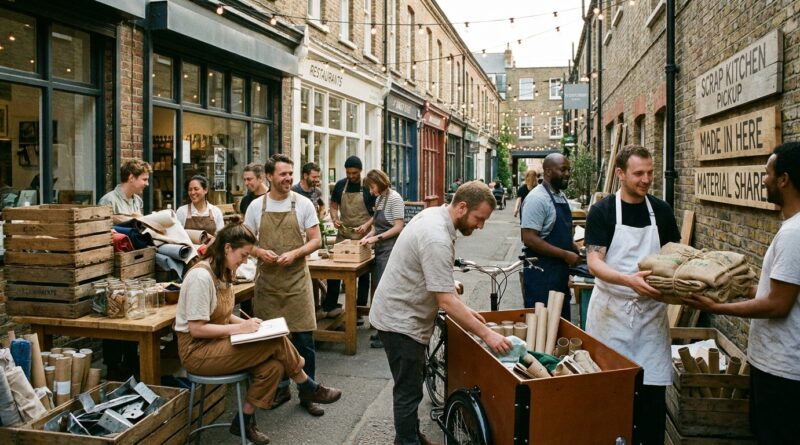
The Hyper-Local Scrap Kitchen: How Neighborhood Upcyclers Are Quietly Turning Waste Into Work For Local Makers
It is frustrating to watch one business pay to throw useful stuff away while another business down the block pays too much to buy the same kind of material new. That is the quiet mess sitting behind a lot of neighborhoods right now. Restaurants toss wooden produce crates, coffee sacks, glass jars, menu boards, sturdy boxes, and leftover decor. Meanwhile, local artisans are hunting for affordable supplies so they can keep making candles, furniture, displays, art, packaging, and market goods without getting crushed by rising costs. A hyper-local scrap kitchen is a simple fix. Think of it as a tiny neighborhood pipeline that helps local makers upcycling restaurant waste connect with cafés, grocers, bakeries, and venues that already have usable leftovers. It does not need a big warehouse or fancy app to start. It just needs a simple list, clear rules, and a pickup rhythm that makes sense for everyone involved.
⚡ In a Hurry? Key Takeaways
- A neighborhood reuse system can turn restaurant and grocery leftovers into low-cost materials for local makers.
- Start small with a shared list of available items, pickup times, and simple cleanliness rules.
- Keep safety first. Only pass along clean, dry, non-food-contact items unless everyone understands the handling risks.
What a “scrap kitchen” really means
Despite the name, this is not about food scraps for compost. It is about the useful materials hiding in plain sight around food businesses.
Think burlap coffee bags from a café. Wooden fruit crates from a grocer. Glass bottles from a juice bar. Cardboard tubes, display stands, chalkboards, fabric banners, tile offcuts, and seasonal decor from event spaces. Most of this gets tossed because nobody has an easy way to claim it quickly.
A hyper-local scrap kitchen gives those materials a second stop before the dumpster. It creates a small, organized handoff from business to maker.
Why this matters right now
Supply costs are still jumpy. Shipping is still expensive. And many small makers do not buy in huge volumes, so they feel every price hike first.
At the same time, customers care more about where things come from. They like buying from people nearby. They also like hearing that the candle holder, market stall sign, tote, or gift box was made from reclaimed local materials.
That is why local makers upcycling restaurant waste is more than a clever side project. It is a practical neighborhood economy tool.
What materials are actually useful to makers
From cafés and coffee shops
Coffee sacks, syrup bottles, clean jars, milk crates if they are not returnable, menu boards, seating cushions, and seasonal decor can all be useful. Roasters may also have heavy-duty packaging and wooden pallets, depending on their setup.
From grocers and markets
Produce crates, floral buckets, clean cardboard, shelving pieces, signage, display baskets, and fabric banners are common wins. Some stores also rotate out wood displays that can be cut down for smaller builds.
From bakeries, restaurants, and bars
Clean wine bottles, sturdy boxes, corks, old stools, broken but salvageable furniture, tile, and tabletop materials can all be repurposed. Venues often have old event decor, lighting pieces, and backdrops too.
What usually should not be shared
Anything greasy, moldy, pest-damaged, chemically contaminated, or hard to clean should go. The same goes for packaging with strong food residue unless the maker specifically wants it and knows how to sanitize it safely.
How to start one without making it complicated
Step 1: Pick a tiny zone
Do not try to serve a whole city first. Start with one block, one market district, or one neighborhood shopping strip. The shorter the distance, the easier the pickups.
Step 2: Make a simple material list
Create a shared sheet or group chat with just a few columns. Item type. Quantity. Condition. Pickup window. Contact person. Photo if possible. That alone can do a lot of the work.
Step 3: Set ground rules
Keep them basic and easy to follow.
- Only list clean and dry materials
- Say clearly if an item touched food
- Give a pickup deadline
- First to confirm gets it
- No storing items indefinitely in the back room
Step 4: Assign a “scrap captain”
Each business needs one person who knows what can be shared and when it can leave. Each maker group needs one point person too. This avoids the usual confusion of “I thought someone else handled it.”
Step 5: Start with three repeat items
Consistency matters more than volume. If one café always has sacks on Thursdays, one grocer always has crates on Saturday afternoons, and one venue always clears old signage monthly, you have a real system already.
What makers can do with these materials
This is where the idea gets fun. Coffee sacks become tote bags, upholstery accents, wall art, or packaging wraps. Produce crates become shelves, market displays, planters, and retail fixtures. Glass jars become candle vessels or refill containers. Cardboard and signage become prototypes, templates, and event props.
The big benefit is not just lower cost. It is freedom to test ideas. When materials are cheap or free, small businesses can experiment more without worrying that every failed prototype is money in the trash.
What businesses get out of it
Less waste hauling. Better community ties. A more believable sustainability story. And sometimes a new customer base.
If the neighborhood candle maker uses reclaimed jars from the local café, both businesses have a story worth telling. Customers notice that kind of loop. It feels real because it is real.
It can also spark direct collaborations. A bakery donates clean flour sacks, then buys custom shelf tags or gift packaging from a local artist who uses them. That is money staying local instead of heading out through shipping fees and wholesale markups.
Safety and common-sense limits
This part matters. Reuse should not create health problems or legal headaches.
Keep food-contact items separate
If something touched food directly, be careful. Some makers can sanitize and use it safely for non-food products, but nobody should guess. Label clearly.
Watch for branded packaging
Not every printed box or branded sign should be reused in a way that suggests endorsement or resale by the original business. Ask first. Be clear about how it will be used.
Check local rules
Some areas have limits on pallet reuse, commercial waste handling, or resale of certain materials. A quick check with your local business association or city office can save hassle later.
How to keep the system from falling apart
Most good neighborhood projects fail for one boring reason. They become annoying.
So keep it easy. Do not ask staff to sort twenty categories. Do not let materials pile up for weeks. Do not make makers chase pickups that are never ready.
The sweet spot is small, predictable, and useful. A little rhythm beats a big promise every time.
Good habits that help
- Use one shared pickup day
- Post photos before saving items
- Limit how long items can sit on site
- Track what gets claimed most often
- Drop categories nobody wants
What success looks like after a few months
You are not looking for a giant recycling empire. You are looking for proof that waste was reduced, makers saved money, and people nearby worked together in a way that can last.
That might mean one coffee shop diverts fifty sacks in a season. One grocer keeps dozens of crates in use. Three makers cut supply costs enough to attend one more market each month. That is real impact at street level.
At a Glance: Comparison
| Feature/Aspect | Details | Verdict |
|---|---|---|
| Startup effort | Can begin with a shared spreadsheet, a group chat, and a few nearby businesses. | Low barrier to entry |
| Value for makers | Cuts material costs, supports prototyping, and creates a stronger local story for products. | High upside |
| Risk and limits | Needs cleanliness rules, quick pickups, and clear limits on unsafe or contaminated items. | Very workable with basic rules |
Conclusion
A hyper-local scrap kitchen is not fancy, and that is exactly why it can work. It gives communities an immediate, practical way to fight waste while feeding the hyper-local maker economy already growing through reuse centers, pop-up markets, and neighborhood craft networks. When you formalize even a tiny stream of reclaimed materials, local artisans can lower costs, test more ideas, and keep money circulating in the same zip code instead of sending it off for imported stock and shipping. Just as important, it creates visible neighborhood teamwork. Cafés can pass along coffee sacks. Grocers can share produce crates. Venues can hand off signage and decor. Customers see businesses investing in the people who make things nearby. That is good for waste reduction, good for small business, and frankly, good for the feel of a neighborhood.