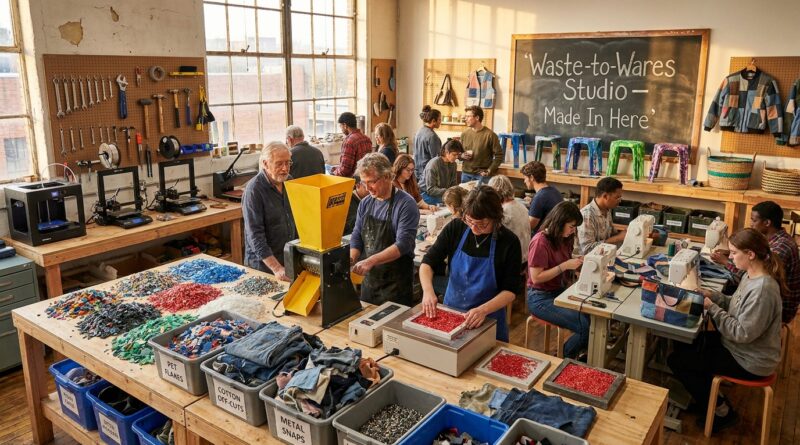
The Hyper-Local Waste-to-Wares Workshop: How Neighborhood Makers Are Quietly Turning Trash Into Tomorrow’s Products
Overflowing bins are hard to ignore. So is the weird feeling of buying a “green” product that traveled farther than you did this year. If you are frustrated, you are not alone. A lot of people want cleaner streets, less waste, and products that actually mean something locally. Meanwhile, neighborhood makers are dealing with the other half of the problem. Materials cost more, cheap imports flood the market, and handmade goods often have to fight for attention. That is why the hyper local upcycling studio turning waste into products model is getting real interest. It is simple in the best way. Collect local waste. Sort it. Process it nearby. Turn it into useful wares people can see, buy, and feel proud of. Instead of sending value out of town, these workshops keep it close to home. Better yet, they create jobs, build skills, and give communities something concrete to rally around.
⚡ In a Hurry? Key Takeaways
- A hyper local upcycling studio turning waste into products can cut trash, create local jobs, and give makers cheaper raw materials.
- Start small with one waste stream, like plastic lids, old textiles, or coffee chaff, and one local partner such as a school, bar, hotel, or festival.
- The safest and smartest projects use clean, sorted inputs, clear product standards, and simple items like tiles, benches, trays, panels, or tote bags before moving to complex goods.
What a Hyper-Local Waste-to-Wares Workshop Actually Is
Strip away the buzzwords and it is pretty straightforward. A neighborhood workshop takes waste that would normally be thrown out and turns it into something useful or sellable nearby.
That waste might be plastic bottle caps from a school. Old hotel linens. Denim scraps from a tailor. Spent grain from a brewery. Even orange peels or oyster shells in some places.
The key idea is not just “recycling.” It is local making. The material is collected close by, processed close by, and sold or used close by. That changes the economics and the story.
Why this matters more than standard recycling
Traditional recycling is often invisible to residents. You toss something in a bin and hope for the best. A local workshop is the opposite. People can actually see the before and after.
Old banners become tote bags. Plastic lids become colorful stools. Fabric offcuts become quilted laptop sleeves. Coffee grounds become soap scrubs or composite planters.
That visibility builds trust. It also builds pride.
Why People Are Paying Attention Now
Three frustrations are colliding at once.
First, people are tired of waste. Streets, parks, schools, and events all produce a mountain of it. Second, households are feeling squeezed by the cost of living. Third, many consumers have become skeptical of slick “eco” branding that still depends on long shipping routes and vague claims.
A local studio answers all three in a practical way. It reduces waste in plain sight. It creates paid work and useful skills. And it makes products with a story that is easy to verify because the source is right there in the neighborhood.
It also helps local makers
This part often gets missed. Makers need materials. Good materials are expensive. If a studio can create a steady stream of cleaned, sorted local inputs, small businesses suddenly have a new supply line.
That can mean lower costs. It can also mean more distinctive products. A tray made from neighborhood festival plastic or a cushion sewn from retired hotel fabric stands out in a way factory goods usually do not.
How These Studios Usually Work
The best models are not trying to save the world in one weekend. They start with a very tight loop.
Step 1: Pick one waste stream
This is the make-or-break decision. Choose one material that is easy to collect in decent volume and easy to explain to the public.
Good starter options include:
- HDPE or PP plastic caps and containers
- Textile offcuts and old linens
- Event banners and signage
- Spent grain, coffee chaff, or corks
Step 2: Find one reliable source
A school, hotel, restaurant group, brewery, office park, or festival organizer is often better than asking the whole city right away. One steady partner beats a hundred random drop-offs.
Step 3: Clean and sort properly
This is not glamorous, but it is where good projects win. Dirty, mixed materials create headaches fast. Clear sorting rules, labeled bins, and simple training matter a lot.
Step 4: Make a short list of products
Start with items that are simple, durable, and forgiving. Think coasters, trays, panels, stools, planters, key tags, tote bags, aprons, patchwork blankets, or acoustic tiles.
Step 5: Sell locally, use locally, or both
Products can be sold at markets, installed in schools and parks, used by partner businesses, or bought by the city for public spaces. The more local the use, the stronger the loop feels.
What Makes the Model Work Financially
People love the idea of upcycling. The money side is where things get real.
The strongest studios usually have multiple income streams
They do not rely only on selling products. Instead, they mix revenue from several sources:
- Collection or waste reduction contracts
- Workshops and school programs
- Custom products for local businesses
- Retail sales at markets and online
- Grants, sponsorships, or city pilot funding
That mix is important because handmade production alone can be hard to scale. But when a bar pays to keep glass or cork out of landfill, and a hotel pays for textile diversion, and residents buy finished goods, the picture starts to make sense.
Labor is a feature, not just a cost
Normally, waste systems try to automate everything. A neighborhood workshop is different. Sorting, cleaning, making, teaching, and repairing can all become local paid work.
That matters because communities are not just looking for lower trash bills. They are looking for decent work, practical training, and visible proof that improvement is possible.
What Kinds of Products Make Sense
Not every waste material should become every product. That is where some projects go off the rails.
Best uses for recycled plastic
Locally processed plastic works well for thick, durable goods. Think benches, tabletops, trays, cutting boards, signage panels, and stools. It is less ideal for products that need food-grade certification or tight mechanical performance unless the studio has the right controls.
Best uses for old textiles
Textiles are great for totes, aprons, pouches, rugs, insulation stuffing, patchwork goods, and workshop uniforms. They are familiar, flexible, and easy for volunteers or trainees to work with after some guidance.
Best uses for food byproducts
This is the trickiest category. Some food waste can become dyes, paper, soap additives, compostable packaging experiments, or composite materials. But it needs care. Moisture, odor, pests, and shelf life all matter. For many studios, food byproducts are best as a second-phase project, not day one.
Who Should Start One First
You do not need a giant warehouse and a million-dollar machine to test the idea.
Good early leaders include
- Makerspaces and fab labs
- Vocational schools and high schools
- Community development groups
- Libraries with tool lending or creative programs
- Festival organizers
- Breweries, hotels, and restaurant clusters
These groups already have some combination of space, community trust, volunteers, or waste problems that need solving.
A Simple Starter Plan You Could Copy This Month
If your town wants a realistic pilot, keep it boring on purpose. Boring is good. Boring means repeatable.
Example pilot: bottle caps to school furniture accessories
- Partner with one school and one cafe cluster.
- Collect clean plastic caps only for 30 days.
- Use clear posters showing exactly what is accepted.
- Sort by plastic type and color.
- Shred and press into small items first, like hooks, trays, signs, or stool tops.
- Sell some items at a school fair. Install some in the school itself.
- Track weight diverted, hours worked, and money earned.
That gives you a proof point. It also reveals the boring but important stuff, like contamination rates, storage needs, and how much labor each batch takes.
Example pilot: hotel linens to neighborhood goods
- Partner with one boutique hotel or hostel.
- Collect retired sheets, towels, and staff uniforms.
- Grade them by condition.
- Turn the best fabric into tote bags, napkins, cleaning cloths, or aprons.
- Use damaged fabric as stuffing, insulation fill, or quilting material.
- Sell products through the hotel gift area and weekend markets.
That sort of loop is easy for residents to understand, and easy for the hotel to talk about without sounding fake.
The Biggest Problems to Watch Out For
It is a promising model, but it is not magic.
Contamination
If materials arrive dirty or mixed, labor costs jump fast. Clear intake rules are essential. So is saying “no” to materials you cannot process well.
Storage
Waste takes space before it becomes inventory. Many projects underestimate how much room sorted bins, drying racks, and finished stock need.
Overcomplicated products
Trying to make premium furniture or highly regulated consumer goods too early can sink a project. Start with robust, low-risk products first.
Green claims that go too far
Be careful with promises. A local upcycled product may cut transport and landfill waste, but that does not automatically make it low impact in every way. Honest messaging wins in the long run.
Volunteer burnout
Community energy is great, but stable systems need paid roles. If a studio only runs on goodwill, it can fade as soon as the novelty wears off.
Why Cities and Businesses Should Care
For city officials, this can be a visible win. Less waste. Local training. Better public engagement. Small batch products for parks, schools, and events.
For businesses, it solves a branding problem and a practical problem at the same time. They reduce waste hauling, meet sustainability goals in a way customers can actually see, and sometimes get custom products back from their own discarded materials.
That is a far more believable story than buying generic “green” merch from another continent.
How to Tell if a Studio Is the Real Deal
Not every project with recycled materials is built to last. Look for a few signs.
Good signs
- Specific material streams, not vague claims
- Named local collection partners
- Products that fit the material sensibly
- Basic data on waste diverted and hours created
- Visible community use, not just Instagram photos
Red flags
- Everything is accepted
- No explanation of sorting or cleaning
- Luxury pricing with no local value story
- Big climate claims with no simple numbers
What This Means for Existing Makers
If you already run a small studio, this is not just a civic idea. It can be a business strategy.
A hyper local upcycling studio turning waste into products can give you materials with built-in identity. It can open doors to collaborations with schools, bars, hotels, and city programs. It can also help you stand out from mass-produced goods without pretending to be something you are not.
Customers remember stories they can point to. “This was made from our neighborhood festival banners” lands better than another generic claim about sustainability.
At a Glance: Comparison
| Feature/Aspect | Details | Verdict |
|---|---|---|
| Waste source | Best results come from one steady local source, such as schools, hotels, breweries, or festivals, rather than random public drop-offs. | Start narrow, then expand. |
| Product choice | Simple, durable goods like totes, trays, panels, benches, and signage are easier to make consistently from upcycled materials. | Practical beats fancy at first. |
| Business model | The strongest studios combine product sales with workshops, waste contracts, sponsorships, and local institutional buyers. | Multiple income streams are important. |
Conclusion
People want something more real than guilt, green labels, and another full bin at the curb. That is why this model feels timely. A hyper local upcycling studio turning waste into products does not solve every environmental problem, but it does something many big systems fail to do. It makes progress visible. It turns trash collection, sorting, and making into paid work, useful skills, and neighborhood pride people can actually touch. Right now communities are looking for practical ways to tackle climate anxiety and the cost of living at the same time. This gives them a template they can copy this month with schools, bars, hotels, festivals, and city programs that already need to cut waste. And for local makers, it offers a clear roadmap to new materials, new revenue, and stronger recognition right where they live.