The New ‘Third Places’: How Hyper‑Local Breweries And Cafés Are Quietly Becoming Your Town’s Craft Hubs
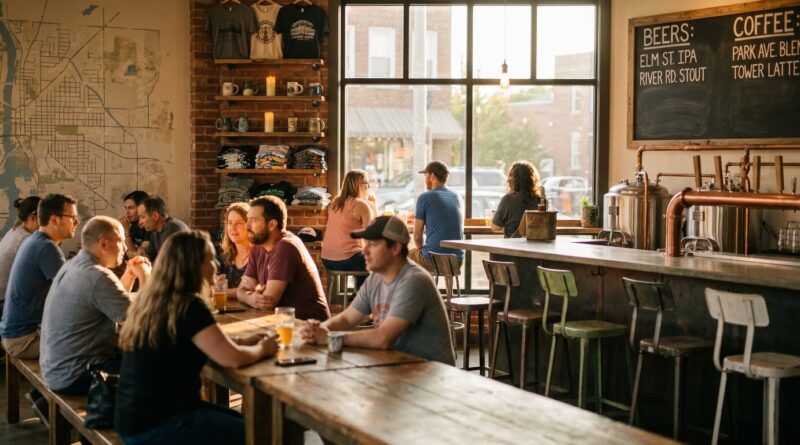
You can feel the difference between a place that is truly local and one that just prints a nearby ZIP code on the label. A lot of people are tired of buying “local” coffee, beer, candles, or baked goods that still feel anonymous, factory neat, and oddly disconnected from the town around them. What is quietly replacing that is more personal. The hyper local brewery community craft hub, or its café version, is becoming the room where your town actually meets itself. You grab a pint or a latte, and the roaster is ten feet away. The ceramic mugs are from the artist down the block. The salsa on the shelf was made two neighborhoods over. These places are not just selling products. They are giving small makers a counter, a crowd, and a reason to stay nearby. For residents, that means better stories, stronger neighborhoods, and more money staying close to home.
⚡ In a Hurry? Key Takeaways
- Hyper-local breweries and cafés are becoming craft hubs by combining making, selling, and gathering in one neighborhood space.
- If you want to support one, buy the house-made product first, then ask what else on the shelf is made nearby.
- These spaces matter because they give small makers affordable visibility and help communities keep money, skills, and foot traffic local.
Why these places matter now
For years, “shop local” often meant buying from a small-looking brand that still behaved like a scaled-down chain. Nice packaging. Maybe a city skyline on the can. But not much connection to the people making it.
That gap is why neighborhood breweries, coffee roasters, and hybrid café-market spaces are starting to matter more. They do more than serve drinks. They act like small economic engines. Production happens on site. Sales happen on site. Community happens on site.
That mix matters at a moment when supply chains still wobble and rent keeps pushing independent makers out of stand-alone storefronts. If a baker, soap maker, print artist, or hot sauce company cannot afford their own retail lease, a well-run brewery taproom or café can become their shelf space and showroom.
What makes a “third place” different
A third place is the spot that is not home and not work, but still feels like part of everyday life. Think of the corner café where people read, meet friends, and bump into neighbors. Or the brewery where the trivia night crowd sits beside the weekend market crowd.
The new version adds one more layer. It is not just social. It is productive.
It is part workshop, part storefront, part hangout
In a hyper local brewery community craft hub, you are not only consuming. You are seeing local production in real time. The coffee is roasted there. The beer is brewed there. The pastries come from a nearby shared kitchen. The art on the wall is for sale. The tote bags were screen printed by someone in town.
That changes the mood completely. Instead of a generic “support local” message, people get proof. They can meet the owner, ask questions, and hear why a stout is named after the creek two blocks away.
It lowers the risk for small makers
Not every craft business can open a full shop. Rent, staffing, insurance, and buildout costs are brutal. But getting a small shelf inside a busy café or brewery is much more realistic. It lets makers test products, build repeat customers, and be seen by people who already want a neighborhood experience.
For the host business, this also makes sense. A brewery with local snacks, handmade glassware, and rotating vendor nights gives people more reason to stay longer and come back.
Why breweries and cafés are especially good at this
Breweries and cafés already have the one thing many local makers need most. Regular foot traffic.
People visit these places weekly, sometimes daily. That rhythm is gold. A craft fair is nice, but it is occasional. A shelf inside a busy coffee shop creates steady exposure. A brewery with a Saturday maker pop-up can turn a one-time customer into a familiar face.
They have built-in community habits
Morning coffee. Friday pints. Weekend brunch. Open mic night. Book club. These are recurring rituals, and rituals help local commerce stick. When people know they will already be there, they are more willing to browse handmade jam, locally printed cards, or small-batch spice mixes.
They give local products context
A product feels less anonymous when you encounter it where it was made or where the maker is known. A candle on a random store shelf is just a candle. That same candle, sold in the café where the maker hosts a workshop once a month, becomes part of a neighborhood story.
How to spot a real craft hub and not just clever branding
Not every business with reclaimed wood tables and a chalkboard menu is truly community-rooted. Some are just very good at the look.
Here is what to watch for.
1. The products have names and faces behind them
If staff can tell you who made the ceramics, where the honey comes from, or which street inspired the seasonal beer, that is a good sign. Real local networks are visible and specific.
2. The shelf changes over time
A real hub usually rotates nearby makers in and out. That means the business is actively working with the community, not just filling a corner once and forgetting about it.
3. Events include actual makers
Look for meet-the-maker nights, mini markets, tastings, roasting demos, zine swaps, or workshops. If the place creates reasons for residents and makers to interact, it is doing the job of a third place.
4. The local story is geographic, not just aesthetic
Street names. Neighborhood references. Town history. Nearby farms. Local schools. A hyper-local place usually sounds like the place it lives in.
What residents can do to help these spaces survive
You do not need to become a full-time local-shopping purist. Most people cannot do that, and no one should pretend otherwise. But small, steady habits make a real difference.
Buy one thing with a story
When you visit, do not just order the drink. Ask what else is made nearby. Buy the jar of jam. Take home the soap. Grab the bag of beans roasted in back. One extra purchase tells the business that giving shelf space to local makers is worth it.
Ask who made it
This is simple, but useful. Questions create demand. If enough customers ask where something was roasted, brewed, baked, printed, or stitched, owners notice. They stock more of it.
Show up on slower days
Saturday afternoons are great, but Tuesday at 4 p.m. counts too. Neighborhood places need a dependable baseline, not just packed special events.
Bring someone new
Word of mouth still matters more than people think. If you have a favorite café-bakery-bookshop or brewery-market hybrid, bring a friend. These businesses grow through trust and familiarity, not giant ad campaigns.
What owners and local organizers can do
If you run one of these spaces, or help shape a business district, the goal is not to become everything for everyone. It is to become useful in a way chains cannot.
Start with a small, steady local shelf
A few well-chosen makers beat a cluttered display. Keep it easy to understand. Label where each item comes from. Tell people why it is there.
Host repeatable events
A monthly craft night is often better than one giant seasonal festival. Repetition builds habit. Habit builds a real community.
Make collaboration easy
Small makers are busy. Simple terms, clear payment schedules, and basic promotion go a long way. If joining your shelf or pop-up night is confusing, many good makers will skip it.
Use the room well
The best spaces often do double duty. Morning coffee counter. Afternoon remote-work zone. Evening taproom. Weekend maker market. One room can serve many needs if the setup is flexible.
The bigger payoff for towns
This is not only about vibes. It is about resilience.
When a town has places that combine production, retail, and social life, it becomes a little less dependent on faraway systems. That does not mean every item will be made within five miles. It means more everyday spending supports nearby people, nearby skills, and nearby supply.
That matters when shipping gets weird. It matters when commercial rents rise. It matters when a talented local maker is deciding whether to keep going or give up.
A strong hyper local brewery community craft hub can help make that decision easier. It gives the maker a place to be seen. It gives the customer a reason to care. It gives the neighborhood a shared room that feels alive.
At a Glance: Comparison
| Feature/Aspect | Details | Verdict |
|---|---|---|
| Local feel | A real craft hub connects products to actual makers, streets, neighborhoods, and recurring community events. | Much stronger than generic “local” branding. |
| Support for small makers | Breweries and cafés can offer low-risk shelf space, pop-ups, and direct customer contact without requiring a full retail lease. | A practical lifeline for independent businesses. |
| Community value | These spaces combine gathering, making, and selling, which keeps money and social energy circulating closer to home. | One of the most useful local business models right now. |
Conclusion
The best neighborhood breweries and cafés are doing more than pouring drinks. They are becoming practical, human-sized craft hubs where production, shelf space, and community life share the same room. Right now, as supply chains stay fragile and rents push many small makers out of traditional storefronts, that setup is more than charming. It is useful. When residents learn to recognize and support these places, they help strengthen local supply, create steady room for nearby makers, and keep more money and skills circulating in their own ZIP codes instead of drifting back to national chains. That is a small shift with a real payoff. Sometimes the most important local infrastructure is not flashy at all. Sometimes it is just a good cup of coffee, a fresh pint, and a room where neighbors can meet the people making their town.