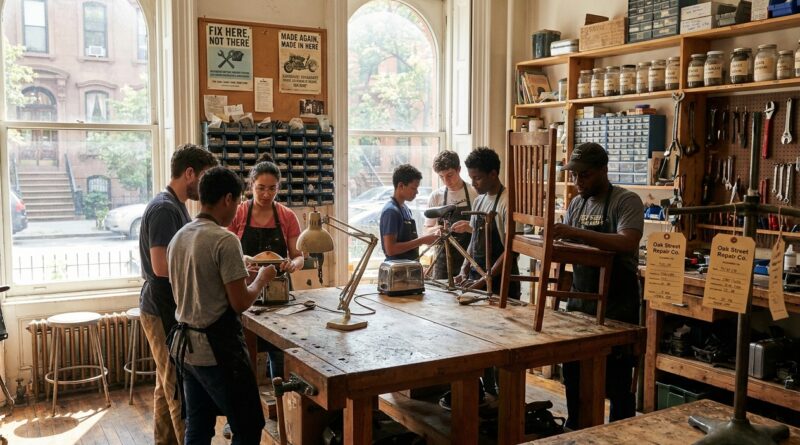
The Rise of the Neighborhood Repair Studio: How Fixers Are Quietly Becoming Your Town’s Most Important Manufacturers
Your coffee maker quits. Your kid’s scooter loses a wheel. Your phone screen cracks. None of these things should be a one-way ticket to the trash, but that is how modern buying often feels. People are tired of products that seem designed to fail, tired of customer service loops, and tired of waiting three weeks for a replacement part that may never arrive. That frustration is exactly why the neighborhood repair shop is starting to matter in a bigger way. These small studios are not just fixing broken stuff. They are becoming local problem-solvers, parts hunters, tool libraries, and in some cases the first step toward real neighborhood manufacturing. When a repair tech learns what breaks over and over, they also learn what could be built better. That matters for your wallet, your town, and the pile of almost-fine things sitting in closets and garages right now.
⚡ In a Hurry? Key Takeaways
- Neighborhood repair studios do more than fix things. They are becoming the seed of local manufacturing.
- Start by finding one reliable repair shop for phones, bikes, appliances, or furniture and use them before you buy new.
- A good repair can save money and cut waste, but always ask about warranty, parts source, and whether the fix is safe to keep using.
Why repair shops suddenly feel so important
For years, “shop local” mostly meant food, gifts, and maybe a weekend market. But the bigger money drain in most homes is not candles or coffee beans. It is the stream of useful things we replace because fixing them feels confusing, expensive, or impossible.
That is where the neighborhood repair shop local manufacturing story gets interesting. A local fixer sees patterns that giant brands miss or ignore. They know which blender base always cracks, which e-bike controller fails after rain, which office chair only needs a $6 part, and which phones can survive another three years with a battery swap.
That kind of hands-on knowledge is manufacturing knowledge. It starts with repair. Then it grows into custom brackets, replacement panels, 3D-printed clips, upgraded parts, and eventually small-batch products made for local needs.
Repair is the front door to making things again
Think about the skills inside a good repair studio. Troubleshooting. Sourcing parts. Working with metal, plastic, fabric, wood, wiring, adhesives, and software. Talking to customers about what failed and why. That is not just service work. That is design feedback from the real world.
A bike mechanic who fabricates a hard-to-find mount is already doing light manufacturing. A phone repair tech who starts stocking tougher replacement parts is improving a product. A sewing and alterations shop that begins making custom bags from scrap fabric has crossed the line from repair into production.
This is one reason local maker scenes matter so much. If you want to see how neighborhood talent grows from hobby tables into serious community infrastructure, read From Pop-Up Tables To Powerhouses: How Maker Markets Are Quietly Becoming Your Town’s R&D Lab. Repair shops and maker markets often feed each other. One diagnoses what breaks. The other tests what can be built better.
What a modern neighborhood repair studio looks like
Do not picture only an old-school TV repair counter. Today’s repair studios can be tiny and specialized or broad and scrappy. Some fix phones and laptops. Some focus on bikes, lamps, vacuums, or small appliances. Others restore furniture, mend clothes, sharpen tools, or rebuild electronics.
Common signs you have found a good one
Look for a shop that explains the problem in plain English. They should tell you what failed, what the repair involves, what it costs, and whether the fix is worth doing.
Good repair studios also tend to show their work. You may see labeled parts, clean benches, before-and-after photos, or shelves of items waiting for pickup. That is a good sign. So is a shop that offers realistic timelines instead of vague promises.
Services that hint at future manufacturing
Pay attention when a repair studio offers custom brackets, 3D-printed replacements, welded reinforcements, cable making, upholstery patches, or upgraded components. Those are clues that the shop is moving beyond simple repair.
Once a neighborhood starts trusting that work, demand follows. Then the same shop that fixed your lamp may start making short-run lighting parts for local restaurants or custom storage pieces for nearby apartments.
How to find a repair studio worth supporting
Most people do not have a repair network. They have a search bar. So start there, but search smart.
Use better search terms
Try searches like “small appliance repair near me,” “bike repair independent shop,” “furniture restoration local,” or “phone battery replacement neighborhood.” Avoid only searching by brand, because that often sends you straight to corporate service channels.
Ask in the right places
Your neighborhood social group, local hardware store, bike club, tailor, school theater department, and independent cafe owners often know who can actually fix things. Tradespeople know other tradespeople.
Test with a smaller job first
If you are unsure, start with something lower risk. A tool sharpening, zipper replacement, battery swap, or chair repair can tell you a lot about communication, pricing, and quality.
Check for these basics
Ask if they guarantee labor for a set period. Ask whether they use original, aftermarket, salvaged, or custom-made parts. Ask how long the fix should reasonably last. If a shop gets defensive about simple questions, move on.
How to know if repair makes financial sense
Not every item is worth fixing. That is the honest part.
A smart repair shop will help you do the math. If the repair costs half the price of a replacement but gives you several more years of use, that is often a good deal. If the product has known repeat failures, poor parts support, or safety issues, replacing it may be the better call.
A simple rule of thumb
Repair is usually a strong choice when the item is well-built, the problem is limited, and the fix restores most of its useful life. It is also a strong choice when the new version is not meaningfully better.
Repair gets even more attractive when supply chains are slow, prices are climbing, or the replacement product is flimsier than the one you already own.
Why this helps your whole town, not just your budget
Money spent on repair tends to stay nearby. It pays for local labor, rent, tools, and often nearby suppliers. Compare that with buying a replacement from a distant warehouse. Most of that money leaves the community right away.
There is also a resilience angle here. When supply chains wobble, neighborhoods with repair capacity cope better. They can keep tools running, patch daily essentials, and make small replacement parts without waiting on a shipping container or a brand approval queue.
That matters more than it sounds. A town with trusted fixers has the beginnings of a local production system. Not giant factories. Something more practical. Small shops that know how to keep life moving.
How to support a repair studio so it can grow into local manufacturing
If you want these businesses to stick around, they need more than compliments. They need steady work and community visibility.
Give them the jobs people usually throw away
Bring in the lamp, side table, mixer, torn backpack, or squeaky stroller. The small jobs matter. They help shops smooth out cash flow and build repeat trust.
Leave detailed reviews
Do not just write “great service.” Say what they fixed, how they explained it, how long it took, and whether the item held up. Specific reviews help the next person choose repair instead of replacement.
Ask what they wish people knew
Many repair owners can tell you exactly what services they want to offer next if demand exists. Maybe it is knife sharpening, 3D-printed replacement parts, furniture touch-up, or community repair nights. That conversation can shape what your neighborhood gets next.
Connect them with schools, libraries, and markets
A repair demo at a library or a booth at a street fair can turn a hidden shop into a known neighborhood asset. Once people see a cracked item restored in front of them, repair stops feeling mysterious.
Could your neighborhood organize a repair network?
Yes, and it does not have to be complicated.
Start with a simple directory. One page. Name, specialty, neighborhood, contact info, and whether the shop handles walk-ins. Add categories like electronics, bikes, clothing, furniture, appliances, and tool repair.
Then create one small event. A “fix-it Saturday” with local shops, a church hall, library meeting room, or school cafeteria can work. Even if pros only take consultations instead of on-the-spot repairs, the event still helps people learn what is fixable.
The long-term goal is not just fewer broken items. It is stronger local capability. Once that network exists, it becomes much easier for those same shops to start offering custom fabrication, small-run products, and local parts making.
What consumers should watch out for
Repair is good. Blind trust is not.
Be cautious with safety-critical items
Anything involving batteries, brakes, structural loads, gas, or high-voltage power needs real expertise. Ask who is doing the work and what standards they follow.
Get the estimate in writing
Especially for electronics and appliances. Hidden corrosion, water damage, or unavailable parts can change the final price.
Do not expect miracles on junk
Some products are built to resist repair. Glued casings, locked software, unavailable parts, and brittle plastics are real barriers. A good shop can still advise you, but they cannot rewrite bad product design.
At a Glance: Comparison
| Feature/Aspect | Details | Verdict |
|---|---|---|
| Repair vs replacement cost | Repairs often cost less upfront than buying new, especially for quality items with a single failure point. | Repair first when the item is well-made and the fix adds real usable life. |
| Community impact | Money spent locally supports skilled labor, nearby suppliers, and future small-batch production. | Strong win for local economies. |
| Convenience and risk | A good shop can be faster than brand service, but quality varies and safety-sensitive repairs need care. | Worth it, as long as you ask smart questions and use trusted shops. |
Conclusion
The quiet rise of the repair studio hits three real pressures at once. Prices are up. Supply chains still wobble. And a lot of us feel a little sick throwing away things that are almost fixable. Supporting hyper-local repair turns “shop local” from a slogan into something useful. It keeps money circulating close to home, helps small service businesses grow, and gives your town more practical skills than it had before. Just as important, it changes how we think about who makes things. Today’s phone screen fixer, bike mechanic, seamstress, or appliance wizard may be tomorrow’s trusted small-batch maker. If your neighborhood knows their name and trusts their hands, local manufacturing does not have to start with a giant factory. It can start with one repaired lamp, one replaced battery, one saved chair, and one shop on your block that proves broken does not have to mean finished.