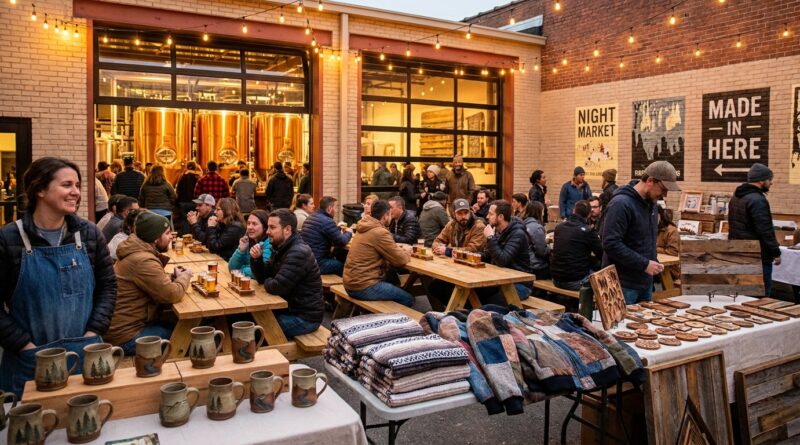
From Taproom Tables To Tiny Factories: How Brewery Night Markets Are Quietly Powering A New Wave Of Hyper‑Local Makers
You can feel the frustration in a lot of towns. Everyone says “support local,” but the actual buying experience still feels scattered. One weekend there is a pop-up in a parking lot. The next month a maker fair appears, then disappears. If you are a small maker, that means shaky foot traffic and little chance to build repeat customers. If you are a shopper, it is hard to form a habit. That is why the rise of the brewery night market local makers model matters more than it may seem. Breweries and taprooms already have the hard part figured out. They have regular hours, loyal locals, a relaxed setting, and a reason for people to show up in the first place. When those spaces host recurring night markets, they stop being one-off events and start acting like tiny local economies. A candle maker meets a ceramic artist. A jam producer tests a new flavor. A neighborhood starts recognizing the people who actually make things nearby.
⚡ In a Hurry? Key Takeaways
- Recurring brewery night markets give local makers something pop-ups often do not, steady foot traffic and repeat relationships.
- If your town wants a stronger maker scene, start with monthly markets at venues people already visit, not one-off big events.
- The real value is long-term. These markets keep more spending, skills, and stories inside the community.
Why breweries are becoming the easiest place for makers to grow
A brewery is not just a place to grab a drink anymore. In many towns, it has become one of the few dependable gathering spots left. People already go there to meet friends, hear music, try food trucks, or just get out of the house.
That matters because local makers do not only need customers. They need consistency. A one-day craft fair can bring a sales spike, but a monthly night market at the same taproom gives people a reason to come back and say, “I bought soap from that vendor before,” or “That woodworker makes great cutting boards.”
That repeat familiarity is what turns a hobby seller into a real small business.
This is also part of a broader shift. As we covered in The New ‘Third Places’: How Hyper‑Local Breweries And Cafés Are Quietly Becoming Your Town’s Craft Hubs, some of the most useful community spaces today are not formal business incubators. They are familiar, welcoming places where people already want to spend time.
What makes a brewery night market local makers model work
It lowers the risk for sellers
For a home-based maker, renting a storefront is out of reach. Even many traditional markets can be expensive or unpredictable. A brewery night market often has lower booth costs, shorter setup times, and a built-in audience.
That gives makers room to test products without betting the farm. They can see whether hand-poured candles sell better than wax melts. They can find out if customers want larger prints, smaller batch sauces, or custom leather goods.
It creates repeat sales instead of random sales
One-off events are good for exposure. Recurring events are better for trust.
When the same venue hosts markets every month, buyers begin to remember names, faces, and products. That is how a customer who bought hot sauce in April comes back in June for a refill, then places a holiday order in November.
It encourages collaboration
This is where things get especially interesting. Once makers and breweries see each other often, they start making things together.
A brewer might work with a local ceramicist on limited-run mugs. A candle maker may create a scent tied to a seasonal stout. A printmaker can design posters for a neighborhood beer festival. These are small projects, but they create new income and stronger local identity.
From side hustle to tiny factory
The phrase may sound dramatic, but this is how local manufacturing often starts now. Not with a giant warehouse. With a folding table, a batch of inventory, and enough repeat demand to justify making more.
A baker gets wholesale requests after a few successful markets. A screen printer moves from custom one-offs to short neighborhood runs. A metalworker who started with bottle openers begins taking on small home goods orders.
These are tiny steps. But tiny steps stack up.
For rural crafters and home-based fabricators, this setup can be especially useful. They may not have daily storefront traffic where they live, but they can plug into a nearby brewery’s audience and test whether their goods connect with people outside friends and family.
Why this feels better for shoppers too
Most people do want to support local. The problem is convenience. If buying from local makers feels like homework, many people drift back to giant online stores.
Brewery markets fix that by attaching discovery to an outing people already enjoy. You meet friends. You grab a drink. You wander past a row of tables. You chat with the person who made the thing. Suddenly “shopping local” feels less like a chore and more like a habit.
That human connection matters. It is easier to buy a handmade cutting board when you just heard the maker explain which local wood they used and why they started making them in the first place.
What towns and venue owners can do right now
Make the schedule predictable
The biggest mistake is treating these markets as occasional extras. If a brewery wants to help local makers, a regular slot works best. First Thursday. Last Sunday. Every second Friday night. Pick one and stick to it.
Routine builds attendance.
Curate for variety, not clutter
A strong market is not twenty nearly identical vendors. It is a smart mix. Food products, personal care goods, home items, prints, textiles, ceramics, small-batch fabricated goods. That mix gives shoppers more reasons to browse and buy.
Keep fees realistic
Many of the best vendors are still testing demand. If booth fees climb too high, the market starts excluding exactly the people it should be helping. Lower fees can mean more experimentation, more fresh products, and a healthier scene over time.
Help vendors tell their story
Simple signage, social posts, and short maker spotlights go a long way. People are more likely to buy when they understand who made the item and what makes it local.
What makers should look for before signing up
Not every brewery event is worth your time. Before paying for a table, ask a few simple questions.
Is it recurring?
A repeating event has more long-term value than a random festival.
Does the venue fit your customer?
A family-friendly taproom in a residential area may be perfect for home goods or pantry items. A more nightlife-heavy venue may suit graphic prints, apparel, or giftable products.
Is the organizer actually organized?
You want clear setup times, vendor rules, promotion plans, and weather backup if needed. Chaos burns out good sellers fast.
Can you collect repeat business?
Bring cards, QR codes, and clear packaging. The point is not only that night’s sales. It is getting people to remember you next month.
The bigger economic effect people miss
It is easy to dismiss these markets as cute community events. That misses the point.
They can become a local sales channel. A testing ground. A networking hub. A way for money to circulate between neighbors instead of heading straight to distant platforms and warehouses.
When that happens, the brewery is doing more than hosting vendors. It is acting like a light-touch economic engine for local production.
And because the venue already exists, the model is much cheaper and faster to start than building a formal retail incubator from scratch.
At a Glance: Comparison
| Feature/Aspect | Details | Verdict |
|---|---|---|
| One-off pop-up markets | Can create buzz, but attendance and vendor follow-up are often inconsistent. | Good for exposure. Weak for long-term growth. |
| Recurring brewery night markets | Built-in crowds, familiar venue, lower risk for makers, better repeat customer potential. | Best option for building a steady local maker habit. |
| Traditional retail storefronts | Offer stability, but come with much higher overhead and more pressure to scale fast. | Useful later. Often too expensive as a first step. |
Conclusion
The quiet power of this trend is that it meets people where they already are. Breweries and taprooms have become dependable, community-anchored places in many towns, drawing locals out for an experience instead of just a transaction. Turning those spaces into structured, recurring micro marketplaces gives home-based makers, rural crafters, and side-hustling fabricators a low-risk way to test hyper-local goods, steady their income, and team up on limited runs tied to the brewery or the neighborhood. For residents, it turns a casual night out into a simple ritual of discovering what is truly made nearby. And that means more money, more skills, and more local stories stay in the community instead of drifting off to anonymous online retailers. Small? Yes. But small is often how something real starts.