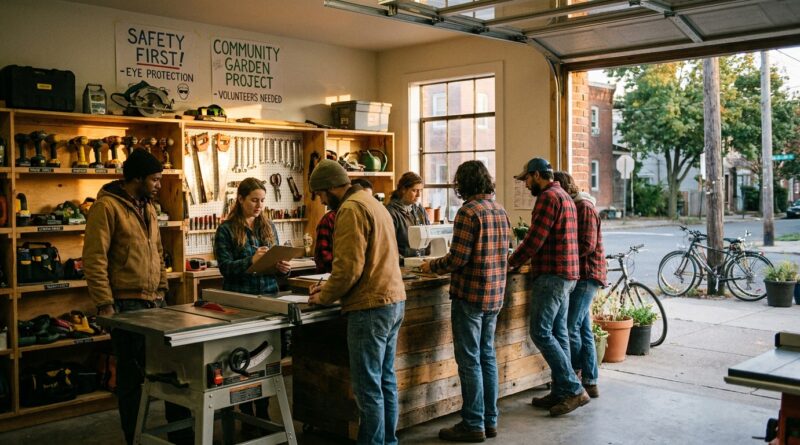
The Local Tool Pool: How Neighborhood Equipment Co‑Ops Are Quietly Supercharging Backyard Manufacturing
You can feel the bottleneck almost immediately. The cabinet maker has orders but no planer. The bike tinkerer needs a torque wrench, not another cheap multitool. The neighbor who could fix three broken lamps this weekend is stuck waiting for access to a workshop across town. It is a frustratingly ordinary problem. People have skills, ideas, and willing customers, but the tools are scattered, expensive, or locked behind memberships that do not fit real life. That is why neighborhood equipment co-ops, often called tool libraries, matter more than they sound. They are not just about borrowing a drill. They are a simple way to turn underused garages, church basements, and community centers into local production muscle. If you are wondering how to start a neighborhood tool library, the good news is that you do not need a giant budget or a fancy makerspace. You need a practical plan, a few trusted people, and a sharp eye on safety.
⚡ In a Hurry? Key Takeaways
- A neighborhood tool library is one of the fastest, cheapest ways to help local makers share expensive equipment and start making or repairing things close to home.
- Start small with a core group, a borrowing system, safety rules, and 20 to 50 high-demand tools before chasing a big space or a giant inventory.
- The real value is not just saving money. It is safer access, better repairs, faster side hustles, and more local resilience when supply chains get shaky.
Why this quiet idea matters right now
For years, the usual answer was simple. Buy your own tools, pay for a makerspace, or outsource the job. That answer is getting harder to live with. Tools cost more. Workspaces cost more. Shipping is slower when you need a part or a replacement. And plenty of people live in apartments or small homes where buying a table saw makes no sense.
A neighborhood tool co-op fixes a very specific pain point. It gives regular people access to the right tool at the right time without a giant upfront cost. That means more repairs instead of replacements, more custom work instead of generic imports, and more side income for people who already know how to build, weld, sew, print, or fix.
That local effect adds up. One good jigsaw can help half a dozen people finish paid projects in a month. One decent heat press can help someone test a shirt business before spending thousands. One tile saw can save three families from calling in expensive contractors for jobs they can do themselves.
What a neighborhood tool library actually looks like
Forget the image of a giant industrial warehouse. Most successful tool libraries start much smaller and much more simply.
It is usually a shared inventory
Members donate, lend, or help fund tools. The group tracks who has what, when it is due back, and what shape it is in.
It runs on basic rules
Who can borrow. How long they can keep tools. What happens if something breaks. Which tools require a quick training session first. None of that is glamorous, but it is what keeps the whole thing from turning into a pile of missing batteries and bent blades.
It can live almost anywhere
A neighborhood association office, a library annex, a church storage room, a school shop after hours, or a member’s garage with good organization. Fancy is optional. Reliable is not.
How to start a neighborhood tool library without making it a mess
If you are searching for how to start a neighborhood tool library, the trick is to avoid going too big too early. Start with demand, not dreams.
1. Find the first ten people, not the first hundred
Start with a small group of residents who will actually use it and help run it. A neighborhood email list, local Facebook group, Buy Nothing group, or bulletin board at the library is enough to begin. Ask a few plain questions.
- What tools do you wish you could borrow locally?
- What tools could you donate or share?
- Would you pay a small annual fee for access?
- Would you help with check-in, repairs, or classes?
You are looking for patterns. If 12 people say they need ladders, sanders, and sewing machines, that is your starter list. If everyone asks for a CNC router but nobody can maintain it, that can wait.
2. Start with boring tools that people actually need
New groups often dream big and buy specialty gear too soon. Resist that. The best starter inventory is usually a mix of practical, high-turnover items.
- Power drills and driver sets
- Circular saws and jigsaws
- Orbital sanders
- Ladders
- Stud finders
- Socket and wrench sets
- Clamps
- Sewing machines
- Pressure washers
- Shop vacs
- Soldering kits
- Basic bike repair tools
These tools solve everyday problems and support small paid jobs. They also build trust because people see immediate value.
3. Pick a simple home base
You do not need a perfect location. You need one that is accessible, secure, and easy to explain. If members cannot figure out where pickup happens or when it is open, usage drops fast.
Good first homes include a community center closet, a donated garage bay, or a shared room at a local nonprofit. Make sure there is decent lighting, shelves, and a place to charge batteries safely.
4. Use a real checkout system
This is where many well-meaning efforts fall apart. A notebook sounds charming until the impact driver vanishes.
Use a spreadsheet at minimum. Better yet, use a low-cost library or inventory app that tracks borrowers, due dates, maintenance status, and photos. Put an ID number on every tool. Label chargers, cases, blades, and accessories too.
5. Write the rules before the first loan
Keep them short. Keep them plain. Put them in writing.
- Membership requirements
- Borrowing periods
- Late fees or grace periods
- Damage reporting rules
- Replacement expectations
- Training requirements for certain tools
- Age limits and supervision rules
People are usually happy to follow rules when the rules are clear and fair.
6. Build safety into the co-op from day one
This part is important. Shared tools are only a good idea when shared responsibly.
Every tool should be inspected between loans. Blades should be sharp and properly installed. Frayed cords should take a tool out of circulation immediately. Battery packs should be labeled and checked. Eye and ear protection should be available or clearly required.
For higher-risk items, require a quick orientation before checkout. Ten minutes of instruction can prevent a trip to urgent care.
7. Create a maintenance budget
Tools wear out. Bits disappear. Belts crack. Batteries fade. If your whole model depends on donated gear lasting forever, you are setting yourself up for disappointment.
Even a modest yearly fee can help. So can sponsorships from a local hardware store, grants from a community foundation, or tool drives focused on quality used equipment.
Why these co-ops can supercharge backyard manufacturing
“Backyard manufacturing” sounds bigger than it is. Most of the time, it means normal people making useful things in small batches from homes, sheds, porches, and garages.
That might be custom shelves, repaired bikes, laser-cut signs, small-run candles, sewn goods, planter boxes, or refinished furniture. The problem is not usually talent. It is access. A person can know exactly how to make a product and still get stuck because they cannot justify buying a $400 specialty tool for a weekend order.
That is where a local tool pool changes the math. Instead of every person making the same expensive purchase, the neighborhood spreads the cost. One shared setup can support several tiny businesses at once.
If you have seen homegrown product businesses pop up block by block, you will probably enjoy From Etsy To Your Street: How ‘Porch Brands’ Are Quietly Turning Neighborhood Homes Into Hyper-Local Micro-Factories. It shows the same trend from another angle. Small makers are closer than most people realize. They often just need better access to tools and workflow support.
What makes a tool co-op work long term
Trust beats size
A smaller group with reliable checkouts, clear communication, and clean returns will outperform a giant chaotic inventory every time.
Training matters more than inventory bragging rights
Twenty well-maintained tools and a couple of helpful how-to sessions are worth more than a room full of intimidating gear nobody knows how to use safely.
Good neighbors make the difference
Retired tradespeople, experienced DIYers, bike mechanics, seamstresses, and shop teachers are gold here. They do not just share tools. They share judgment. That can save people money, time, and rookie mistakes.
Common mistakes to avoid
Starting with the most expensive equipment
Industrial-grade gear is tempting. It also brings higher maintenance costs, storage headaches, and more risk. Earn your way there.
Ignoring insurance and liability
This is not the fun part, but you need it. Check local laws. Talk to an attorney or nonprofit adviser if you are forming an official group. Look into waivers and insurance options that fit community lending programs.
Having no repair workflow
If members return a broken tool and nobody knows what happens next, the inventory slowly dies. Create a red-tag system for damaged gear and assign one or two people to inspect and approve repairs.
Making the process too complicated
If people need three apps, two forms, and a committee vote to borrow a staple gun, they will give up and order another cheap tool online. Keep the process friendly and fast.
Who benefits most from a local tool pool
The obvious winners are makers and DIY homeowners, but the circle is wider than that.
- Renters who cannot store large tools
- Seniors who need occasional access for repairs
- Teens learning practical skills
- Side hustlers testing products before scaling up
- Local repair volunteers and mutual aid groups
- Artists, crafters, and fabricators doing short runs
A strong tool library can quietly become a neighborhood economic engine. Not in a flashy startup way. In a useful, grounded, “we can fix that here” way.
At a Glance: Comparison
| Feature/Aspect | Details | Verdict |
|---|---|---|
| Startup cost | Can begin with donated tools, a small storage space, and a basic checkout system instead of a full makerspace buildout. | Low barrier if you start small and stay organized. |
| Community impact | Supports repairs, local side hustles, skill sharing, and small-batch production close to where people live. | High value for neighborhoods trying to keep work local. |
| Risk and upkeep | Needs clear rules, safety checks, maintenance funds, and a plan for damaged or missing tools. | Very manageable, but only with structure. |
Conclusion
A neighborhood tool co-op is one of those ideas that sounds humble until you see what it unlocks. It helps today because communities everywhere are feeling the squeeze of rising costs and fragile supply chains while demand for local, resilient production keeps growing. A neighborhood tool library lets residents skip big capital purchases, launch side hustles faster, and keep work local. That means more repairs, more custom builds, and more small-batch products made within walking distance of where people live. If you have been wondering how to start a neighborhood tool library, do not wait for a perfect facility or a giant grant. Start with a shelf, a signup sheet, a few good tools, and a handful of neighbors who are ready to build something useful together.