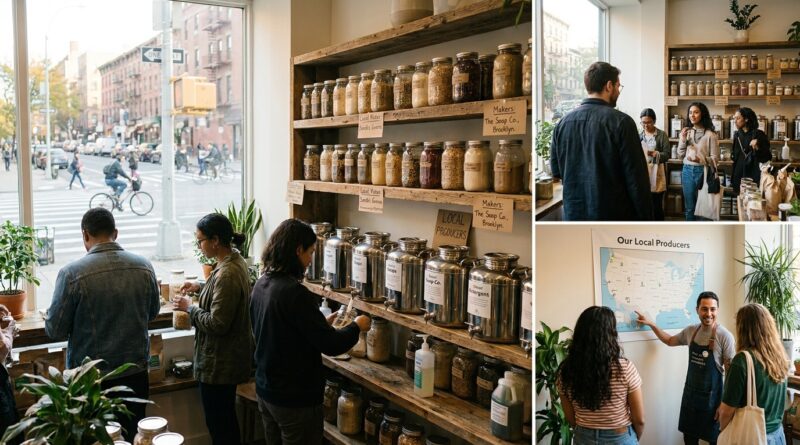
The Hyper-Local Dry Goods Comeback: How Neighborhood Bulk Refill Shops Are Quietly Rewiring What ‘Made Nearby’ Means
You can feel the problem every time you shop. One aisle is full of cheap plastic bottles and mystery labels. The next is stocked with polished “eco” brands that somehow make dish soap feel like a luxury hobby. If you want boring, useful stuff like oats, hand soap, laundry powder, vinegar cleaner, or rice that is actually made nearby, the hunt gets tiring fast. That is why the hyper local bulk refill shop matters more than it looks. These shops are not just cute zero-waste side quests for people with glass jars. They are quietly becoming neighborhood distribution points for small makers who cannot afford supermarket shelf wars. That changes what “made nearby” means. Instead of needing a full grocery chain or expensive branding campaign, a local soap maker or grain mill can move everyday products through one trusted refill counter. For shoppers, that means simpler choices, less packaging, and local goods that fit real-life budgets.
⚡ In a Hurry? Key Takeaways
- A hyper local bulk refill shop can make everyday staples more local, less wasteful, and often more affordable than boutique “green” brands.
- Start small. Move just three repeat buys, like soap, grains, and cleaner, to a nearby refill shop on your next grocery run.
- The real value is not just less trash. You also help small neighborhood makers survive supply shocks and keep more money in your local economy.
Why these shops matter now
Most people do not wake up wanting a “retail revolution.” They just want to buy normal household basics without feeling ripped off, buried in packaging, or tricked by vague claims like “natural,” “artisan,” or “locally inspired.”
A hyper local bulk refill shop solves a very plain problem. It shortens the distance between maker and buyer for things people use all the time. Think olive oil from a regional producer, flour from a nearby mill, castile soap from a neighborhood workshop, or cleaning concentrates mixed and packed within driving distance.
That is a big shift. “Made nearby” used to mean a farmers market treat or a pricey giftable item. Refill shops are turning it into something more practical. Now it can mean dishwasher powder, lentils, shampoo, and all-purpose cleaner.
What a hyper local bulk refill shop actually does
On the surface, it is simple. You bring a container, fill what you need, and pay by weight or volume. But behind the counter, something more interesting is happening.
It acts like a shared shelf for small makers
Small manufacturers often cannot meet the packaging, slotting, or distribution demands of big retail. A refill shop gives them a smaller, more flexible route to market. Instead of producing thousands of branded units, they can sell in larger containers to one local shop that handles the last step.
It cuts packaging without making life harder
Refill only works if it is convenient enough for normal people. The good shops understand this. They pre-label bins clearly, explain prices in plain language, and often sell backup jars or bottles if you forget yours.
It gives shoppers a cleaner paper trail
One of the best parts is transparency. It is easier to ask, “Who made this soap?” or “Where was this flour milled?” in a neighborhood store than in a giant chain. Good refill shops usually know their suppliers by name, not just by invoice number.
Why this feels different from boutique local shopping
For years, buying local often meant buying special. Nice candles. Fancy jam. A ceramic mug you talked yourself into. That has value, sure, but it does not change the weekly shopping list much.
The refill model moves local spending into the dull middle of life. That is where the real economic impact sits. If a household shifts regular purchases like beans, pasta, soap, and cleaner to nearby supply networks, that creates steadier demand than occasional gift shopping ever could.
It also reduces the weird guilt loop. You do not have to choose between cheap convenience and an expensive moral performance. You are just buying the basics from people closer to home.
How shoppers can tell if a refill shop is the real deal
Not every shop with bins and amber bottles is truly local. Some are excellent. Some are mostly reselling the same national goods with earthy branding.
Ask three simple questions
First, where is this made? Second, who makes it? Third, how often do you restock from them? If staff can answer clearly, that is a good sign.
Look for staples, not just novelty
If the shop mainly stocks rare spices and premium bath salts, it may be more gift store than local supply hub. The stronger model includes repeat buys like rice, oats, dish soap, laundry detergent, hand soap, and cleaning refills.
Check the pricing pattern
A fair hyper local bulk refill shop does not need to beat every supermarket price. But it should make sense. If basic staples cost wildly more than nearby alternatives, most households will not stick with it. The best stores keep a mix of affordable essentials and some nicer specialty goods.
The hidden benefit: local resilience
This is the part that often gets missed. Refill shops are not only about less trash. They can also make neighborhoods more stable when supply chains get messy.
If one local store buys from five nearby makers, and hundreds of customers buy a handful of basics there each week, that creates a small but durable network. It is not a complete replacement for national retail. It does not need to be. It just gives communities more options when prices jump or products disappear.
That same idea shows up in newer local food systems too. If you liked the logic behind The Hyper-Local Pantry Subscription: How ‘Bright Stores’ Of Fresh Staples Are Quietly Rewiring The Grocery Aisle, refill shops are a close cousin. Both models make routine shopping more local without asking people to become full-time hobbyists.
How to try it without turning your week into a project
You do not need a Pinterest shelf of matching jars. You do not need to replace your whole pantry in one heroic trip. Keep it boring. Boring is good.
Start with three high-repeat items
Pick products you buy all the time. Good candidates are dish soap, hand soap, rice, oats, beans, laundry detergent, and all-purpose cleaner. If you can move just a few of those into a refill routine, the habit sticks much better.
Use what you already have
Clean pasta sauce jars, old detergent bottles, and sturdy food containers work fine. Label them with masking tape if needed. This is not a beauty contest.
Pair it with an existing errand
The easiest refill trip is one attached to something you already do, like your Saturday grocery stop or weekday coffee run. Convenience is what keeps good intentions alive.
Track cost for one month
Do a basic side-by-side comparison. Some items will be cheaper. Some will be about the same. A few may cost more. The point is to see the full picture, including less packaging, better sourcing, and stronger local circulation of money.
What small shop owners and makers can learn from this
If you run a small retail shop or make household goods locally, this is not just a consumer story. It is a partnership story.
Shops can become trusted filters
Customers are tired of decoding labels. A shop that vets local makers, explains ingredients, and keeps pricing fair becomes useful fast. That trust matters more than a slick logo.
Makers can skip some expensive retail steps
Packaging every item for shelf display is costly. Selling in bulk to a refill partner can lower waste and simplify production. It can also help makers test demand before investing in wider expansion.
Both sides can share delivery and pickup rhythms
A practical local system often wins through repetition, not scale. Weekly drop-offs. Shared containers. Predictable ordering. None of it sounds glamorous. All of it works.
At a Glance: Comparison
| Feature/Aspect | Details | Verdict |
|---|---|---|
| Price vs big-box shopping | Basic staples may be similar in price or slightly higher, but buyers often save on packaging and avoid boutique markups. | Best for steady essentials, not every single item. |
| Local sourcing | Good refill shops can name nearby makers and often restock directly from them in bulk. | A strong way to make “made nearby” part of normal shopping. |
| Convenience and waste reduction | Requires bringing containers or buying reusable ones once, but sharply cuts single-use packaging over time. | Worth it if paired with your regular grocery routine. |
Conclusion
The quiet comeback of the hyper local bulk refill shop is really about making local shopping normal again. Not precious. Not confusing. Not reserved for people with extra time and extra cash. Right now communities are dealing with rising prices, shaky supply chains, and a real desire to cut waste without making daily life harder. These shops offer a practical middle path. Shift a few basic purchases a week into this system and you do more than fill a jar. You help neighborhood makers move product, keep more dollars in your ZIP code, and cut down on packaging trash at the same time. That is useful on your very next grocery run. It is also a smart playbook for small shop owners and local manufacturers who are stronger together than they are trying to outshout national brands alone.