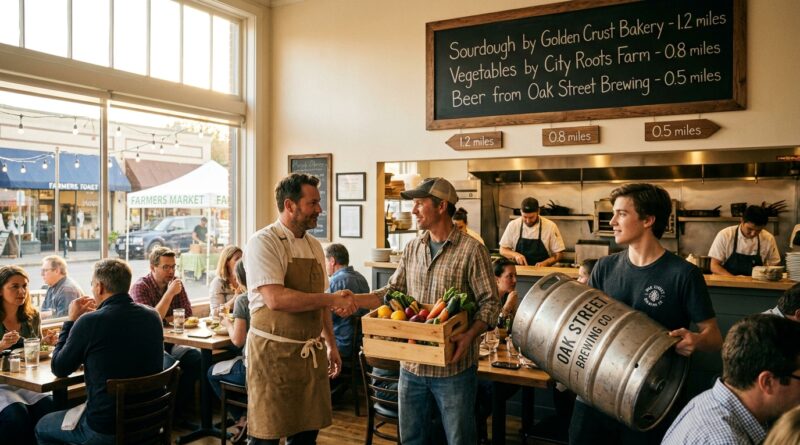
The Hyper-Local Menu Shift: How Neighborhood Restaurants Are Quietly Turning Nearby Makers Into Their Secret Supply Chain
If you run a restaurant or café, you already know the headache. Customers love the idea of local bread, local greens, local beer, and local jam. But turning that idea into a Tuesday morning delivery schedule is where things usually fall apart. One farm has great produce but no online ordering. The baker can do small batches but only on certain days. The brewery wants to collaborate, but not if it turns into a paperwork circus. For years, that made hyper local restaurant sourcing local makers feel like something only fancy farm-to-table spots could manage.
That is starting to change. Quietly, neighborhood food hubs, shared markets, brewery pop-ups, and rotating maker nights are becoming a new kind of supply chain. They connect restaurants with nearby producers who do not need huge orders. They need steady ones. That shift matters because it gives small food businesses a practical way to buy closer to home without blowing up labor costs, menu planning, or margins. Better yet, it gives diners a real shot at supporting the block they live on, not just talking about it.
⚡ In a Hurry? Key Takeaways
- Hyper-local sourcing is becoming more realistic because nearby makers now have more shared spaces, pop-up markets, and small-order systems.
- Start with 3 to 5 core items you can buy locally every week, not your whole menu at once.
- The safest path for margins is steady, repeatable purchasing with backup vendors, clear delivery days, and simple invoices.
Why this shift is happening now
For a long time, local sourcing had a branding problem and an operations problem.
The branding part was easy. Put “local” on the menu and people feel good. The operations part was brutal. Small producers often did not have the scale, packaging, delivery routes, or admin time to serve restaurants every week. Restaurants, meanwhile, needed consistency more than romance. They cannot 86 half the menu because someone’s truck broke down.
Now there is a middle layer growing in many towns. Food halls. Farm-linked pickup points. Brewery markets. Shared kitchen collectives. Small wholesale groups. These are not giant national distributors. They are local connectors.
That means a café can buy croissants from one neighborhood baker, microgreens from a hydroponic grower five miles away, and hot sauce from a local maker selling through a market hub that already handles pickup and invoicing.
It is a lot like what is happening in other local industries. The same way neighborhood production is getting rebuilt in fashion through The Hyper-Local Sewing Comeback: How Neighborhood Stitch Rooms Are Quietly Replacing Fast Fashion One Contract at a Time, food businesses are finding that local supply chains work better when there is a network, not just a single heroic supplier.
The big myth that keeps restaurants stuck
The myth is that local sourcing has to replace your whole distributor.
It does not.
The smarter model is to build a menu supply chain in layers. Keep national or regional distribution for shelf-stable basics and emergency fill-ins. Then carve out the items that make the most sense to buy nearby.
Start with the products that travel best across short distances
These usually include:
- Bread and pastries
- Salad greens and herbs
- Seasonal produce
- Coffee beans and tea blends
- Beer, cider, and specialty drinks
- Condiments, sauces, pickles, and jam
- Desserts and grab-and-go baked goods
These categories are often where local makers can compete. Not always on raw unit price, but on freshness, shorter lead times, lower waste, and better menu appeal.
What nearby makers actually want from restaurants
Most small producers are not waiting for one giant contract. They are looking for predictable revenue.
That is good news for independent restaurants.
A farm may be thrilled with a standing weekly order for two cases of greens and one crate of radishes. A neighborhood baker may prefer guaranteed Tuesday and Friday pastry orders over random event catering. A local brewer may love a monthly tap takeover paired with a small wholesale account.
The key is consistency. Small but frequent orders can be more useful than big, sporadic ones. They help makers plan production. They help restaurants avoid overbuying. And they keep money moving around the neighborhood instead of sending it out of town.
A realistic model for hyper local restaurant sourcing local makers
Here is the simple version. Think in three rings.
Ring 1: Your weekly anchors
These are the products you know you can use every single week. Bread. Milk. Greens. Eggs. Coffee. One dessert item. One house condiment.
Pick 3 to 5.
If you try to localize 20 items at once, your team will hate you by Thursday.
Ring 2: Your rotating specials
This is where local sourcing gets fun without wrecking your line.
Build one soup, sandwich, salad, pizza, or pastry special around what nearby growers and makers have that week. Put a name on it people can understand. “Northside Bakery focaccia with Hill Street tomatoes” beats a vague “seasonal flatbread.”
Customers love specifics. Staff can sell specifics.
Ring 3: Your event and retail layer
This is the missed opportunity in a lot of places.
If your café already has counter space, use it. Add a mini maker shelf. Stock local granola, bottled sauces, cookies, or jam. If you run a taproom, dedicate one night a week to a rotating local food founder. If you have dead hours in the afternoon, host pickup lockers or a neighborhood market table.
This turns your restaurant into both a buyer and a micro-distributor. That can strengthen supplier relationships fast.
How to build the supplier list without making it a part-time job
You do not need a giant procurement system. You need a short list and a repeatable routine.
Step 1: Map your ZIP code first
Do a simple radius search. Start with 5 miles, then 15. Look for:
- Farmers market vendors
- Shared commercial kitchens
- Local breweries and roasters
- Independent bakers
- Food incubators and maker markets
- Farm hubs and CSA pickup points
You will often find producers already selling nearby. They just have never been asked for wholesale terms.
Step 2: Ask three boring but important questions
Not “Can you supply us?” Ask:
- What can you deliver consistently for 8 to 12 weeks?
- What is your order cutoff and delivery day?
- What pack size and invoice process do you use?
This gets you out of the dream phase and into the working phase.
Step 3: Test with one menu slot
Do not bet your brunch rush on six new vendors at once. Start with one slot, like pastries, burger buns, greens, or one house beer.
Run it for a month. Track waste, labor, delivery accuracy, and customer response. Then expand.
How to protect your margins
This is the part owners worry about most, and for good reason.
Local does not automatically mean cheaper. But “cheaper” is not the only math that matters.
Look at total usable value, not just unit price
If local lettuce lasts longer, trims cleaner, and sells better on the plate, it may beat a cheaper case from far away. If local bread arrives fresher and helps you charge two dollars more for a sandwich, that counts too.
Build fixed-order agreements when possible
Try simple standing orders instead of weekly renegotiation. It saves time on both sides. It also helps producers hold pricing steadier.
Keep a backup source for every key item
Hyper-local should reduce risk, not create a fresh kind of chaos. For every local anchor item, have a backup vendor. Rain happens. Ovens break. Trucks get delayed.
Use menu language carefully
Do not promise exact farms or makers on printed menus if supply can shift daily. Train staff with current sourcing notes, and use chalkboards, inserts, or digital menus for changes.
What diners can do to support this shift
Customers are not powerless here. Far from it.
If you are a regular diner, ask simple questions that reward the effort. “Which bread is local?” “Do you sell any neighborhood-made products to take home?” “Is this beer from nearby?”
Questions like that tell owners there is demand.
Then buy the item. That part matters more than posting about it.
Even one lunch choice can help decide whether a local pastry program or maker shelf stays on the calendar.
What this can look like in a real town
Picture a small neighborhood strip with a café, a taproom, a corner store, and a weekend market.
The café buys bagels from a baker six blocks away and stocks local jam at the register. The taproom hosts a Thursday night food founder pop-up and starts carrying a rotating menu item built with nearby sausage or mushrooms. The corner store adds a two-shelf maker aisle with sauces, cookies, and pickles from producers who also sell wholesale to local restaurants. The market doubles as a place where chefs meet growers and test small orders.
Nothing about this requires a giant grant or a trend piece. It just needs coordination and a few reliable invoices.
Common mistakes to avoid
Trying to localize everything at once
This burns out your team and usually leads to supply gaps.
Choosing suppliers based only on story
A great founder story is nice. On-time delivery is nicer.
Ignoring packaging and storage
Small makers may use different case sizes, containers, or labeling. Sort this out early.
Forgetting the sales side
If you are paying more for a better local item, train your staff to explain why it is worth ordering.
At a Glance: Comparison
| Feature/Aspect | Details | Verdict |
|---|---|---|
| Full distributor replacement | Switching every item to local at once adds risk, admin work, and supply gaps. | Usually a bad first move |
| Hybrid sourcing model | Keep broadline basics, but move 3 to 5 repeat items to nearby makers with standing orders. | Best balance of local impact and sanity |
| Retail and event add-ons | Maker shelves, pop-ups, and taproom nights create extra sales and stronger supplier ties. | Smart low-risk expansion |
Conclusion
The quiet shift here is not just about better tomatoes or fresher buns. It is about building a neighborhood business loop that actually works on a weekly schedule. Right now there is a surge of hyper-local food hubs, farm-linked markets, and neighborhood breweries turning their spaces into rotating food halls and micro-markets. That means restaurants and cafés suddenly have more nearby producers to buy from than they realize. It also means those producers are eager for consistent, small but frequent orders that keep money moving on the block instead of leaking out to national distributors. If owners start with a simple menu supply chain, just a few dependable local items, they can protect margins, cut food miles, and give diners something real to support. And any town can copy the model this season, whether that is a corner store adding a maker shelf or a taproom hosting one local food founder a week. That is when “buy local” stops being a slogan and starts showing up in bookings, invoices, and lunch orders.