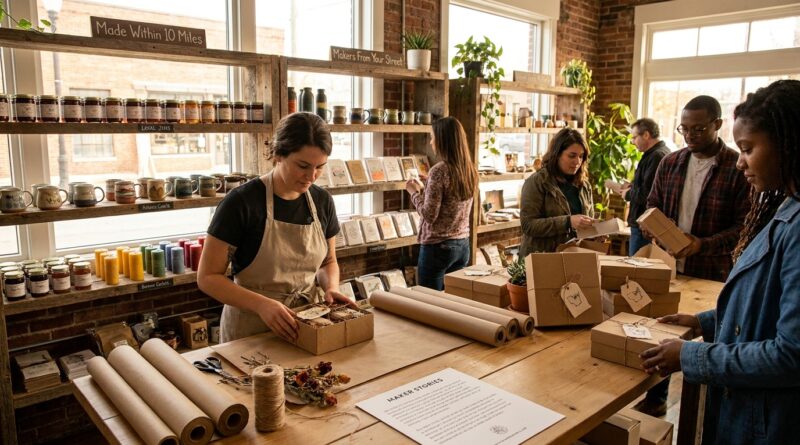
The Hyper-Local Gift Box Hub: How One Small Shop Can Turn Every Neighborhood Maker Into A Go-To Present
You know the last-minute gift panic. You want something that feels thoughtful, something that says “this is from our town,” not “I grabbed it next to the batteries and paper towels.” But buying local can turn into a part-time job. One soap maker is only at Saturday markets. The candle person sells through Instagram messages. The jam lady is great, but you have no idea what pairs well with it. So people do what busy people do. They give up and order something easy.
That is why a local artisan gift box shop is such a smart idea. One small shop can act like a neighborhood gift hub, gathering products from local makers, building ready-to-go boxes, and making “shop local” feel as easy as walking in, clicking buy, or grabbing a gift on the way to dinner. It solves the convenience problem without losing the heart. And for makers, it turns random weekend exposure into steady sales all week long.
⚡ In a Hurry? Key Takeaways
- A local artisan gift box shop makes local gifting easy by curating products from multiple neighborhood makers in one place.
- Start with themed, ready-to-buy boxes like housewarming, hostess, baby, thank-you, and corporate gifts so shoppers do not have to guess.
- The real value is convenience plus trust. Good packaging, clear maker stories, and consistent quality keep customers coming back.
Why this works so well right now
People already want local. That part is not the problem.
The problem is friction. Too many stops. Too many choices. Too much uncertainty about what makes a good gift versus what just looks nice on a folding table for five minutes.
A local artisan gift box shop fixes that by doing the editing for people. Instead of asking customers to hunt across ten separate businesses, it offers one clean answer. “Here are the best gifts from here, already grouped, packed, and ready.”
That simple shift matters more than it sounds. Most shoppers are not trying to become gift curators. They just want to walk out with something that feels personal and polished.
The small shop becomes the translator
Individual makers are often great at making. They are not always set up to bundle products, write gift copy, manage seasonal inventory, or predict what a rushed customer will buy for a teacher, new neighbor, or client.
The shop can do that part for them.
Think of it as a translator between artisan talent and everyday buying habits. The maker focuses on excellent coffee syrup, handmade ceramics, small-batch hot sauce, or local honey. The shop turns those items into giftable experiences.
What the shop is really selling
It is not just selling objects. It is selling relief.
Relief for the customer who needs a birthday gift in 20 minutes. Relief for the office manager who needs ten client gifts by Friday. Relief for the visitor who wants to bring home something that actually represents the place.
That is why packaging and presentation matter so much here. People are paying for confidence as much as they are paying for products.
Why markets alone cannot carry the whole load
Local markets are fantastic for discovery. They create excitement, foot traffic, and that “I found something special” feeling. But they are often temporary. Once the tents come down, the buying path gets messy again.
That is where a permanent gift hub steps in and keeps the momentum going. If you liked the energy of market culture, From Parking Lot To Pop-Up Factory: How Weekly Maker Markets Are Quietly Rewiring Local Shopping gets at why these events spark so much interest in local goods. The missing piece is what happens after the weekend ends.
A gift box shop gives those makers a home base. Seven days a week. Not just when the weather cooperates.
What a great local artisan gift box shop should actually do
1. Curate tightly
More is not always better. A strong shop does not try to stock every local product from every person in town. It picks well.
That means products should feel gift-friendly, shelf-stable when possible, visually cohesive, and easy to mix into bundles. The goal is not endless options. The goal is easy yeses.
2. Build around common gift moments
The best boxes solve specific situations.
Examples include:
- Housewarming boxes with candles, tea towels, soap, and snacks
- Hostess gifts with jam, crackers, honey, and a small serving piece
- New baby boxes with gentle skincare, soft goods, and keepsakes
- Thank-you gifts for teachers, coaches, and volunteers
- Corporate gifts that feel local instead of generic
This is where many small shops can stand out fast. They remove decision fatigue.
3. Tell the maker story briefly and clearly
Customers do care who made the item. But they do not need a novel while standing at the register.
A good local artisan gift box shop gives each maker a short, useful story. Who they are. What they make. Why it is local. Why it is special. Keep it human. Keep it readable.
4. Standardize quality and packaging
This part is easy to overlook and it is a big one.
If one box looks polished and another looks thrown together, trust drops fast. Tissue, labels, box sizes, insert cards, and product condition all need consistency. That does not make the gifts less personal. It makes them feel dependable.
How one shop helps makers without swallowing their brand
Some makers worry that joining a shared retail setup means losing their identity. That can happen if the shop treats everything like anonymous inventory.
The smarter approach is co-branding.
Keep the maker name visible. Include a small story card. Use shelf tags that explain where the item comes from. If a customer falls in love with one product, they may come back for the full gift box next time, or seek out that maker directly. Both outcomes are good for the local ecosystem.
What makers get out of it
Steadier exposure. More repeat orders. Better gifting context.
A jar of local honey might sell slowly on its own. Put it inside a breakfast-themed gift box with pancake mix and coffee, and suddenly it makes instant sense to the buyer.
Convenience is not the enemy of local
This is the big mental shift.
Some people talk like local shopping has to be slower, harder, and a little inconvenient to count. That is nonsense. If residents have to choose between values and practicality every single time, practicality will win most days.
A local artisan gift box shop works because it respects real life. Busy parents. Forgetful spouses. Office admins. Visitors checking out of a hotel. People want local gifts, but they also want parking, clear prices, and something they can buy before lunch.
Simple ways to make the shop a go-to present destination
Offer ready-made boxes and build-your-own options
Some customers want speed. Others want control. Give both.
Ready-made boxes are great for grab-and-go. Build-your-own stations work for shoppers who want to customize by budget, color, or occasion.
Use price bands that remove awkwardness
Good examples are under $25, under $50, and under $100.
That lets shoppers self-sort quickly, which is especially useful for teacher gifts, client thank-yous, and neighbor presents.
Keep a few “save me” gifts by the door
Not every sale is planned. Some are pure panic.
Have a few attractive, all-purpose gifts pre-wrapped and clearly marked. Birthday. Hostess. Sympathy. Baby. Congratulations. These can become quiet bestsellers.
Make local feel easy online too
If the shop has a website, keep it simple. Clear photos. Clear prices. Clear delivery or pickup rules. Let people filter by occasion and budget.
This is especially important for repeat purchases. Once someone trusts the shop, they will come back if reordering is painless.
What can go wrong
There are a few traps here.
Too many makers, not enough editing
If the assortment feels cluttered, customers freeze. Curated beats crowded.
Pretty products that are not actually gift-ready
Some items are lovely but fragile, awkward to package, or hard to explain. Not everything belongs in a gift box.
No seasonal rhythm
Gift buying has peaks. Graduations. Summer hosts. New teachers. Holidays. Corporate year-end orders. A smart shop plans for these well ahead of time.
Forgetting the everyday shopper
It is tempting to chase only big holiday sales. But the long-term win is becoming the place people think of all year for birthdays, dinner invites, welcome gifts, and last-minute thank-yous.
At a Glance: Comparison
| Feature/Aspect | Details | Verdict |
|---|---|---|
| Convenience | One shop brings together multiple local makers, ready-made boxes, and quick gift options for common occasions. | Big advantage over chasing separate vendors. |
| Local impact | Money stays in the community, makers get repeat visibility, and shoppers can support local without extra hassle. | Strong long-term value for both residents and producers. |
| Gift quality | Success depends on smart curation, consistent packaging, and short, clear storytelling about each maker. | Excellent if the shop edits well and keeps standards high. |
Conclusion
A permanent local artisan gift box shop can do something weekend markets alone cannot. It keeps local buying alive after the tents fold up and the Instagram stories disappear. By curating the best products, packaging them well, and telling the story of who made them, one small shop can become the easiest place in town to find gifts that actually mean something. That helps busy people skip anonymous, mass-produced presents without adding more work to their day. It also gives small makers steadier sales and keeps more money moving inside the community. In short, it turns “I should shop local more often” into “I know exactly where to go.”