The Hyper-Local Kids’ Table: How Youth Maker Markets Quietly Build the Next Wave of Neighborhood Manufacturers
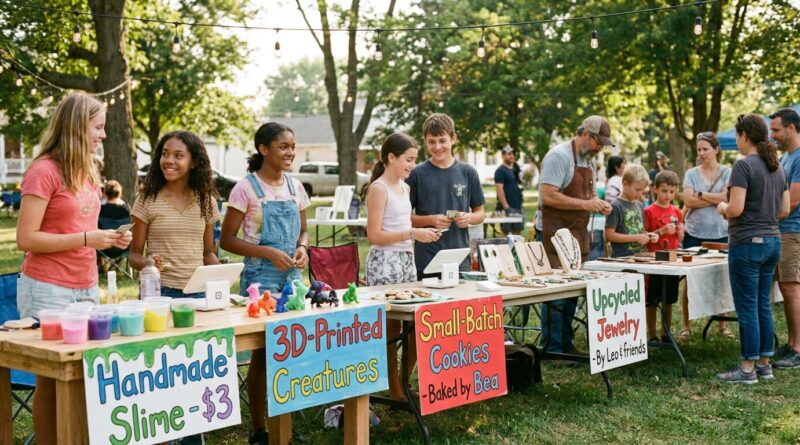
Parents, teachers, and market organizers keep running into the same wall. The kids are creative. The interest is there. The products are real. But the places where young makers can actually sell, learn, mess up a little, and try again are still surprisingly rare. A bake sale at school is nice. A holiday craft table is fun. Neither usually gives a kid the feeling that they are building something with repeat customers, real pricing, and a product people came to buy on purpose. That is why the rise of the youth maker market hyper local scene matters so much. Across towns and small cities, regular neighborhood markets are starting to add youth vendor rows, kids-only market days, and low-cost booth programs. What looks small from the outside is actually a serious training ground. Kids are learning how to make enough inventory, explain what they sell, hear customer feedback, and see firsthand what their own community will support.
⚡ In a Hurry? Key Takeaways
- Youth maker markets are becoming real entry points for young people to test products, learn pricing, and start neighborhood-scale businesses.
- If you run a market, start with a simple youth section, low booth fees, short selling windows, and light coaching for parents and kids.
- Keep the focus on safety, age-appropriate expectations, and learning. The goal is not to turn every child into a hustler. It is to give them a real place to practice.
Why this shift matters more than it first appears
It is easy to dismiss kids’ booths as a novelty. That is the mistake.
When a young person sells handmade earrings, laser-cut keychains, baked treats, seed starters, or 3D-printed tools to actual neighbors, several important things happen at once. They learn what people will pay for. They find out whether their packaging makes sense. They discover that being “good at making” is not the same thing as being ready to sell.
That lesson is gold.
A strong youth maker market hyper local setup gives kids a version of business school they can touch. They count change. They answer awkward questions. They run out of inventory too early, or they bring too much. They hear a shopper say, “I love this, but do you have it in blue?” That kind of feedback is hard to fake in a classroom.
What makes these markets different from the usual fundraiser
They happen in a real buying environment
At most school events, buyers are supportive by default. They already know the child, the teacher, or the team. That support is lovely, but it can blur the signal. In a neighborhood market, shoppers stop because something caught their eye. That means a young seller has to earn attention.
They reward repeatability
One successful craft project is not the same as a product line. Youth market programs push kids to think in batches. Can you make ten of these? Twenty? Can you make them with the same quality each time? Can you still make money after materials?
They build business habits, not just confidence
Confidence is nice. Process is better. The best youth markets teach simple habits. Track costs. Label clearly. Show prices. Practice a short explanation. Bring enough small bills. Display your work so people can understand it from six feet away.
The quiet connection to neighborhood manufacturing
This is where the story gets bigger than a cute Saturday market.
A child who learns to design, make, package, and sell locally is getting an early look at how small-scale manufacturing works. Not giant factory manufacturing. Neighborhood manufacturing. The kind that starts in a garage, kitchen, spare room, school lab, or shared workshop.
That is why these youth programs fit naturally with the broader rise of local production spaces. If you have been watching community workshops and shared build spaces grow, this next step makes sense. Young makers need a place to sell just as much as they need a place to make. That larger ecosystem is part of what makes The Hyper-Local Makerspace Wave: How Neighborhood Workshops Are Becoming the New Factory Floor such an important trend to watch. Makerspaces help kids build skills. Markets help them test whether those skills can turn into something sustainable.
What successful youth vendor programs tend to include
Low friction entry
The easiest mistake is overcomplicating the first step. If parents have to deal with a full business application, complicated insurance language, and adult-level booth pricing, many families will simply skip it.
Good programs start small. A simple sign-up form. A clear age range. A short list of approved product types. A parent or guardian agreement. A modest booth fee, or none at all for first-timers.
Clear product boundaries
Not everything should be sold by kids, and that is okay. Organizers should spell out what is allowed. Handmade goods, art prints, simple sewn items, jewelry, plants, stationery, shelf-stable baked goods where rules allow, and beginner inventions are all common fits.
Some categories need tighter rules. Food often requires local health guidance. Cosmetic products can raise allergy and labeling issues. Items with blades, heat, chemicals, or electrical modifications may need age limits or extra review.
Shorter market windows
Adults can grind through an all-day market. Kids often cannot. A two- or three-hour youth block usually works better than expecting younger sellers to stay engaged for six hours. Tired kids stop learning. They just wilt.
Simple coaching before the event
A 30-minute prep session can change everything. Show kids how to make a sign. Explain why prices should be easy to read. Talk about greeting customers without sounding robotic. Remind them to keep talking simple. “I designed this bookmark on my tablet and cut it from recycled plastic” is better than saying nothing and staring at the table.
How communities can support a youth maker market hyper local program on purpose
Pair markets with build spaces
If your town already has a library lab, school shop, art room, or community makerspace, connect it to the market. The making side and the selling side should not live in separate worlds.
A kid who uses a 3D printer at the library should know there is a market date coming up. A teen who learns basic woodworking after school should have a pathway to show and sell finished work. That bridge is what turns isolated projects into a local pipeline.
Invite local business owners to mentor lightly
This does not need to become a formal accelerator program. In fact, that can scare people off. Keep it simple. Ask a baker to talk about pricing. Ask a jeweler to talk about display. Ask a print shop owner to explain packaging and labels. Kids do not need a lecture. They need a few practical tips from someone who has done it before.
Make room for different age groups
A seven-year-old selling hand-drawn stickers is in a very different place from a sixteen-year-old selling custom 3D-printed bike accessories. Put them together if needed, but design with those differences in mind.
Separate categories, age labels, or beginner and advanced sections can help shoppers understand what they are seeing. It also keeps older teens from accidentally crowding out younger kids who are just learning the ropes.
Celebrate effort, but do not fake the feedback
This one matters. Adults often want to praise every booth equally and protect feelings. Fair enough. But young makers also need honest signals. Which product got people to stop? Which sign confused shoppers? Which item sold out? Which one never moved?
Supportive does not mean pretend.
Common mistakes that hold these markets back
Treating the youth area like a side attraction
If the kids’ booths are shoved into a far corner with poor foot traffic, the lesson kids learn is not entrepreneurship. It is invisibility. Put youth vendors where they can be seen. Make them part of the event, not a decorative add-on.
Expecting parents to do the selling
Adults will naturally step in, especially when a child gets shy. But if parents do all the talking, the point gets lost. A parent can help with money, safety, or setup. The child should still get the chance to explain the product and interact with customers when they are able.
Skipping the money lesson
Many kids can make beautiful things and still have no clue what they cost to produce. Organizers should encourage a simple worksheet. Materials cost this much. Packaging costs this much. Booth fee was this much. I sold this many. Here is what I actually made.
That is where the light bulb goes on.
Making it too serious too fast
Yes, this can become a path to real local business. No, every child does not need branding strategy and growth targets at age ten. The sweet spot is structure without pressure. Real enough to matter. Gentle enough to stay fun.
What parents can do without taking over
Parents are often the hidden engine behind these booths. The trick is helping without turning the whole thing into your project.
Ask product questions, not leading questions
Try asking, “How long does this take to make?” or “What would make this easier to display?” That helps a child think through the work. It is better than saying, “You should sell these for eight dollars,” before they have done the math.
Practice a simple pitch at home
Nothing fancy. Just one or two sentences. What is it? Who is it for? Why did you make it? That is enough.
Help with production planning
Young makers often underestimate time. If the market is on Saturday, Friday night is a terrible moment to discover they still need twenty tags, six boxes, and another batch of cookies. A basic checklist goes a long way.
Talk about what did not sell
This can be the most useful conversation of the day. Not as failure. As information. Maybe the price was too high. Maybe the display was flat. Maybe customers liked the idea but wanted a different color or size. That is how real product improvement happens.
Why neighbors should care, even if they do not have kids
A local economy is stronger when more people know how to make useful things, sell them clearly, and respond to demand close to home. Youth markets help build those habits early.
They also make local talent visible. The teen making custom plant markers today might become the small-batch manufacturer your town depends on later. The kid selling hand-poured candles could become the adult who opens a studio, hires locally, and trains others.
That path sounds big, but it often starts very small. One folding table. One market morning. One customer who says, “You should keep doing this.”
At a Glance: Comparison
| Feature/Aspect | Details | Verdict |
|---|---|---|
| Learning Value | Kids practice pricing, inventory, customer conversations, and product improvement in public. | Much stronger than one-off school sales for real-world business skills. |
| Ease of Starting | Works best with simple applications, low fees, short market hours, and parent support. | Very doable for existing farmers markets, craft fairs, libraries, and town events. |
| Long-Term Community Impact | Creates an early pipeline from making at home or in workshops to neighborhood entrepreneurship. | High value if communities treat youth vendors as part of local economic life, not just entertainment. |
Conclusion
The big opportunity here is hiding in plain sight. Right now there is a surge in hyper-local markets that already include or are starting kids’ sections and youth vendor days, where young people sell everything from baked goods and 3D-printed trinkets to handmade jewelry and small inventions. These events are no longer just cute extras. They are becoming real on-ramps into local manufacturing and craft, giving kids hands-on experience with pricing, production, storytelling, and customer feedback in front of their own neighbors. If towns, parents, libraries, schools, and market organizers build these programs with a little intention, they can lock in that momentum. The result is not just a fun day out. It is a visible path from kitchen-table tinkering to serious neighborhood entrepreneurship, and a stronger local economy growing up one booth at a time.