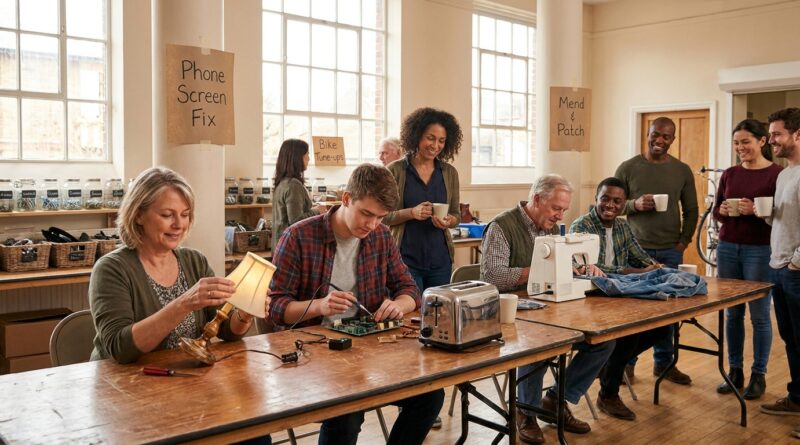
The Hyper‑Local Repair Revolution: How Neighborhood Fix‑Shops Are Quietly Outcompeting Big Retail
Your toaster quits. Your phone charging port goes loose. The zipper on your favorite jacket gives up. And somehow the answer from big retail is always the same. Buy another one. People are tired of it. Tired of paying more for stuff that lasts less. Tired of being made to feel like a broken lamp, mixer, laptop, or vacuum is somehow not worth saving. The good news is that many of those items are still fixable, often for a lot less than replacement. The problem is not a total lack of repair talent. It is that the people who can help are often hard to find. They work out of tiny storefronts, home garages, market stalls, and side hustles. Quietly, these hyper local repair shops near me searches are turning into a small revolution. Neighbors are finding neighbors. Money stays close to home. Useful things get a second life. And big retail loses one easy sale at a time.
⚡ In a Hurry? Key Takeaways
- Hyper local repair shops often beat big retailers on price, honesty, and turnaround for everyday fixes.
- Before replacing an item, search nearby repair options, ask for a diagnosis fee upfront, and get a quote in writing.
- Good repair saves money and cuts waste, but always use trusted pros for batteries, gas appliances, and anything with serious electrical risk.
Why repair is suddenly making sense again
For years, the math seemed stacked against repair. A cheap coffee maker broke, and replacing it looked easier than fixing it. A cracked tablet screen felt like the end of the road. Stores trained us to think this way.
But prices changed. Fast. A new appliance, phone, bike, or vacuum can now cost enough to make you stop and think. Even simple household items have jumped in price. At the same time, people are more aware of how much junk gets tossed just because one part failed.
That is where local repair steps in. Not as a nostalgic hobby. As a practical answer.
What big box stores get wrong
Replacement is often their business model
A large retailer makes money moving new inventory. That does not automatically make them the villain, but it does shape the advice you get. If your blender dies and the store does not repair blenders, guess what they will suggest.
Another new blender.
Repair desks are often limited
Even when a chain offers service, it is usually restricted to a few categories. Phones, maybe. Laptops, sometimes. Small appliances, lamps, fans, sewing machines, game consoles, or older stereo gear often fall into a gray area where nobody wants to touch them.
Local knowledge beats corporate scripts
A neighborhood fix-shop owner has seen the same vacuum model fail 30 times. They know the weak switch, the cracked hose, the fuse that looks fine but is not. That kind of pattern recognition saves time. It also saves you from buying a whole new unit because one $18 part wore out.
The quiet advantage of hyper local repair shops near me
When people search for hyper local repair shops near me, they are usually not looking for a movement. They just want their thing working again. But those searches often uncover a hidden local economy that is surprisingly strong.
They are cheaper than you expect
A lot of repairs sound expensive until you compare them with replacement. Replacing a vacuum might cost $250. Repairing the motor housing or power cord might cost $45 to $90. Replacing a phone charging port can be much cheaper than buying a new phone. A chair re-glue job may beat buying flimsy furniture that will break again in two years.
They are faster than mailing things away
Big service centers often mean shipping, processing, waiting, and guessing. A neighborhood repairer may tell you by tomorrow afternoon whether it is worth fixing. Sometimes they can do it while you run errands.
They work on the weird stuff
This is where local repair really wins. Old cassette decks. Desk lamps. Kitchen mixers. Small engines. Vintage fans. Game controllers. Torn bags. Broken zippers. Wobbly dining chairs. You would be surprised how much of modern life sits outside the neat repair categories of big retail.
These repair pros were always there. They were just hard to see.
One reason local repair feels new is that many skilled people have been invisible for years. They are not always ranking high in search results. They may not have a glossy website. Some rely on word of mouth, handwritten signs, church bulletin boards, neighborhood groups, or a tiny booth at the weekend market.
If you want proof of how much hidden skill is around you, take a look at The Sidewalk Maker Map: How One Afternoon Walk Can Reveal Dozens of Hidden Craftspeople In Your Neighborhood. It makes a simple point. A lot of useful local talent is easy to miss until you slow down and look.
That matters because repair networks do not need fancy apps or venture funding to work. They need visibility. A few good listings. Honest reviews. A local recommendation thread. Maybe a flyer in a coffee shop. That is often enough to connect the person with the broken item to the person who knows exactly how to fix it.
How to tell if something is worth repairing
Not every item should be saved. Some products are poorly made from the start. Some are unsafe once they fail. But many are absolutely worth a second look.
Usually worth checking
Phones with battery or port problems. Laptops with bad keyboards or fans. Vacuums. Mixers. Lamps. Bicycles. Small furniture. Sewing machines. Headphones with broken jacks. Game consoles. Speakers. Power tools. Jackets, bags, and shoes.
Pause and compare first
Very cheap small appliances, low-end printers, and bargain earbuds can be a toss-up. Ask for a diagnosis fee and an estimate before approving anything. If repair costs 80 percent of replacement for a low-quality item, replacement may be reasonable.
Always use a pro for higher-risk repairs
Anything involving swollen lithium batteries, gas appliances, microwaves, high-voltage power supplies, or exposed household wiring deserves caution. This is not the place for guesswork.
How to find the right local fixer
Start simple. Search for the item and your area. Search for hyper local repair shops near me. Then get more specific. “Vacuum repair near me.” “Lamp repair near me.” “Sewing machine repair near me.” “Furniture repair near me.”
Check these clues
Look for photos of actual repairs, not just stock images. Read reviews for words like honest, fair, quick, explained, and worth it. See whether the shop lists common brands or categories they handle. A short, plainspoken website can be a good sign. It often means the person is busy fixing things, not polishing marketing copy.
Ask three smart questions
Do you charge a diagnosis fee? Can you give me a rough estimate range? If you cannot fix it, do I still owe anything?
Those questions tell you a lot, fast.
Use neighborhood channels too
Do not rely only on search engines. Try your local Facebook group, neighborhood forum, library board, farmers market, and independent hardware store. The best repair person in town may have a waiting list and almost no web presence.
Why this trend matters beyond your wallet
Yes, repair saves money. That is the immediate win. But there is a bigger shift happening.
When communities get better at repair, they get better at resilience. Households stretch budgets. Useful skills stay local. Teenagers see adults fixing things instead of tossing them. Retired tradespeople can pick up part-time work. Side-hustle tinkerers can build a steady customer base one satisfied neighbor at a time.
And then there is the landfill problem. A huge amount of waste comes from items that are not truly finished. They just need a part, a solder joint, a bearing, a patch, a battery, or a careful set of hands.
What a healthy neighborhood repair network looks like
It is not complicated. It looks like a bike mechanic sharing space with a key cutter. A phone repair counter next to a dry cleaner. A retired electrician who fixes lamps and fans by appointment. A talented sewist who also replaces backpack zippers. A hobbyist who refurbishes old audio gear on weekends.
None of that needs to become a startup. It just needs to be findable.
Once a few of these people become visible, the network starts to feed itself. One neighbor gets a mixer repaired. Another hears about it. Someone posts a recommendation. A local shop that was barely hanging on suddenly has enough steady work to keep going.
How to be a better repair customer
Bring details
Know the brand, model, age, and exact symptoms. If the item makes a sound, smell, or error message, mention it.
Be realistic
Good repair takes time. Parts may need ordering. Older items can have hidden issues. Patience helps everyone.
Reward the good ones
Leave a review. Tell your neighbors. Save the number. Small repair businesses live and die by local trust.
At a Glance: Comparison
| Feature/Aspect | Details | Verdict |
|---|---|---|
| Cost | Local repair is often far cheaper than replacing mid-priced appliances, electronics, furniture, and gear. | Repair usually wins if the item was decent quality to begin with. |
| Convenience | Big retail is easy for instant replacement, but local shops can offer faster diagnosis and less hassle than manufacturer mail-in service. | For many everyday problems, nearby repair is more convenient than it sounds. |
| Long-term value | Repair keeps useful items in service, cuts waste, and supports skilled people in your own community. | Best overall choice when the fix is safe, sensible, and fairly priced. |
Conclusion
Right now, a lot of people feel cornered. Prices keep rising, products feel flimsier, and waste seems baked into the system. That is exactly why this shift matters. A hyper-local repair network gives regular people a practical way to push back. You save real money. Good tools, gadgets, and household gear stay out of the trash. Skilled local shop owners and side-hustle repairers get steady work without needing flashy storefronts or outside funding. That is not a small thing. It is a healthier local economy, built one fixed lamp, one revived phone, and one repaired vacuum at a time. Before you replace the next broken thing in your house, stop for a minute. Search for hyper local repair shops near me. The fix may be closer than you think, and the person who can do it may be right down the street.