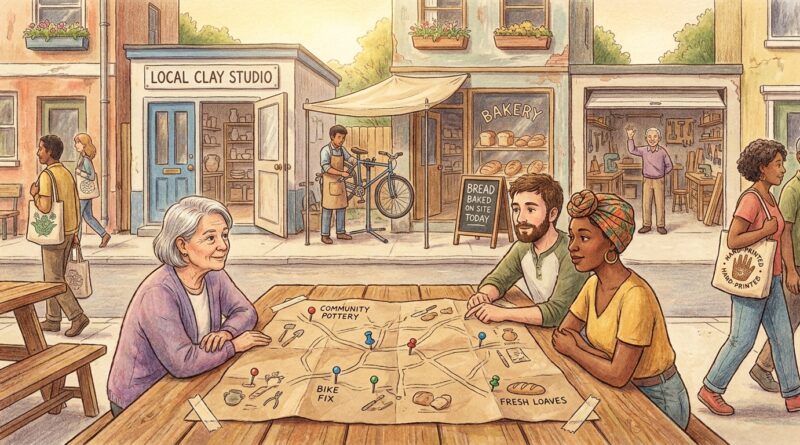
The Sidewalk Maker Map: How One Afternoon Walk Can Reveal Dozens of Hidden Craftspeople In Your Neighborhood
You try to buy one thoughtful local gift, or find someone nearby who can hem curtains, repair a chair, or make a birthday cake from scratch, and somehow the internet sends you straight back to the same big retailers. It is frustrating. The problem is not that your neighborhood lacks talent. It is that the people actually making things nearby are often hard to spot unless you already know their names. A Sidewalk Maker Map is a simple fix. You take one afternoon, walk a few blocks, and note the real places where making happens. Not just stores. Think bakers, florists, print shops, sewists, ceramic studios, frame shops, garage woodworkers, cafés with craft nights, and barbers who also sell handmade pomade. By the end, you have a living map of who makes what close to home. It is practical, cheap, and surprisingly good at answering a very common question: how to find local makers in my neighborhood.
⚡ In a Hurry? Key Takeaways
- A Sidewalk Maker Map helps you find real local makers by walking your area and recording who actually makes, repairs, grows, bakes, or crafts things nearby.
- Start with one route of 10 to 20 blocks, note names, products, hours, and contact info, then turn it into a simple shared Google Map or printable list.
- Always respect privacy. Only include businesses or makers who want to be listed, especially home-based craftspeople working from porches, garages, or studios.
Why search keeps missing the people you actually want
If you have ever searched for a local gift and gotten pages of sponsored listings, chain stores, and mystery brands with stock photos, you are not imagining it. Tiny workshops do not have ad budgets. Many home-based makers do not have polished websites. Some are too busy making the thing to spend half the day feeding social platforms.
That means the baker around the corner, the person reupholstering stools in a garage, or the neighbor sewing custom aprons may be invisible online. They exist. You just cannot find them through the usual channels.
That is why a street-level approach works so well. Instead of asking the algorithm who matters, you go look.
What a Sidewalk Maker Map actually is
Think of it as a neighborhood field guide. It is a list or map of people and places within walking distance that make, repair, alter, roast, print, pour, stitch, carve, preserve, or teach a craft.
It can be very simple:
- A shared Google Map
- A one-page PDF for a business association
- A handwritten community board list that later becomes digital
- An Instagram highlight, if that is what your area already uses
The point is not fancy design. The point is discovery.
How to find local makers in my neighborhood in one afternoon
1. Pick a walkable zone
Start small. A few blocks is enough. Use a main street plus the nearby side streets where studios, garages, churches, cafés, and older mixed-use buildings often hide small production spaces.
If you make the zone too large, you will quit halfway through. Keep it manageable.
2. Decide what counts as a “maker”
Do not limit yourself to obvious craft shops. Include anyone producing something tangible or offering skilled repair or customization.
Examples:
- Bakers and candy makers
- Woodworkers and furniture refinishers
- Sewists, tailors, and embroiderers
- Ceramic artists
- Soap, candle, and skin-care makers
- Print shops and sign painters
- Bike repair and knife sharpening services
- Florists making arrangements in-house
- Cafés hosting regular craft circles or pop-ups
If a place creates, repairs, or helps neighbors make something, it probably belongs on the map.
3. Walk slowly and look for clues
This is the fun part. Look beyond storefront signs. Watch for:
- Drying racks, cutting tables, or kilns visible through windows
- Sandwich boards advertising classes or pop-ups
- Community boards with flyers for makers markets
- Side doors with workshop hours
- Porch pickup signs
- Garages with branded labels, packaging, or inventory shelves
You will spot more than you expect once you start paying attention.
4. Ask one simple question
When you enter a shop or talk to someone outside, keep it easy: “Do you make anything here, or know someone nearby who does?”
That one question tends to open doors. Shop owners usually know the florist who buys local pottery, the café that sells neighborhood jam, or the tailor two blocks over who fixes everyone’s wedding clothes.
5. Record only useful details
You do not need a full business profile. Just gather the basics:
- Name
- What they make or repair
- Location or pickup area
- Best contact method
- Hours or appointment notes
- Whether they welcome custom orders
Take photos only if you ask first.
Do not forget the “hidden” makers
Some of the best local producers are not in regular retail spaces at all. They might sell from home, through porch pickup, at occasional markets, or inside someone else’s store. That is where the map becomes really valuable.
We are seeing more of these tiny, home-based operations all the time. If you want a good picture of how that works, From Etsy To Your Street: How ‘Porch Brands’ Are Quietly Turning Neighborhood Homes Into Hyper‑Local Micro‑Factories shows how neighborhood production often hides in plain sight.
Just remember the privacy piece. Some home-based makers want customers. Others only want referrals or prearranged pickup. Ask before listing exact addresses.
How to turn your notes into a map people will actually use
Keep categories plain and human
A buyer is rarely searching for “micro-manufacturing capacity.” They are searching for “custom birthday cake,” “chair repair,” “baby gift,” or “local soap.” Use common language.
Good categories include:
- Food and drink
- Clothing and alterations
- Home goods
- Repairs and restoration
- Art and paper goods
- Classes and community craft spots
Use a simple format
A Google Map works well because people already know how to use it. A spreadsheet works too. If your neighborhood has an active newsletter, add a “maker of the week” section that links back to the full list.
For each maker, keep the description short. One sentence is enough.
Example: “Rosa’s Upholstery. Garage-based chair and stool recovery. Best by text. Custom fabric welcome.”
Add a trust signal
If you visited in person, say so. A note like “seen making on site” or “hosts open studio Saturdays” helps people know this is a real local source, not a random online listing.
Who can start one
You do not need permission from city hall. A Sidewalk Maker Map can be started by:
- One resident
- A neighborhood association
- A main street program
- A library
- A school art department
- A chamber of commerce
- A shop owner who wants a stronger local network
In fact, the best versions usually start small, then spread because people recognize names and add more.
What buyers get out of it
This is not just nice community branding. It solves real errands.
- You need a last-minute gift and do not want mass-produced junk.
- You want a cake, not a supermarket sheet cake.
- You need pants hemmed before Friday.
- You want local wedding favors.
- You need a lamp rewired or a table refinished.
A good map cuts that search from an hour of dead ends to five minutes.
What makers get out of it
For tiny businesses, discovery is half the battle. A neighborhood map gives them a fighting chance without asking them to buy ads or become content creators.
It can bring:
- New nearby customers
- More custom orders
- Cross-referrals between local businesses
- Stronger repeat business
- Better odds of surviving slow seasons
That matters a lot when polished search results keep pushing small producers down the page.
Common mistakes to avoid
Do not overcomplicate version one
You do not need logos, reviews, a fancy website, or a launch event. Start with names and categories. Polish can come later.
Do not include people without asking
This is especially important for home studios. Some people are happy to be discovered. Others are not set up for walk-ins.
Do not make it only about shopping
The best maps include repair, classes, and supply sources too. A bead shop, a sharpening service, or a café craft night can connect the whole local making scene.
Do not let it go stale
Add a quick “last checked” date. Even a volunteer-updated map is useful if people know when it was refreshed.
At a Glance: Comparison
| Feature/Aspect | Details | Verdict |
|---|---|---|
| Search engines | Good for finding established shops, weak at surfacing tiny makers, home studios, and part-time craftspeople. | Useful starting point, but incomplete. |
| Sidewalk Maker Map | Built from direct observation, local referrals, and real walking routes. Can include pop-ups, porch brands, and repair services. | Best for real neighborhood discovery. |
| Social media alone | Helpful for updates and photos, but easy to miss posts unless you already follow the maker. | Good supplement, not a full map. |
Conclusion
If you have been wondering how to find local makers in my neighborhood, the answer may be a lot less digital than you expected. Put on good shoes, pick a route, and start noticing who is actually making things near you. This matters right now because AI-driven search, local SEO crackdowns, and algorithmic feeds tend to favor polished brands that can spend money, not the woodworker in a garage or the baker taking porch pickups three blocks away. A Sidewalk Maker Map is a fast, zero-budget way to surface the real production happening within walking distance and connect it to nearby customers. It makes buying local easier, helps small makers stay visible, and turns “shop local” into something concrete. Not a slogan. A neighborhood supply chain you can literally walk in an afternoon.