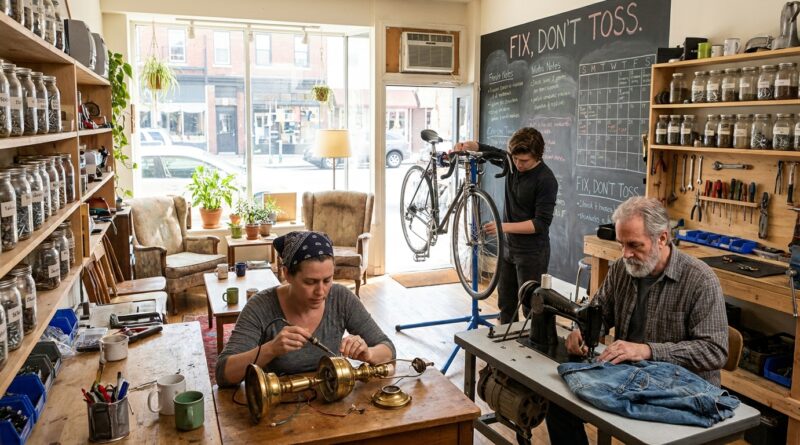
The Hyper-Local Repair Room Revival: How Neighborhood Fixers Are Quietly Outshining Throwaway Culture
Your toaster quits. Your jacket zipper gives up. A bike wheel starts wobbling. Then comes the annoying part. You search for help, get pushed toward a brand service center three states away, and hear the same bad news: ship it in, wait two weeks, maybe pay more than the thing is worth. No wonder people replace stuff they would rather keep. The odd part is that the person who could fix it might be five blocks away, working out of a garage, a sewing room, a bike co-op, or a tiny storefront you have never noticed. That is the quiet comeback happening right now. Hyper-local repair is becoming the practical answer to high prices, long delays, and throwaway habits. If you have been typing “local repair shops near me” and getting mixed results, the real story is this: the best fix is often closer, faster, and more human than the big systems make it seem.
⚡ In a Hurry? Key Takeaways
- Neighborhood repairers are often the quickest and most affordable answer for everyday fixes, from lamps and clothing to bikes and instruments.
- When searching for local repair shops near me, look beyond big chains. Check maker spaces, farmers markets, bike co-ops, community boards, and neighborhood social groups.
- Always ask for an estimate, timeline, and parts plan up front, especially for electrical items, safety gear, and anything that carries weight or heat.
Why local repair is having a real moment
People are tired of waste. They are also tired of paying replacement prices for problems that are often small. A busted seam is not a dead coat. A frayed cord is not always a dead lamp. A loose tuning peg is not the end of a guitar.
What changed is simple. Prices went up. Shipping got slower. Parts can still take forever. So the old habit of dropping things and replacing them no longer feels cheap or easy.
That is where neighborhood fixers come in. A good sewist can save a favorite bag in a day. A bike mechanic can turn a dusty garage bike into your daily ride by the weekend. A luthier can make a buzzing instrument playable again without forcing you into a costly upgrade.
These are not backup options anymore. In many cases, they are the best option.
The hidden problem is not skill. It is visibility.
Most neighborhoods already have talented repair people. The problem is that they are hard to find. They may not have polished websites. They may book through Instagram messages, a handwritten sign, or word of mouth. Some work from shared workshops. Others take jobs through community events.
That means when people search for local repair shops near me, search results do not always show the best person for the job. They show the best-indexed person for the job.
That is a big difference.
Who is often missing from the map
Think beyond appliance stores. Hyper-local repair includes:
- Tailors and sewists who fix zippers, hems, straps, and upholstery
- Bike mechanics who rebuild brakes, true wheels, and replace cables
- Small electronics tinkerers who swap ports, batteries, and switches
- Lamp and lighting repair specialists who can rewire older fixtures
- Luthiers who adjust, reglue, and restore instruments
- Cobblers who save boots, bags, and belts
- Furniture repair pros who tighten joints, patch veneer, and refinish surfaces
How to actually find the right fixer nearby
If search results feel thin, widen the net a little. You are not hunting for a giant service center. You are trying to find skilled hands with a local reputation.
Start with these places
- Neighborhood Facebook groups and Nextdoor threads
- Farmers markets and local craft fairs
- Independent hardware stores
- Bike co-ops and community workshops
- Makerspaces and repair cafes
- Main street business associations
- Library bulletin boards and community centers
Ask a very specific question. Not “Does anyone know a repair person?” Ask “Who rewires table lamps nearby?” or “Who replaces backpack zippers in this neighborhood?” Specific questions get specific referrals.
Read reviews the smart way
Do not just look at star ratings. Look for signs of trust. Did the person explain the problem clearly? Did they suggest repair only when it made sense? Did they finish on time? Did they handle older or unusual items with care?
A short review that says “fixed my vintage floor lamp in two days and explained the new cord options” is more useful than a vague five-star rating.
Why this matters beyond saving a few bucks
Local repair is not only about cost. It changes the relationship people have with their stuff. When an item gets repaired instead of tossed, you start to see it as maintainable, not disposable.
That shift matters. It supports a neighborhood craft economy. It gives skilled trades more respect. It keeps money close to home. It also cuts waste without turning it into some grand moral lecture. You fix the thing because it makes sense.
And sometimes repair leads to something even better. A missing knob or broken bracket may be custom-made nearby. That is where small-scale making overlaps with repair. If you are curious about that side of the neighborhood economy, The Hyper-Local Micro Factory Next Door: How Neighborhood 3D-Print Hubs Quietly Turn Ideas Into Real Products shows how local fabrication can help replace tiny parts that big brands no longer stock.
What to ask before handing over your item
A friendly local setup is great. Clear expectations are better.
Ask these five questions
- What do you think the problem is?
- What is the estimated cost range?
- How long should this take?
- Will you repair the original part or replace it?
- Is there any safety risk or reason not to repair it?
Good repairers usually appreciate these questions. They show you value the work.
For safety-critical items, be extra careful
This includes helmets, child gear, electrical devices, heaters, brakes, and structural furniture. In those cases, the cheapest option is not always the right one. Ask about testing, replacement parts, and whether the item should be retired instead of repaired.
Why local repair often beats distant service centers
Distant service centers have their place. Some warranty work has to go through official channels. But for many common household and personal items, local repair has clear advantages.
You get speed
No boxing. No shipping label. No weeks of status emails. Sometimes you can meet the repairer, show the issue in person, and get an answer on the spot.
You get context
A local fixer sees how you actually use the item. They can suggest a sturdier zipper, a better cord, a stronger stitch, or a replacement part that fits your real life.
You get honesty
Independent repairers live on reputation. If the fix is not worth it, the good ones will often say so. That kind of honesty saves everyone time.
How cities and local groups can make this easier
This is the part that gets exciting. Hyper-local repair does not need a giant policy overhaul to grow. It needs visibility and a little organizing.
Three things communities can do right away
- Host Fix Nights where residents bring small items and meet local repairers
- Add repair booths to maker markets, street fairs, and seasonal festivals
- Create a simple local directory sorted by item type, not just business name
Main street groups, libraries, climate groups, and neighborhood associations could do this tomorrow. It is practical. It is affordable. And it gives hidden talent a front door.
At a Glance: Comparison
| Feature/Aspect | Details | Verdict |
|---|---|---|
| Speed | Local repair often means same-week turnaround, while distant service centers may require shipping and long queues. | Local usually wins |
| Cost | Neighborhood fixers may charge fair labor rates, but you often avoid shipping fees, replacement markups, and unnecessary upsells. | Often better value locally |
| Trust and fit | In-person conversations make it easier to explain odd problems, discuss options, and judge whether a repair is safe and worth doing. | Strong advantage for local |
Conclusion
The return of neighborhood repair is not nostalgia. It is a smart response to how expensive, slow, and wasteful replacement has become. The person who can save your lamp, zipper, bike, boots, or guitar may live within a mile of you. That matters right now. It gives people a faster and often cheaper option when supply chains drag and prices climb. It also helps us see repair as skilled craft work, not a last resort, which gives local fixers more respect and better pricing power. And for cities, business districts, and climate groups, the next steps are refreshingly concrete: host Fix Nights, plug repairers into existing community markets, and treat them like essential parts of a resilient local economy. So the next time you search for local repair shops near me, do not stop at the first chain result. Ask around. Look closer. The best fix may be right down the block.