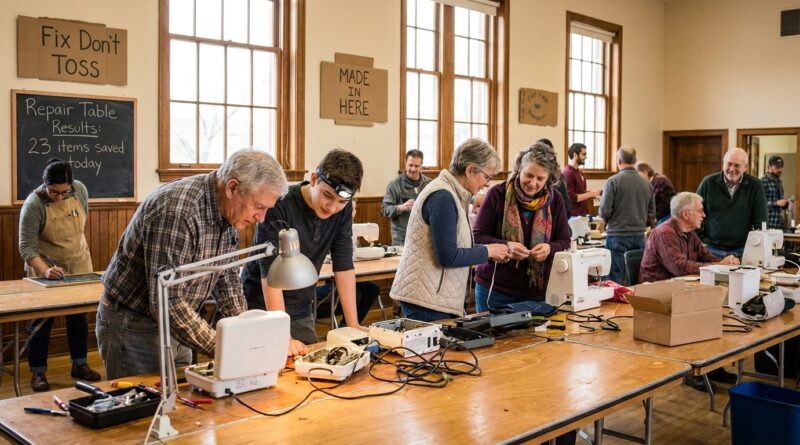
The Hyper-Local Repair Table: How Neighborhood Fixers Are Quietly Beating Planned Obsolescence One Saturday At A Time
Your blender quits. Your kid’s bike has a bad brake. Your laptop hinge cracks, and the brand’s answer is a return label, a long wait, and a replacement that may not last any longer than the first one. That gets old fast. Most people are not asking for miracles. They just want a real person nearby who can say, “Let’s open it up and see.” That is why neighborhood repair cafés are having a moment. They are simple, human, and surprisingly practical. A few folding tables, a couple of skilled fixers, a box of screwdrivers, and suddenly a broken toaster is not trash. It is a Saturday project. If you want to start a neighborhood repair cafe, the good news is you do not need a giant grant, a storefront, or a fleet of volunteers. You need a small start, clear rules, and a way to turn one successful event into a regular local habit.
⚡ In a Hurry? Key Takeaways
- A neighborhood repair café helps people fix common household items locally instead of throwing them away or mailing them to far-off service centers.
- To start one, gather three fixers, pick easy repair categories first, and host a simple two-hour event in a library, church hall, school, or community center.
- Keep everyone safe by limiting high-risk repairs, using waivers, setting clear intake rules, and sending complicated jobs to paid local repair shops.
Why these repair tables are catching on now
People are tired of products that feel sealed shut by design. Even when something small breaks, the usual path is annoying. Box it up. Print a label. Wait. Hope. Repeat. It is expensive in time, and often wasteful too.
At the same time, the local fix-it world is getting stronger. Right-to-repair rules are opening doors. Cities and towns are putting money into reuse projects. Libraries, schools, and neighborhood groups are looking for practical events that bring people together. A repair café checks every box.
It is also a social answer to a technical problem. You are not just fixing a lamp. You are rebuilding local know-how. That matters.
What a neighborhood repair café actually is
Think of it as a pop-up clinic for everyday stuff. People bring in broken items. Volunteer fixers sit with them, diagnose the problem, and try to repair it on the spot. Sometimes the item is saved in ten minutes. Sometimes it is not fixable, but the owner at least learns why. That still has value.
The best part is that repair cafés do not try to replace professional shops. They do the opposite. They create a front porch for local repair culture. Easy wins happen at the event. Harder jobs get referred to neighborhood pros who deserve the business.
How to start a neighborhood repair cafe without overcomplicating it
Step 1: Find your first three fixers
Do not begin by hunting for twenty volunteers. Start with three.
A good first trio looks like this:
- One small-appliance tinkerer
- One bike fixer
- One generalist for simple electronics, lamps, cords, toys, or furniture touch-ups
Retired tradespeople are gold here. So are bike co-op volunteers, theater techs, school shop teachers, makerspace regulars, and the neighbor who is always repairing things on the porch.
Ask them for one Saturday, not a lifelong commitment. People say yes more often when the ask is small.
Step 2: Pick a venue that already feels welcoming
You want a place with tables, chairs, outlets, decent lighting, and easy parking or transit access. Public libraries are great. So are church halls, school cafeterias, neighborhood centers, and fire halls.
Keep the first event short. Two or three hours is enough. A packed 90-minute event is better than a six-hour marathon that burns everyone out.
Step 3: Choose repair categories that give you quick wins
If you want your first event to feel successful, avoid the hardest jobs. Start with items that are common, visible, and often repairable.
Good starter categories:
- Bikes with minor issues
- Toasters, lamps, fans, and coffee makers
- Clothing mends and zipper fixes
- Loose laptop hinges, battery swaps, and simple cleaning, if you have the right person
- Toys, stools, and small household hardware
Skip or limit dangerous categories at first, such as microwaves, e-bikes, swollen batteries, gas-powered tools, and anything with major water damage.
Step 4: Set up a simple intake table
This is where many events either feel calm or chaotic. Use a basic check-in form with:
- Name and contact info
- Item description
- What is wrong
- Permission note and waiver
- Whether the owner agrees to buy a low-cost part if needed
Label each item with painter’s tape and a number. Suddenly the whole event runs better.
What tools and supplies you really need
You do not need a shiny workshop. You need enough of the basics to keep people moving.
- Phillips and flathead screwdrivers
- Precision screwdriver set
- Pliers and needle-nose pliers
- Adjustable wrench set
- Allen keys
- Bike pump and patch kit
- Multimeter
- Extension cords and power strips
- Work lights
- Zip ties, electrical tape, super glue, wood glue
- Rags, gloves, and cleaning supplies
If your group does not own much yet, borrow instead of buying everything at once. This is where a local tool-sharing effort can help. If you want a smart companion idea for your neighborhood, read The Hyper-Local Utility Closet: How Neighborhood Tool Libraries Are Quietly Turning Renters Into Makers. Repair cafés and tool libraries make a very natural pair.
How to pair students and retirees so the skills do not disappear
This is one of the best parts of the whole model. A repair café is not just about fixing objects. It is about passing on confidence.
Retirees often bring patience, muscle memory, and years of practical judgment. Students bring curiosity, speed with online manuals, and energy. Put them together at the same table.
A few easy ways to do that:
- Assign one student helper to each experienced fixer
- Ask students to handle intake, labeling, and parts lookup
- Have retirees explain the diagnosis out loud while they work
- End the event with a 15-minute recap of what everyone learned
This turns a one-off event into local training. Over time, your helper becomes your next fixer.
How to work with local repair shops instead of competing with them
This part is important. A repair café should feed the local repair economy, not undercut it.
Do that by being clear about what the event is for. It is for diagnosis, simple fixes, learning, and triage. It is not free unlimited labor for every difficult problem in town.
Here is the smart move. Invite local repair shops to be your “next step” partners.
- List trusted local shops on a handout
- Send complex jobs their way
- Ask if they will donate scrap parts or old screws
- Offer them a table or flyer space at the event
- Highlight them in your social posts after the event
That keeps money and trust in the neighborhood. It also gives your event legitimacy from day one.
Safety rules that keep a good idea from becoming a bad afternoon
You do not need a huge legal manual, but you do need some guardrails.
Use a basic waiver
Make it clear that repairs are attempted by volunteers, success is not guaranteed, and items may not be returned to original condition.
Limit risky categories
Do not take on everything. High-voltage gear, damaged lithium batteries, and structurally unsafe items should be referred out.
Make owners stay with their item
This reduces confusion and helps learning. It also avoids the feeling that your event is a drop-off repair depot.
Have one safety lead
One person should be able to say, “Nope, this one goes to a pro.” That saves time and arguments.
How to spread the word so people actually show up
You do not need a big campaign. You need local trust.
Use neighborhood Facebook groups, library calendars, community bulletin boards, PTA newsletters, houses of worship, and small-town newspapers. Keep the message plain: bring one item, stay with it, and expect a shared repair attempt, not guaranteed service.
Photos help. So do before-and-after stories. “Lamp saved in 12 minutes” is better publicity than any fancy slogan.
What success looks like at the first event
Success is not fifty perfect repairs. Success is much simpler.
- People show up
- Volunteers do not feel overwhelmed
- A handful of items get fixed
- A few items get referred to local pros
- Someone says, “When is the next one?”
That is your proof. Then you can add categories, partners, and maybe a small grant later.
At a Glance: Comparison
| Feature/Aspect | Details | Verdict |
|---|---|---|
| Getting started | Three fixers, a free room, simple tools, and a short event are enough for version one. | Very doable for most neighborhoods |
| Best first repairs | Bikes, lamps, toasters, clothing, toys, and minor household fixes tend to give the quickest wins. | Start here for momentum |
| Long-term value | Builds local skills, supports nearby repair shops, reduces waste, and keeps spending in town. | Much bigger than a one-day event |
Conclusion
If you have been wondering whether this is the right time to start a neighborhood repair cafe, it is. The wave is already here. From Seattle to Boulder to small towns in Maine, communities are setting up repair cafés, reuse hubs, and local circular-economy projects because people want practical alternatives to throwaway living. New right-to-repair rules and local funding are helping, but the real engine is much more ordinary. Neighbors are tired of tossing fixable things. Start small. Gather your first three fixers. Pick easy repairs. Pair students with retirees. Then use the event to shine a light on the paid local repair shops that can handle the harder jobs. Done right, a repair café is not just a nice Saturday event. It is a way to keep skills, trust, and money close to home, where they belong.