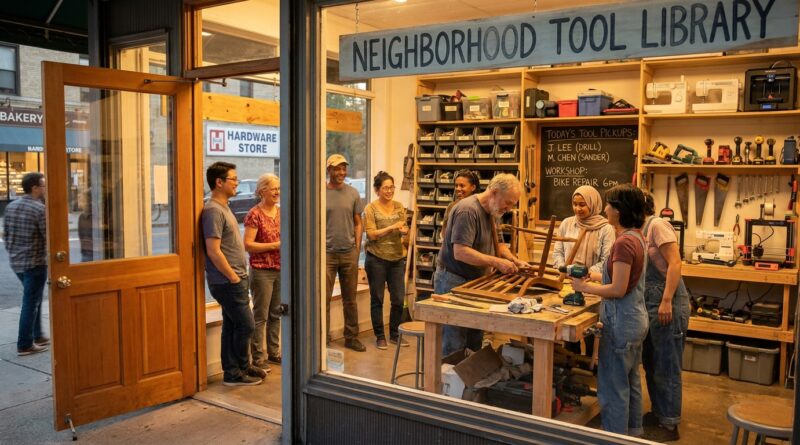
The Hyper-Local Utility Closet: How Neighborhood Tool Libraries Are Quietly Turning Renters Into Makers
You do not need a garage full of shiny tools to make something useful. Most people are not blocked by motivation. They are blocked by space, money, and the annoying math of buying a $180 saw to cut two shelves one time. If you rent, live upstairs, or barely have room for a vacuum, the usual DIY advice can feel ridiculous. That is why the neighborhood tool library matters. It is basically a utility closet for the block. Instead of every apartment buying the same drill, ladder, sewing machine, or tile cutter, a local business or community group keeps a shared collection that residents can borrow for a small fee or monthly membership. The result is simple but powerful. More people fix things. More people try building. More neighbors meet each other. And the host shop gets steady foot traffic from people who might never have walked in otherwise.
⚡ In a Hurry? Key Takeaways
- A neighborhood tool library is one of the cheapest, fastest ways to help renters and beginners start making things without buying every tool themselves.
- If you want to know neighborhood tool library how to start, begin small with 20 to 40 high-demand tools, a simple checkout system, and one trusted local host like a café, repair shop, or corner store.
- Clear safety rules, deposits, waivers, and maintenance checks matter just as much as the tools themselves.
Why this idea is catching on
People still want to repair a chair, hem curtains, build a planter box, mount shelves, or print a replacement part for a broken appliance. What they do not want is to spend half a paycheck on tools that will sit in a closet for eleven months a year.
That is the quiet genius of a neighborhood tool library. It takes expensive, rarely used gear and makes it act more like public infrastructure. One drill can serve 50 homes. One sewing machine can support a whole block of side projects. One label maker, heat gun, or stud finder can save dozens of people from unnecessary purchases.
It also meets people where they already are. Not in some distant industrial makerspace with limited hours and a big learning curve. Right on the block, inside a familiar place.
What a neighborhood tool library actually looks like
Forget the fancy image for a second. This can be very simple.
A neighborhood tool library might live inside:
- A corner store with an unused back room
- A café with community shelving
- A bike repair shop
- A laundromat with extra wall space
- An apartment common room
- A nonprofit arts space
Members browse a list of available tools, reserve one, pick it up, use it, and bring it back. Some libraries offer day rates. Others use a monthly subscription. Some are volunteer-run. Others are hosted by a business that earns a small cut while gaining new customers.
Tools that usually get borrowed first
- Cordless drills and driver sets
- Ladders and step stools
- Sewing machines
- Stud finders and levels
- Jigsaws and circular saws
- Sanders
- Tile cutters
- Socket sets and torque wrenches
- 3D printers
- Specialty kitchen or garden gear
The sweet spot is not “everything.” It is the stuff people need occasionally, cannot justify buying, and can realistically use at home.
Neighborhood tool library how to start
If you are trying to figure out neighborhood tool library how to start, the biggest mistake is overbuilding it. You do not need a giant nonprofit launch. You need a controlled pilot.
Step 1: Start with demand, not with donations
Ask 50 to 100 nearby residents what they actually want to borrow. Use a simple form. Give them a checklist and a write-in box.
You will probably see a pattern fast. Power drill. Sewing machine. Ladder. Carpet cleaner. Basic woodworking kit. Maybe a 3D printer if the neighborhood has students, artists, or product tinkerers.
Do not accept random old junk just because it is free. A shelf full of broken hedge trimmers and mystery cables is not a tool library. It is a headache.
Step 2: Pick a host that already has trust and foot traffic
This is where the model gets interesting. A host business does not need to become a full makerspace. It just needs to be reliable, visible, and open enough hours to support pickup and return.
Good hosts include repair shops, hardware stores, cafés, bookstores, and small groceries. The host benefits because borrowers often buy coffee, snacks, replacement screws, fabric, or repair services while they are there.
The tool library benefits because it gains a real-world home without taking on full rent.
Step 3: Launch with 20 to 40 tools
You want enough variety to be useful, but not so much that tracking becomes chaos.
A practical starter mix might include:
- 5 cordless drills
- 3 sewing machines
- 2 circular saws
- 2 jigsaws
- 2 sanders
- 4 ladders
- 6 basic toolkits
- Stud finders, levels, clamps, and extension cords
- 1 specialty tool section, like tile tools or bike repair tools
Step 4: Use a dead-simple checkout system
You do not need custom software on day one. Many small programs can run on:
- A shared spreadsheet
- A library checkout app
- A point-of-sale system with inventory notes
- A reservation tool like Calendly plus a member database
Every item should have:
- A unique ID tag
- A photo
- What is included in the case
- Replacement cost
- Safety notes
- Check-in condition notes
Step 5: Set pricing that feels fair, not heroic
People do not need this to be free. They need it to be cheaper than buying the tool.
Examples:
- $25 to $40 per month for unlimited basic borrowing
- $5 to $15 day rental for standard tools
- $20 to $40 day rental for premium gear like carpet cleaners or 3D printers
- $50 to $150 refundable deposit for higher-risk items
Some libraries also offer a pay-what-you-can membership tier sponsored by local businesses or apartment buildings.
The business case for hosts
This is not just a feel-good community idea. It can make real business sense.
A café hosting a small tool library becomes a neighborhood destination. A repair shop becomes the first place people think of when something breaks. A hardware store gets more visits from customers who may borrow the saw but still buy wood screws, sandpaper, safety glasses, glue, and paint.
Foot traffic matters, especially for small local businesses trying to stand out against chains and delivery apps.
There is also a second layer. Tool borrowing often leads to skill-building. Once people make one thing, they want to make another. That is why a tool library can pair naturally with classes and workshops. If you like this community-first model, The Hyper-Local Class Boom: How Neighborhood Hobby Schools Are Turning Makers Into Micro-Businesses shows how learning spaces can help neighbors turn hands-on hobbies into actual income.
What it costs to get a pilot running
You can start smaller than most people think.
Low-cost pilot budget
- Starter tools: $2,000 to $6,000
- Shelving and storage bins: $300 to $1,000
- Labeling and tags: $100 to $250
- Basic insurance or liability support: varies by location
- Checkout software or admin tools: free to $100 per month
- Maintenance and replacement fund: $100 to $300 per month
A surprising amount can come from local sponsorships. Real estate offices, neighborhood associations, co-ops, and even landlords may chip in if it makes the area more attractive and useful.
The rules that keep it from becoming a mess
Shared tools sound lovely until the first missing battery charger. Then reality shows up.
The best tool libraries are warm and neighborly, but they are also organized.
Basic rules worth having from day one
- Borrower agreement and ID on file
- Late fees that are firm but reasonable
- Deposits for higher-value tools
- Photo checklist of included parts
- Condition check at checkout and return
- Required safety briefing for certain items
- Maintenance schedule for every power tool
What about liability?
This is the part nobody should skip. Talk to a local attorney or insurance broker before launch. You will likely want waivers, clear use policies, age restrictions for some equipment, and a plan for damaged or unsafe returns.
Also, be realistic about what belongs in version one. Industrial table saws and welding gear may be too risky for a neighborhood-first pilot. Drills, sewing machines, hand tools, and simple cutting tools are often a better place to begin.
How this changes the culture of a block
The money savings are easy to understand. The social shift is the bigger story.
When tools are visible and borrowable, people stop seeing repair and making as a niche hobby for homeowners with basements. It becomes normal. A renter can patch drywall. A teenager can learn basic fabrication. A parent can fix a stroller instead of tossing it. A neighbor can print a part instead of waiting a week for shipping.
That small change matters. It chips away at throwaway culture and replaces it with practical confidence.
And because the library is local, people often swap advice while picking things up. “How did that sander work?” “What bit do I need for brick?” “Can this sewing machine handle denim?” Those little conversations are how skills spread.
Partnership ideas that work well
Apartment buildings
A landlord or condo board can underwrite memberships for residents. That can be cheaper than maintaining a half-used amenity room and more useful than another lonely treadmill.
Schools and youth groups
Offer supervised access to sewing machines, 3D printers, or electronics tools for project-based learning.
Repair cafés and fix-it events
Use the library as a permanent extension of occasional repair events. Borrowers come for the event, then keep making progress at home.
Local instructors
Once the library is active, workshops become much easier to fill. People are more willing to join a class if they know they can borrow the tools later instead of buying them. That is the bridge between access and action.
Common problems and the simple fixes
Problem: Tools come back late
Fix: Use reminders by text and email. Offer grace periods for first-time members. Charge fees after that.
Problem: Stuff goes missing
Fix: Put every accessory on a checklist with photos. Cases should show exactly what belongs inside.
Problem: A few tools get all the demand
Fix: Track reservations and buy duplicates of the top five most borrowed items before expanding into exotic gear.
Problem: Members are nervous about using tools
Fix: Add short orientation sessions, printed guides, and beginner classes.
Problem: The host business feels burdened
Fix: Limit pickup windows, pay an admin fee, or use volunteers during rush periods.
At a Glance: Comparison
| Feature/Aspect | Details | Verdict |
|---|---|---|
| Startup model | Small pilot inside an existing local business, with 20 to 40 high-demand tools and a basic checkout system | Best way to start quickly without waiting for grants or a dedicated building |
| Member value | Access to drills, sewing machines, ladders, saws, and specialty gear for a low monthly fee or day rate | High value for renters, beginners, and anyone doing occasional projects |
| Risk and upkeep | Needs clear waivers, deposits, maintenance checks, labeled inventory, and realistic rules about what equipment to offer | Very manageable if safety and admin are treated as core features, not afterthoughts |
Conclusion
Right now, this idea hits a real nerve for good reason. Budgets are tight, but the urge to fix, build, and customize things is only getting stronger. A neighborhood tool library gives people a practical way back into hands-on life without demanding a garage, a big bank account, or a leap into some far-off makerspace. Put it inside a corner store, café, or repair shop, and suddenly useful tools are visible, local, and affordable. Residents borrow instead of buying. Businesses get more foot traffic. Good equipment stays in circulation instead of gathering dust in closets and storage units. Most of all, neighbors stop being passive consumers and start becoming capable people again. That is a big shift from a very small space. And it is the kind of project a block can start now, with a simple playbook, a few partners, and a shelf full of well-labeled tools.