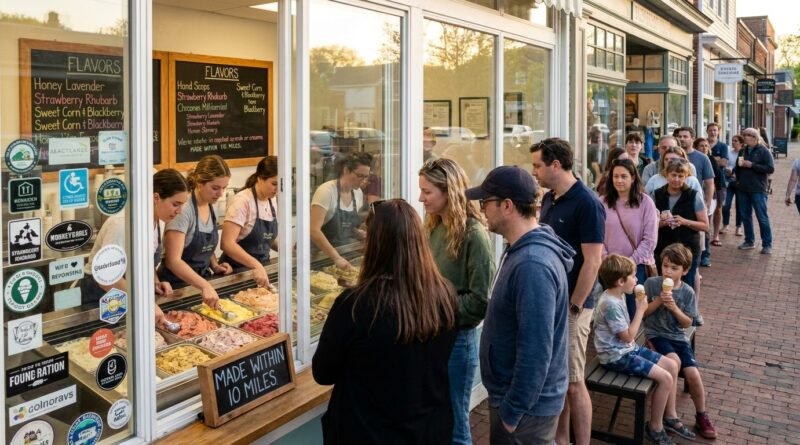
The Hyper-Local Scoop Shop: How Neighborhood Ice Cream Makers Became Summer’s Most Powerful Local Business Engine
You can feel it when a shop is the real thing. The line is a little longer. The staff can tell you where the peaches came from. The pistachio flavor tastes like actual pistachios, not green sugar with a fancy sign over it. That is the frustration with buying “local” right now. A lot of brands look homespun, but the ice cream itself may be coming from a factory far outside town. If you have ever searched for a local artisan ice cream shop near me and wondered what actually counts, you are not alone. The good news is that ice cream is one of the simplest places to start. One scoop can support nearby dairy farms, local bakers, coffee roasters, fruit growers, and the small retail streets that make a neighborhood feel alive. This is one of the easiest ways to shop local without turning it into homework.
⚡ In a Hurry? Key Takeaways
- A true neighborhood creamery usually makes its ice cream in-house or nearby, and can clearly tell you where key ingredients come from.
- Start with one simple check. Ask whether the shop makes on site, rotates seasonal flavors, or works with local farms and bakeries.
- Your choice matters more than it seems. A local scoop often keeps more money circulating through farmers, downtown shops, and nearby food makers.
Why ice cream became such a powerful local business test
People say they want to buy local. Then real life gets in the way. Labels are vague. Marketing is slick. You are busy. It is hard to investigate every coffee bean, loaf of bread, or jar of jam.
Ice cream is different. It is visible, social, and easy to compare. A neighborhood shop either has a real local story or it does not. You can often see the production space, talk to the staff, read the flavor board, and notice whether the menu changes with the season.
That makes the local scoop shop a kind of gateway habit. You are not signing up for a total lifestyle change. You are buying dessert. But in doing that, you start seeing how local economies actually work.
What separates a real hometown creamery from a clever label
They can explain the product without reading from a script
If you ask where the ice cream is made, a real local shop usually has a plain answer. “In the back.” “At our small production kitchen two blocks over.” “At our dairy partner outside town.” That kind of clarity matters.
If the answer gets fuzzy fast, that tells you something too. “We are inspired by local culture” is not the same as “we make it here.”
Seasonal flavors actually mean something
Local shops often change flavor menus around what is available. Strawberry in early summer. Peach later on. Sweet corn when nearby farms have it. Apple pie in fall. Those shifts are small clues that the shop is buying from the world around it instead of using the same shipped-in base all year.
They pull in other local businesses
One scoop can include milk from a regional dairy, brownies from a neighborhood bakery, mint from a local grower, honey from a nearby apiary, and espresso from the roaster down the street. That is the hidden engine. The ice cream shop becomes a buyer for a whole local chain.
You can see the same pattern in other foods too. If you want another good example of how one product can connect a wider community, take a look at The Hyper‑Local Chocolate Boom: How Neighborhood Bean‑To‑Bar Makers Are Turning Cacao Into A Community Story.
How to tell if a “local artisan” shop is truly local
You do not need to interrogate anyone. Just look for a few plain signals.
Ask these simple questions
Try one or two of these the next time you visit:
- Do you make the ice cream here or at another local kitchen?
- Which flavors use ingredients from nearby farms or makers?
- Do your seasonal flavors change every few weeks?
- Do you sell pints to local groceries or restaurants?
A shop that is proud of its process will usually answer gladly.
Read the menu like a detective, not a cynic
You are looking for specifics. “Blueberry lavender from Smith Farm.” “Cold brew with beans from Elm Street Roasters.” “Cherry pie with crust from Northside Bakery.” Specific names are usually a better sign than broad feel-good wording.
Notice the neighborhood footprint
Does the shop host school fundraisers? Stay open for the town concert series? Partner with local nonprofits? Feature artists on the walls? A real neighborhood business usually has roots you can see.
Why your scoop matters more than the price difference
Yes, local ice cream may cost a bit more than a supermarket tub or a chain dessert. But the comparison is not just about ounces. It is about where the money goes next.
When you buy from a neighborhood creamery, more of that money is likely to pay local wages, buy local ingredients, and cover rent on a local commercial street. That helps other nearby shops too. People who come out for dessert often end up browsing a bookstore, grabbing coffee, or staying downtown longer.
That is why these shops can become tiny economic anchors. They create traffic. They give families a reason to walk the district. They make “shop local” feel fun instead of dutiful.
How to make your search actually work
Typing local artisan ice cream shop near me into your phone is a fine start. But do not stop at the map pins.
Check photos and reviews for clues
Look for pictures of rotating flavor boards, in-house waffle cones, production spaces, and ingredient callouts. Reviews that mention seasonal flavors or staff explaining sourcing are helpful signs.
Visit social media with one goal
You are not there to admire branding. You are checking whether the shop talks about local farms, maker collaborations, neighborhood events, or new small-batch flavors. Those are stronger signals than polished packaging alone.
Start with one scoop, not a perfect system
You do not need a spreadsheet. Pick one shop this week. Try one flavor made with a local ingredient. See how it tastes. Ask one question. That is enough to begin.
The easiest way to test-drive a hyper-local mindset
This is what makes neighborhood ice cream so useful. It is a low-pressure experiment. You are not overhauling your pantry or changing your whole budget. You are seeing, in one summer outing, whether your spending can line up a little more closely with your values.
And because the experience is immediate, the payoff is easy to notice. Better flavor. More conversation. A stronger sense of place. Kids remember the shop. Visitors ask about it. You end up with a local favorite instead of another generic stop.
At a Glance: Comparison
| Feature/Aspect | Details | Verdict |
|---|---|---|
| Where the ice cream is made | True local shops make in-house or at a nearby small facility and can say so clearly. | Strongest sign of a real hometown creamery |
| Ingredient sourcing | Seasonal fruit, local dairy, and collaborations with nearby bakers or roasters show deeper community ties. | Worth paying attention to |
| Community impact | Your purchase can support local jobs, farms, retail foot traffic, and other small food businesses. | Small purchase, surprisingly big local effect |
Conclusion
Right now, in the peak of summer, ice cream is one of the easiest entry points for people who like the idea of buying local but feel overwhelmed by where to begin. A neighborhood creamery gives you something simple, visible, and enjoyable to support. You get a treat. Local farmers, food artisans, and small retail streets get a real boost. So if you have been meaning to shop closer to home, start with dessert. Search for a local artisan ice cream shop near me, ask one good question, and let one enjoyable evening show you how the hyper-local idea works in real life.