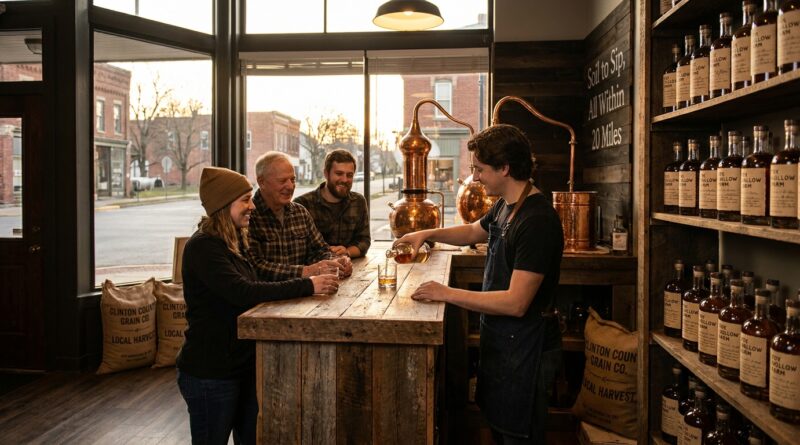
The Hyper-Local Sip Shift: How Neighborhood Distilleries Are Quietly Turning Grain Next Door Into Bottles With a Story
You are not wrong to feel bored staring at a bar shelf full of labels that say “craft” but tell you almost nothing about where the spirit actually came from. A lot of bottles look handmade, sound rustic, and still could have been produced almost anywhere. That is why neighborhood distilleries are starting to matter more. They are giving people a chance to drink something tied to local grain, local wood, local water, and local people. The shift is quiet, but it is real. More small producers are working with nearby farms, selling at farmers markets, and building tasting rooms that feel more like community spaces than marketing machines. If you have ever searched for a hyper local craft distillery near me, you are already part of the trend. The good news is that finding the real thing gets easier once you know what signs to look for, and which claims are worth a second glance.
⚡ In a Hurry? Key Takeaways
- Hyper-local distilleries stand out by using nearby ingredients and giving each bottle a real connection to place.
- Ask where the grain comes from, whether aging happens on-site, and if the distillery works with local farms or markets.
- Your purchase does more than stock a home bar. It can keep money in local supply chains and help small makers survive.
Why this shift is getting attention
People learned to ask where their coffee beans came from. Then their vegetables. Then their bread, cheese, and meat. Spirits were slower to join that conversation.
Part of the reason is simple. A bottle can look local without being deeply local. Nice label. Small batch wording. Maybe a town name in big print. But the grain may come from far away, the liquid may be sourced, and the connection to the neighborhood may be more branding than reality.
That is changing. Drinkers want proof. They want a bottle with a backstory that is not made up by an ad team. They want to know who grew the rye, who milled the corn, and why that whiskey tastes a little different from one made three states over.
If you want the deeper version of that idea, The Hyper-Local Grain Loop: How Neighborhood Distillers Are Quietly Turning Nearby Farms Into Flavor Powerhouses lays out why so many “local” claims deserve a closer look.
What makes a distillery truly hyper-local
It starts with nearby ingredients
The biggest clue is the raw material. Grain matters. A distillery using corn, wheat, rye, or barley from farms within driving distance is doing something very different from one that buys bulk neutral spirits or generic grain from a national supplier.
Some even go further. They use local botanicals in gin, local fruit in brandies, or regional oak for finishing and aging. That is where the bottle starts to taste like where you live, not just look like it belongs there.
It is rooted in the community
A hyper-local distillery usually does not hide from questions. It often shares the names of farms, coop partners, and nearby businesses it works with. You may find it pouring samples at a weekend market, teaming up with a local bakery, or hosting events with farmers and food makers.
That matters because local is not just a radius on a map. It is a set of relationships.
It makes, not just markets
This part is important. Some small brands design labels and build a story, but the actual spirit is produced elsewhere. There is nothing automatically wrong with that, but it is not the same as a neighborhood distillery that mills, ferments, distills, ages, and bottles with care on-site or nearby.
When you visit, ask a basic question. “What part of the process happens here?” Good producers usually answer clearly.
How to find a hyper local craft distillery near me
Start with the obvious search. Then go beyond it.
Check farmers markets and food halls
Many neighborhood distillers show up where local food people already gather. If a distillery has a table at a market, that is often a good sign it wants local customers, not just wholesale accounts.
Read the “about” page carefully
Look for specifics. Farm names. Grain sources. Milling details. Barrel info. Regional ingredients. If the website says “inspired by local heritage” but never says where anything comes from, be a little skeptical.
Visit the tasting room
This is still the fastest way to separate a real local maker from a polished brand story. Ask what they are most proud of. Ask what ingredient comes from closest to home. Ask what changes from season to season.
If the staff lights up and starts naming nearby farms, you are probably in the right place.
Why these bottles taste different
Spirits are not just alcohol plus packaging. Raw materials shape flavor. Local grain can bring different sweetness, spice, weight, and texture. Regional oak changes how a spirit picks up vanilla, smoke, or tannin. Local climate affects aging, especially for whiskey and rum.
Even gin can become a map of a place. One distiller might use local citrus peel and coastal herbs. Another might lean into mountain botanicals or orchard fruit. The result is not always louder. Often it is more distinctive.
That is the appeal. You are not buying a bottle engineered to taste identical in every city. You are buying one that carries the fingerprints of one place.
How buying local helps more than your cocktail
This is where the story gets bigger than flavor.
When a neighborhood distillery buys local grain, it gives nearby farmers another customer. When it hires local coopers, printers, truckers, or tasting-room staff, more money stays in the area. When it becomes a regular stop for visitors, nearby restaurants and shops benefit too.
Big national brands are built for scale. Hyper-local distillers are built for circulation. The money loops back through the same community that supports the bottle.
That makes each purchase feel less like grabbing a product and more like backing a small local system that can grow if enough people care.
Red flags to watch for
Vague “craft” language
“Craft” by itself means very little. It sounds nice. It does not tell you where the ingredients came from or who made the spirit.
No sourcing details
If a distillery is truly proud of local grain or regional aging, it usually says so plainly. Silence can be a clue.
A story with no names in it
Real local supply chains have names. Farms have names. Millers have names. Neighbors have names. If everything stays fuzzy, the local angle may be thinner than it looks.
What to ask before you buy a bottle
Keep it simple. You do not need to turn a tasting room visit into a job interview.
- Where does your grain come from?
- Do you distill this yourselves?
- Is it aged here or elsewhere?
- What ingredient in this bottle is most tied to this region?
- Do you work with local farms or markets?
These questions are friendly, normal, and useful. They also tell makers that customers care about substance, not just label design.
How to support the good ones
You do not have to become a spirits collector.
Buy one bottle instead of your usual default. Order the local pour at a bar and ask how it is made. Bring visitors to the tasting room. Mention your favorite neighborhood distillery to a local shop owner. If a bottle stands out, tell people why. Word of mouth still matters a lot for small producers.
And if you find one doing the real work with nearby farms and ingredients, stick with it. These businesses often live on thin margins while competing against giant names with giant budgets.
At a Glance: Comparison
| Feature/Aspect | Details | Verdict |
|---|---|---|
| Ingredient sourcing | Hyper-local distillers often name nearby farms, regional botanicals, or local wood used in aging. | Best sign that “local” is real, not just branding. |
| Production transparency | Strong local makers explain what happens on-site and what, if anything, is sourced from outside. | Clear answers usually mean a more trustworthy bottle. |
| Community impact | Buying from neighborhood distilleries can support local farms, jobs, markets, and tourism. | High value if you want your spending to stay close to home. |
Conclusion
Hyper-local food already changed how many people shop and eat. Spirits are just catching up. That is why this moment matters. The best neighborhood distillers are still a little hidden, tucked onto back bars, poured at small tastings, or set up beside produce stands on a Saturday morning. But they are there, and they are making bottles with a real sense of place. When you seek out and support the makers who use nearby grain, age on regional oak, or build their business around local partnerships, you do more than find a better drink. You help keep value moving through local supply chains, give small producers a fairer shot against national labels, and build pride in products that could not have been made anywhere else. That is a pretty good reason to ask one more question before your next pour.