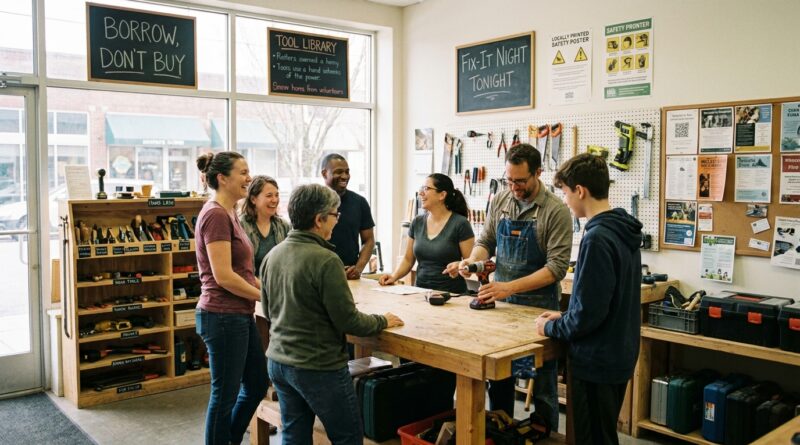
The Hyper-Local Tool Library Boom: How Neighborhood ‘Libraries of Things’ Quietly Turn Borrowers Into Makers
You finally decide to fix the wobbly chair, build a raised garden bed, or try that simple bike repair video you saved three months ago. Then reality shows up. The drill costs more than you want to spend, the saw needs storage space you do not have, and the nearest fancy makerspace wants a monthly fee that kills the whole idea. That is frustrating, and it stops a lot of good projects before they even begin. The good news is that a quieter, more practical option is spreading fast. Neighborhood tool libraries, repair cafés, and shared workshops are popping up inside public libraries, churches, community centers, and tiny maker co-ops. They are close by, low cost, and often run by people who actually want to help you learn. If you have been wondering how to start a neighborhood tool library, or simply how to find one, now is the right time to look close to home.
⚡ In a Hurry? Key Takeaways
- Tool libraries let neighbors borrow useful gear for little to no money, making home fixes and first-time projects much easier to start.
- If you want to start one, begin small with a host site, a simple checkout system, and a short list of high-demand tools.
- Shared tools save money and reduce waste, but clear safety rules, maintenance checks, and basic training matter a lot.
Why tool libraries are suddenly everywhere
Part of this boom is simple economics. A decent circular saw, shop vacuum, ladder, sewing machine, or torque wrench can be expensive, especially if you only need it a few times a year. Most households do not need to own every tool. They just need access when a project pops up.
The second reason is space. Apartment dwellers, condo owners, and even plenty of suburban homeowners do not have room for bulky gear. A community shelf solves that problem better than another trip to the home center.
And then there is the social piece. Tool libraries are not only about borrowing stuff. They often connect you with a volunteer fixer, a retired carpenter, a bike mechanic, or the neighbor who knows how to sharpen blades properly. That human help can be the difference between giving up and actually finishing the job.
What a neighborhood “library of things” actually looks like
Do not picture a giant warehouse. Many of these operations are modest and local by design. Some live in the back room of a public library. Others share space with churches, art centers, or community development groups.
Common items you can borrow
You will often find power drills, bits, hammers, stud finders, levels, socket sets, ladders, carpet cleaners, sewing machines, gardening tools, extension cords, and bike repair stands. Some go further with canning supplies, pressure washers, audio gear, or 3D printers.
Many offer more than tools
Repair cafés can help with small appliance fixes, clothing mending, lamp rewiring, and bike tune-ups. Shared workshops may offer supervised use of saws, sanders, laser cutters, or bench tools that are too risky to send home with a beginner.
That is why these places quietly turn borrowers into makers. People come in to solve one small problem. Then they realize they can learn a skill, meet local experts, and try a bigger project next time.
Why this matters more than another big-box purchase
Buying every tool yourself sounds independent until you look at the receipt. Borrowing can be the smarter path, especially for occasional jobs. It also keeps perfectly good equipment in use instead of letting it gather dust in ten different garages.
There is a bigger neighborhood effect too. Every local tool library creates a tiny network of practical knowledge. Kids see adults fixing things instead of tossing them. New homeowners gain confidence. Renters learn basic maintenance. Older tradespeople pass along what they know.
That same local learning chain shows up in youth programs too. If you want to see how hands-on spaces can shape the next generation, The Hyper-Local Career Pipeline: How Neighborhood Maker Camps Are Quietly Turning Middle Schoolers Into Tomorrow’s Manufacturers is worth your time. It connects the dots between small community maker spaces and bigger local job skills.
How to find a tool library near you
Start with places people often overlook. Public libraries are a strong first stop. Search your city or county name plus “library of things,” “tool library,” “repair café,” or “makerspace.” Community Facebook groups and neighborhood apps can also turn up low-key programs that barely advertise.
Check these local spots
Look at churches, reuse centers, bike co-ops, community gardens, and nonprofit workshops. Some housing groups and neighborhood associations also run tool shares for residents. If your town has a sustainability office or zero-waste program, ask there too.
What to ask before you join
Ask about membership cost, loan periods, late fees, training rules, age limits, and whether consumables like sandpaper or blades are included. Also ask what happens if a tool breaks during normal use. A well-run library will have a clear answer.
How to start a neighborhood tool library
If your area does not have one, this is where the search term becomes real. Learning how to start a neighborhood tool library is less about buying hundreds of items and more about building a simple, trusted system that people can use.
1. Start with demand, not inventory
Ask neighbors what they actually need. You will usually hear the same categories first: drills, ladders, yard tools, cleaning machines, and bike repair gear. Start there. A focused collection is easier to manage than a random pile of donations.
2. Find a host site
The best host is accessible, trusted, and already part of daily community life. Public libraries, churches, schools, and community centers are strong options. They may already have insurance, storage, volunteer channels, and regular hours.
3. Keep the checkout system boring and simple
That is a compliment. Use a basic inventory spreadsheet, library software, or a low-cost lending platform. Label every item clearly. Track who borrowed it, when it is due back, and whether it needs maintenance before going out again.
4. Write plain rules
Spell out loan times, renewals, late returns, cleaning expectations, and what borrowers should do if something stops working. Do not bury people in legal language if you can avoid it. Plain English builds trust.
5. Build a volunteer repair and training bench
A tool library works better when someone can inspect cords, sharpen blades, tighten loose parts, and teach safe use. Retired tradespeople, hobbyists, bike mechanics, and handy neighbors are often glad to help if asked directly.
6. Start with donations, then fill the gaps
Many first collections come from garages, estate donations, hardware store support, and local contractors replacing older but still reliable gear. Accept only what you can test, maintain, and safely lend.
7. Offer one event early
Host a repair night, basic drill class, or garden tool tune-up day. That gives the project a face. People are much more likely to borrow, donate, or volunteer when they have met the humans behind it.
What makes a good tool library, not just a full one
A shelf packed with gear is not enough. The best programs are easy to understand and easy to trust.
Reliability matters
Borrowers need tools that work, batteries that charge, and accessories that are not missing. A smaller collection in good shape beats a huge one full of mysteries.
Training matters
Some tools should come with a quick demo, printed instructions, or a required orientation. That is not gatekeeping. It is basic common sense.
Welcoming matters
Many people are curious about making and fixing but feel intimidated. A friendly check-in desk and a no-shame question policy can do more than a room full of expensive equipment.
The hidden benefit: borrowers become local problem-solvers
This is the part big consumer coverage often misses. A person who borrows a drill for one shelf today may come back next month to fix a bike brake, patch drywall, mend a lamp, or help at a repair café. Skills stack up quietly.
That changes a neighborhood over time. Instead of every household solving every problem alone, people begin sharing know-how. One person learns sharpening. Another gets good at simple wiring. Someone else teaches kids how to use a tape measure correctly. It is practical, not flashy, and that is exactly why it works.
Common concerns, answered
“Won’t tools come back broken?”
Sometimes, yes. That is why inspection, sign-out records, and maintenance volunteers are important. Breakage happens in any lending system. Good rules and steady upkeep keep it manageable.
“Do you need a giant budget?”
No. Some excellent libraries started with a closet, a donation jar, and twenty carefully chosen tools. Growth can happen later.
“What about liability?”
Use waivers, clear use policies, and host-site guidance. It is smart to talk with a local attorney or insurance contact before launch. This is one area where being careful up front saves headaches later.
“Will people actually use it?”
If you match the collection to real neighborhood needs, they usually do. Think seasonal yard work, move-in repairs, bike maintenance, apartment fixes, and beginner woodworking. Everyday usefulness beats novelty.
At a Glance: Comparison
| Feature/Aspect | Details | Verdict |
|---|---|---|
| Cost vs. ownership | Borrowing a drill, ladder, or carpet cleaner for a small donation is far cheaper than buying tools you may use twice a year. | Big money saver for occasional projects |
| Learning support | Repair cafés and shared workshops often include volunteers who can show beginners how to use tools safely and correctly. | Often more useful than borrowing alone |
| Starting your own library | A host site, a simple checkout process, strong safety rules, and a small starter inventory are usually enough to begin. | Very doable if you start small |
Conclusion
The best part of this trend is how ordinary it is. No expensive subscription. No glossy showroom. Just useful tools, shared space, and people helping people get things done. Right now there is a real rise in community tool libraries, repair cafés, and shared workshops inside public libraries, churches, and small maker co-ops. They are giving neighborhoods access to hundreds of tools and local fixers for the price of a small donation, or nothing at all. That means lower costs, less waste, and more chances to meet the craftspeople and tinkerers already living in your own ZIP code. If you have been waiting for permission to fix, build, or experiment, this is it. Start by searching nearby. And if nothing exists yet, you may be closer than you think to learning how to start a neighborhood tool library yourself.